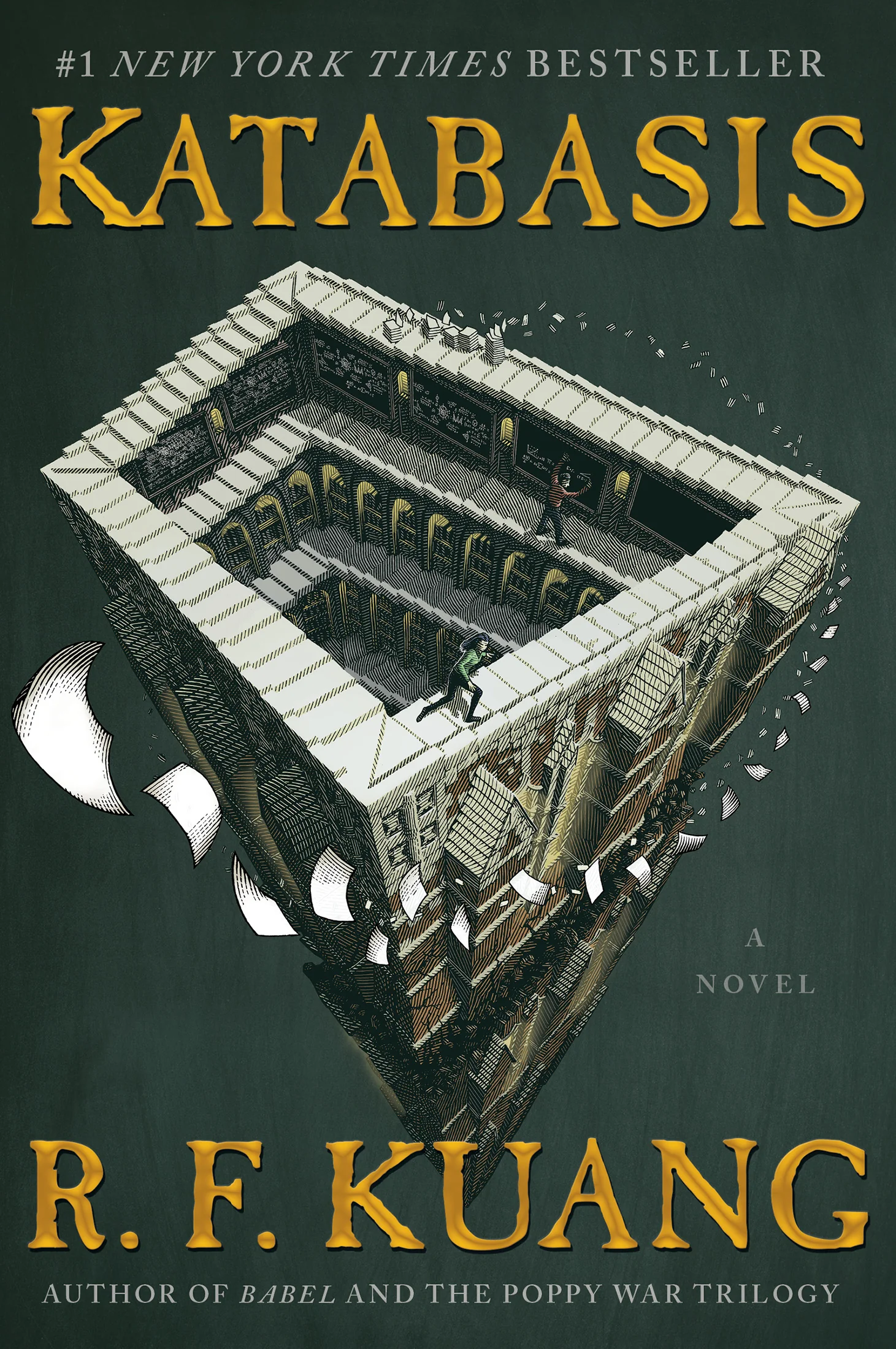
Chapter One
Alice Law, a graduate student in the Department of Analytic Magick at Cambridge, meticulously prepares for a perilous journey to the Eight Courts of Hell. Her mission: to rescue her advisor, Professor Jacob Grimes, whose soul is trapped there after a catastrophic lab accident. Driven by a sense of moral obligation and the need to secure her academic future, Alice has spent the past month becoming a self-taught expert in Tartarology, despite the field's lethal reputation. She carefully checks her chalk inscriptions for the transportative pentagram, acutely aware of the grave risks involved.
Just as Alice is about to complete the pentagram, Peter Murdoch, a colleague known for his brilliance and perfection, interrupts her. Despite her resentment towards Peter, who has always overshadowed her, Alice reluctantly allows him to join her mission. Peter’s knowledge and presence, though unwelcome, are too valuable to ignore given the complexity and danger of the task. After a tense exchange, the two begin their incantation, knowing that the price of their journey is half of their remaining lifespans.
The chapter concludes with Alice and Peter successfully opening the portal to Hell, a realm that appears more like a chilly, desolate landscape than the inferno they expected. They step out of the pentagram, ready to face the unknown challenges of the underworld, with Alice feeling a mix of elation and determination.
Key Events
- Alice prepares to journey to Hell to rescue Professor Grimes's soul.
- Peter Murdoch interrupts and insists on joining Alice.
- Alice and Peter successfully open the portal to Hell.
- They step into the underworld, finding it less terrifying than expected.
Characters Appearing
- Peter Murdoch
- Professor Jacob Grimes
Themes
- Sacrifice and ambition
- Rivalry and collaboration
- The personal and academic stakes of magick
On Magick
Alice reflects on the nature of magick, a discipline that defies the natural laws of the world through linguistic trickery and paradox. She recalls her freshman year, when a demonstration of a never-ending heap of sand captivated her and set her on her path in the field of Analytic Magick. For Alice, magick is about creating a moment of confusion and doubt, where the world seems to blink and the impossible becomes possible. This ability is crucial in her academic and personal life, where she maintains a facade of resilience despite the department's pettiness and the demanding nature of her studies. The chapter also touches on the broader academic landscape of magick, noting the various subfields and approaches, from the flashy showmanship in America to the more traditional and paradox-driven methods at Cambridge. This context underscores the importance of Alice's chosen field and the significance of her journey into the Eight Courts of Hell, where she will need to employ all her skills and beliefs to navigate the unknown and potentially dangerous realm.
Key Events
- Alice reflects on the nature of magick and its reliance on paradox and self-delusion.
- Alice recalls her first encounter with magick during her freshman year.
- The chapter discusses the various subfields of magick and the traditional approach at Cambridge.
Themes
- The nature of magick and paradox
- Alice's personal journey and resilience
- The academic landscape of magick
Chapter Two
Alice and Peter continue their journey through the desolate and shifting landscape of Hell. They cross under a bridge and find themselves at the Viewing Pavilion, a mirror image of Cambridge where they can briefly observe the living world. Alice notices her colleagues, Belinda and Michele, examining the pentagram and speculating about their disappearance, which brings a mix of amusement and apprehension. Peter suggests a sacrifice to locate Professor Grimes, which summons Archimedes, the department cat, and four Shades of Professor Grimes's former students. The Shades, semi-material and hostile, add to the tension as Alice and Peter navigate the emotional and ethical implications of their magickal actions.
Key Events
- Alice and Peter cross the Viewing Pavilion and observe Cambridge.
- Alice reflects on the note she left behind and her colleagues' reactions.
- Peter suggests a sacrifice to locate Professor Grimes, summoning Archimedes and four Shades of Professor Grimes's former students.
Characters Appearing
- Archimedes
- Four Shades (undergraduates)
Themes
- The emotional and ethical implications of magick
- The fear of losing identity in the afterlife
- The paradoxical nature of observing the living world from the dead
Chapter Three
Still reeling from their encounter at the Viewing Pavilion, Alice and Peter find themselves at the base of a vast, bone-constructed wall in Hell. Surrounded by a mass of hostile Shades, they are prevented from cutting the line and decide that climbing the wall is their only option. The climb is treacherous, and Peter's severe fear of heights causes him to have a panic attack. Drawing on her experience as a climber, Alice helps Peter overcome his fear and reach the top of the wall. Once they summit, Peter is emotionally overwhelmed, and Alice comforts him, reflecting on the physical and emotional strain of the climb. From the top of the wall, they see a surreal, shifting landscape that defies normal perception. Alice, trying to maintain a positive outlook, compares the terrain to a challenging but manageable climb, encouraging Peter to stay focused and delusional to navigate the strange terrain below.
Key Events
- Alice and Peter encounter a wall of bones and a mass of Shades.
- Peter has a panic attack during the climb, and Alice helps him reach the top.
- They observe a surreal, shifting landscape from the top of the wall.
Themes
- Facing and overcoming fear
- The role of delusion in survival
- The challenges of navigating the unknown
Chapter Four
Alice and Peter continue their descent from the bone wall, Peter faring better this time due to the psychological comfort of decreasing distance from the ground. They make camp in the shadow of the wall, the landscape beyond a flat, empty field with no clear direction. The evening brings a chilling darkness, and Alice starts a small fire while they share Lembas Bread.
As they sit in the dark, Peter thanks Alice for helping him earlier, leading to a conversation about their relationships with Professor Grimes. Alice and Peter discuss their past interactions with the professor, revealing underlying tensions and unspoken rivalries. Alice learns that Peter has won the prestigious Cooke Fellowship, which triggers her jealousy and resentment. She retaliates by mentioning her successful trip to Italy with Professor Grimes, which Peter was supposed to take.
The conversation becomes awkward, and they agree to put their differences aside for the sake of their mission. Peter admits to feeling sorry for bringing up the Cooke Fellowship, and Alice apologizes for mentioning Italy. They share a hypothermia blanket for warmth, and despite the tense atmosphere, Alice finds herself drifting off to sleep, comforted by the familiar rhythm of Peter's breathing.
The chapter delves into Alice's struggles and ambitions, highlighting her unwavering determination to succeed in the field of magick, even if it means enduring the harsh mentorship of Professor Grimes. Her journey to Cambridge and the warnings she received about Grimes are revisited, emphasizing her resolve to overcome the challenges and achieve her goals.
Key Events
- Alice and Peter descend the bone wall and make camp in the shadow of the wall.
- Peter reveals he has won the Cooke Fellowship, which triggers Alice's jealousy.
- Alice mentions her successful trip to Italy with Professor Grimes, causing tension between them.
- They agree to put their differences aside for the mission and share a hypothermia blanket for warmth.
Themes
- Sacrifice and ambition
- Rivalry and collaboration
- Academic rivalry and personal growth
Chapter Five
Alice wakes to the uncomfortable weight of Peter's arm across her, an awkward moment that quickly turns more embarrassing when Peter experiences a natural, involuntary reaction. The situation is handled with a mix of discomfort and awkward apologies, highlighting the tension between them. The morning is further complicated by the mundane challenges of bodily functions in Hell, and they both struggle with the reality of their physical presence in such an abstract, dangerous place.
After a tense breakfast, Peter and Alice attempt to chart their path through Hell. Peter suggests using the Orpheus map, which Alice criticizes as a fantasy of grief, while she presents her own map based on the accumulative theory of the courts. The debate highlights their different approaches to the problem, with Peter favoring a more mathematical, non-Euclidean approach and Alice sticking to a more traditional, linear progression. They eventually agree to search the courts in order, despite Peter's reservations, and Alice’s insistence that the seven-day limit mentioned in Hecate’s scrolls is more about physical needs than a strict time constraint.
As they prepare to move on, the bone wall they climbed the previous day becomes translucent and disappears, emphasizing the permanence of their journey and the fact that there is no way out but through. The landscape of Hell begins to morph, revealing a familiar and unsettling reflection of their world—specifically, the campus of Cambridge. This realization adds a new layer of complexity to their mission, as they now face a version of Hell that mirrors their academic and personal lives.
Key Events
- Alice and Peter wake up to an awkward and embarrassing situation
- They debate the best map to navigate Hell, agreeing to search the courts in order
- The bone wall disappears, emphasizing the permanence of their journey
- Hell takes on the appearance of the Cambridge campus
Themes
- Awkward intimacy in close quarters
- Differing methodologies and compromise
- The permanence and irreversibility of their journey
On Reincarnation
Still reeling from the tension and philosophical debates of their morning, Alice and Peter find themselves in a chapter that delves deeply into the philosophical and theological underpinnings of Hell and reincarnation. The text explores the consensus among Tartarologists that Hell serves not as a place of eternal punishment but as a preparatory ground for souls to be reincarnated. This perspective is grounded in the idea that eternal punishment is unjust and that the universe requires a balance between life and death, drawing from various philosophical and religious traditions such as Pythagoreanism, Platonism, Buddhism, and Daoism.
The chapter further examines the probabilistic arguments for reincarnation, particularly those of philosopher Michael Huemer, who suggests that if time is infinite, the probability of living only one life is infinitesimally small. This aligns with the concept of eternal recurrence, championed by Nietzsche and the Pythagoreans, which posits that events in the universe repeat themselves infinitely. However, the exact mechanics of reincarnation remain a subject of intense debate among Tartarologists, including questions about the timing of rebirth, the role of karma, and the possibility of escaping the cycle of reincarnation.
The enigma of punishment in Hell is also addressed, questioning whether it serves a rehabilitative or retributive purpose. Various theories are discussed, from Dante's concept of contrapasso to Kant's idea of universalizing broken maxims, highlighting the lack of definitive answers. The final section emphasizes the role of Lord Yama, a figure representing the unknown aspects of the afterlife, whose design and intentions remain a mystery. Souls in the Underworld ultimately travel to Lord Yama's domain, but the specifics of this journey and its outcomes are shrouded in uncertainty.
While this chapter does not advance Alice and Peter's immediate journey, it provides a rich, intellectual backdrop that deepens the reader's understanding of the world they are navigating. It underscores the philosophical and ethical implications of their mission, setting the stage for the challenges and revelations that lie ahead.
Key Events
- Exploration of the philosophical and theological theories about Hell and reincarnation.
- Discussion of the probabilistic arguments for reincarnation and eternal recurrence.
- Examination of the nature and purpose of punishment in Hell.
- Introduction of Lord Yama as a mysterious figure representing the unknown aspects of the afterlife.
Themes
- The philosophical and theological underpinnings of reincarnation
- Probabilistic arguments for reincarnation and eternal recurrence
- The nature and purpose of punishment in Hell
Chapter Six
Alice and Peter find themselves in a version of Hell that resembles a university campus, a setting that Alice finds both familiar and unsettling. The First Court, known as Pride, is a vast library where Shades are tasked with the impossible and vague assignment of defining the good. The atmosphere is tense and competitive, with Shades displaying a range of frustrations and breakdowns, much like a university library during exam season.
They meet George Edward Moore, a Shade who appears to be a former academic and now acts as a sort of librarian and administrator. Moore provides a tour of the library, explaining the hierarchical structure of the courts and the rules of Hell, including the requirement to pass each court in order. He also reveals the fate of those who fail to progress, such as 'bronzing,' a condition where Shades become statues. Alice and Peter are skeptical about Professor Grimes being in this court, believing his character is too complex to be reduced to petty pride.
Alice and Peter decide to challenge Moore's authority by using logic and reason. Alice proposes a syllogism to test the validity of the rules, ultimately confusing Moore and creating an opportunity for them to escape. They push through a set of double doors, leaving the library and the murmurs of the Shades behind, and find themselves facing the river, ready to move on to the next court.
Key Events
- Alice and Peter explore the First Court of Pride, a library where Shades must define the good.
- They meet George Edward Moore, a Shade who acts as the librarian and explains the rules of Hell.
- Alice and Peter challenge Moore's logic and manage to escape the library, moving on to the next court.
Themes
- The paradox of pride in an academic setting and its moral implications
- The role of intellectual pursuits in the afterlife and their potential for transformation
- The use of logic and reason to challenge and navigate authoritative structures
Chapter Seven
Alice and Peter find themselves on the shore of the Lethe, a river that is both still and agitated, reflecting the depths of human memory. The river's waters are a paradox, appearing glassy yet roiling with currents that seem to call to Alice, tempting her with the promise of erasing her troubled memories. Alice is drawn to the river, her thoughts consumed by the allure of forgetfulness, but Peter intervenes, pulling her back and helping her regain her focus through a grounding exercise. They encounter Lady Meng Po, the guardian of the river, who offers Alice a drink of forgetfulness.
Key Events
- Alice is entranced by the Lethe and nearly falls into its waters.
- Peter helps Alice regain her composure and focus.
- They encounter Lady Meng Po, the guardian of the river, who offers Alice a drink of forgetfulness.
Characters Appearing
- Lady Meng Po
Themes
- The seductive nature of forgetfulness
- The struggle against one's own mind
- The role of memory in shaping identity
On Chalk
Still reeling from their encounter with the bone-things and the eerie sense of being watched, Alice and Peter find a moment to rest and reflect on their journey. The chapter delves into the significance of chalk in the practice of magick, a tool made from ancient sea creatures and a link to the remote past. Chalk is described as a manifestation of magical statements, with Barkles and Shropley’s being the preferred brands among English magicians, each with its own loyal following and debates over superiority.
Alice and Peter, still navigating the challenges of Hell, realize that their reliance on magical chalk might not be as straightforward as they thought. The chapter reveals a critical oversight in their preparation: there is no evidence of chalk working in Hell. This revelation adds a layer of complexity to their mission, as they must now find an alternative way to perform the necessary magickal tasks to progress through the courts and save Professor Grimes’s soul.
The chapter also touches on the historical and mythological significance of chalk, including the Cerne Abbas Giant, a prehistoric chalk drawing with potential magical origins. Despite the lack of a recognizable paradox, the giant serves as a mysterious and eerie reminder of the ancient powers that chalk can tap into. This exploration of chalk’s properties and history provides a deeper understanding of the tools and knowledge that Alice and Peter need to rely on in their perilous journey.
Key Events
- The significance of chalk in magick is explored.
- Alice and Peter realize that chalk does not work in Hell.
- The historical and mythological significance of chalk is discussed.
Themes
- The nature of magick and its tools
- The importance of preparation and adaptability
- The ancient and mysterious origins of chalk in magick
Chapter Eight
Alice and Peter make camp after a long and exhausting hike along the banks of the river. Both are rattled by the bone-things they encountered earlier, and Alice is particularly unsettled by the creeping fear that they are being watched. Despite the late hour, they have pushed through to put as much distance as possible between them and the bone-things. Peter tends to his injured arm, and Alice tries to manage her despair, drawing on her graduate school experience to push it aside and focus on the task at hand.
Peter suggests they try a shortcut spell to skip ahead through the courts of Hell, using a mathematical paradox known as Gabriel’s Horn. Alice is skeptical, but Peter is confident in his calculations. However, when they attempt the spell, the chalk lines drawn in the sand disappear, absorbed by the silt. This realization sends Alice into a panic, as the inability to use magick leaves them vulnerable and unprepared for the dangers of Hell. Peter tries to comfort her, reminding her of their capabilities as Grimes’s students and the infinite possibilities of Hell, which he finds exciting rather than daunting.
Their conversation is interrupted by Archimedes’s sudden return, visibly shaken and injured. Alice comforts the cat, noting that he has been attacked by the bone-things. This prompts Alice to recall Eliot’s account in The Waste Land, which mentions a shadowy, creeping terror that is not described in other sojourner’s accounts. The chapter ends with Alice and Peter facing the reality of their situation, acknowledging the real danger they are in and the unknown threats that lie ahead.
Key Events
- Alice and Peter make camp and tend to Peter's injury.
- Peter attempts a shortcut spell using Gabriel’s Horn, but the chalk lines disappear in the silt.
- Alice panics at the realization that they cannot use magick in Hell.
- Archimedes returns injured, indicating an encounter with the bone-things.
Themes
- The protagonists' struggle with the limitations of their magick in Hell
- The psychological impact of fear and despair on Alice and Peter
- The contrast between academic theory and the harsh realities of Hell
Chapter Nine
Still reeling from the previous night's harrowing encounter, Alice and Peter wake up to find Archimedes still with them, much to Alice's surprise. After a meager breakfast, Archimedes leads them toward the Second Court of Desire, a place of temptation and addiction as described by Tartarologists. Alice remains skeptical that Professor Grimes would be found here, given his disciplined nature, but Peter insists they check. As they explore the Court, they encounter Shades engaged in compulsive activities, and Alice witnesses a Shade engaged in a disturbing sexual act, causing her to have a strong reaction. The tension escalates when they are attacked by a pack of bone-things. In a desperate move, they use water from the Lethe to repel the creatures, but Alice falls into the river, her perfect recall the only thing keeping her from succumbing to its amnesiac effects.
Key Events
- Archimedes leads Alice and Peter to the Second Court of Desire.
- Alice and Peter explore the Court of Desire, encountering Shades engaged in compulsive activities.
- Alice witnesses a Shade engaged in a disturbing sexual act, causing a strong reaction.
- Alice and Peter are attacked by a pack of bone-things and use water from the Lethe to repel them, but Alice falls into the river.
Themes
- The nature of desire and addiction
- Moral fortitude and temptation
- The psychological toll of resistance
Chapter Ten
Alice and Peter survive a harrowing encounter with bone-things in the Court of Desire, where Alice falls into the Lethe and Peter rescues her. Peter's concern for Alice's well-being leads to a deep, revealing conversation about their experiences under Professor Grimes’s tutelage. Alice discloses that Professor Grimes tattooed a permanent pentagram on her arm, making her immune to the Lethe's amnesiac effects. This tattoo has granted her perfect recall but also caused immense mental strain and a constant, throbbing pain in her temples. Peter, in turn, reveals that Grimes once asked him to steal a human colon from a cadaver for an experiment, a request Peter complied with despite the ethical implications. Their conversation shifts to their shared experiences of Grimes's harsh treatment, which they both reflect on with a mix of resentment and admiration. They bond over the unique bond they formed through their mentor's intense and often cruel methods, finding a sense of camaraderie in their shared trials. Late at night, while Peter sleeps, Alice discovers a packet of Peter's notes that detail a spell for organic exchange. She realizes with horror that Peter intends to trade her soul for Professor Grimes’s, a revelation that leaves her both terrified and conflicted.
Key Events
- Alice and Peter survive an attack by bone-things and Alice falls into the Lethe.
- Alice reveals the permanent pentagram tattoo on her arm and its effects.
- Peter confesses to stealing a human colon for Professor Grimes.
- Alice discovers Peter's notes detailing a spell for organic exchange, realizing his intention to trade her soul for Professor Grimes’s.
Themes
- Sacrifice and ambition
- Ethical dilemmas in magick
- The psychological impact of mentorship
Chapter Eleven
Alice reflects on the principles of classical logic, specifically the Law of Noncontradiction and the Law of the Excluded Middle, and how these principles struggle to apply to the complexities of human relationships. Her thoughts drift to Peter Murdoch, a fellow graduate student and advisee of Professor Grimes. She recalls their first encounter during the Michaelmas Term two years prior, when she felt out of place among the polished and sophisticated cohort. Despite his charm and enthusiasm, Peter’s unreliability became apparent early on, as he stood her up for their first planned meeting at the Pickerel Inn. Over the years, Alice has learned to navigate Peter’s erratic behavior, understanding that his brilliance is often accompanied by a lack of punctuality and consistency. Their working relationship has evolved into a comfortable, if somewhat fraught, dynamic. Peter is helpful, hilarious, and a joy to work with when present, but his unpredictability and tendency to disappear for long periods of time create a rift. Alice harbors memories of late-night lab sessions where they shared moments of genuine connection, but these are always followed by Peter’s retreat into his own world. Despite her occasional fondness and attraction to him, Alice recognizes the unbridgeable gap between them and the futility of trying to truly know Peter.
Key Events
- Alice reflects on the principles of classical logic and their application to human relationships.
- Alice recalls her first encounter with Peter Murdoch and his reputation as a brilliant but unreliable student.
- Alice and Peter’s working relationship evolves into a comfortable but unpredictable dynamic.
- Alice remembers moments of genuine connection with Peter, but acknowledges the unbridgeable gap between them.
Themes
- The complexity of human relationships and the struggle to apply logical principles to them
- The interplay between brilliance and unpredictability in personal and academic dynamics
- The challenges of forming deep connections with others who are emotionally distant
Chapter Twelve
Alice wakes to a harrowing dream where Professor Grimes, with a horse’s face, leads her through underground tunnels to the lost archives of the Library of Alexandria. The vivid and disturbing dream leaves her deeply troubled, especially when she finds Peter already up, having prepared breakfast. Her unease grows as she discovers Peter’s notes detailing a spell for organic exchange, which she interprets as a plan to trade her soul for Professor Grimes’s. This realization makes her wary of Peter, and she struggles to trust him as they continue their journey.
During their descent from the Court of Desire to the Court of Greed, Alice and Peter encounter a bridge formed of petrified Shades. They also meet Bill Cadeaux, a Shade who had sabotaged a colleague’s career in life. Peter’s reaction to Cadeaux’s history and Alice’s growing suspicion of Peter’s motives lead to a tense conversation. Alice’s anxiety peaks when she hears a woman’s laughter, which turns out to be the Weaver Girl, a deity who has descended into Hell to find her lost mortal lover. The Weaver Girl offers Alice and Peter a test of loyalty, promising safe passage if they can prove their love for each other.
The test involves choosing between a red apple, which means going on together, and a green apple, which means going on alone. If both choose the red apple, they will be granted safe passage. If both choose the green apple, they will be thrown into the Lethe. If they choose differently, the one who chooses to go alone will be granted safe passage, while the other will face a terrible fate. Alice is torn between her desire to trust Peter and her fear of his betrayal. She is also haunted by memories of a conversation she overheard in the lab where Peter and a visitor mocked her. In the end, Alice’s fear and distrust lead her to choose the green apple, while Peter chooses the red apple.
Key Events
- Alice wakes from a disturbing dream about Professor Grimes in the form of a horse.
- Alice and Peter encounter a bridge of petrified Shades on their way to the Court of Greed.
- Alice and Peter meet Bill Cadeaux, a Shade who had sabotaged a colleague’s career.
- The Weaver Girl appears and offers Alice and Peter a test of loyalty to prove their love.
- Alice and Peter are forced to make a choice between the red apple (to go on together) and the green apple (to go on alone).
Characters Appearing
- The Weaver Girl
Themes
- Trust and betrayal
- The nature of love and loyalty
- The psychological impact of suspicion and fear
Chapter Thirteen
Still reeling from the Weaver Girl’s test and the bone-things’ approach, Alice’s mind drifts to a significant period in her first year at Cambridge. Professor Grimes’s head lab assistant, Joshua, abruptly quit and fled to Canada, leaving Alice and Peter to step in for an important conference presentation. Despite the unpaid overtime and lack of credit, Alice and Peter were thrilled to be involved in real research, which brought them closer together. They worked long hours in the lab, bonding over shared meals and late-night discussions, and Alice found herself falling in love with Peter, experiencing a connection that was different from any she had known before.
Their friendship flourished during those intense, exhausting nights, but after the project concluded, Peter began to pull away. Alice, feeling humiliated and confused, tried to reconnect with him, but Peter remained distant and polite, offering no explanation for his changed behavior. This emotional distance and the subsequent gossip about their relationship left Alice feeling isolated and questioning the nature of personal identity and connection. She turned to Derek Parfit’s ‘Reasons and Persons’ for solace, finding a reductionist view of personal identity that helped her understand that the Peter she knew was just a fleeting version of himself, and that true, lasting connection might be an illusion.
Alice’s reflection on this period is tinged with a sense of loss and disillusionment. She realizes that the intense bond they shared in the lab was transient, and that the person she thought she knew so intimately was perhaps a construct of a specific time and place. This realization deepens her sense of isolation and underscores the fragility of human connections in the face of changing circumstances and personal growth.
Key Events
- Alice and Peter work together on a critical project after Joshua's departure.
- Alice and Peter bond over late-night lab sessions and develop a deep, personal connection.
- Peter begins to avoid Alice after the project ends, leaving her confused and hurt.
- Alice reads Derek Parfit’s ‘Reasons and Persons’ and reflects on the nature of personal identity and connection.
Themes
- The transient nature of human connections
- The impact of shared experiences on personal growth
- The illusion of deep, lasting relationships
Chapter Fourteen
Alice, in a panic, accidentally chooses the green apple in the Weaver Girl’s test of loyalty, while Peter selects the red apple. The Weaver Girl, interpreting Alice’s choice as a sign of her inability to trust, decides to keep Peter and send Alice on alone. Desperate to help Peter, Alice tries to intervene but is stopped by the Weaver Girl’s silk, which binds Peter and leaves him helpless as the bone-things approach. Just as the bone-things are about to attack, a mysterious boatman appears and saves both Alice and Peter, whisking them away from the impending danger.
Key Events
- Alice accidentally chooses the green apple in the Weaver Girl’s test.
- The Weaver Girl decides to keep Peter and send Alice on alone.
- A horde of bone-things attacks, but a mysterious boatman saves Alice and Peter.
Characters Appearing
- The boatman
Themes
- Trust and betrayal
- The consequences of choice
- Unexpected salvation
Chapter Fifteen
Alice and Peter find themselves on a peculiar boat, piloted by Elspeth Bayes, a former student of Professor Grimes who died under mysterious circumstances. Elspeth, now a Shade, reveals that she has been living in Hell for a decade, navigating the river Lethe and encountering the Kripkes, a pair of magicians conducting dark and unethical experiments. The Kripkes have been roving through the courts of Hell, amassing a horde of bone-things and Shade constructs, all in pursuit of the Great Quest to find the True Contradiction—a logical paradox that could allow them to escape Hell.
The conversation between Alice, Peter, and Elspeth is tense and revealing. Alice and Peter are shocked to learn that the Kripkes have been murdering souls, including their own son, to fuel their magickal experiments. Elspeth warns them that dying in Hell means total annihilation of the soul, highlighting the stakes of their journey. During a meal of roasted rats, Alice and Peter's relationship remains strained, with Peter still furious over Alice's choice in the Weaver Girl's test. Alice tries to explain her fear and confusion, but Peter remains distant and hurt.
Elspeth demonstrates that magick can still be performed in Hell by using Alice's blood to perform Curry’s Paradox and Banach-Tarski, creating a duplicate of Peter’s flask. This revelation about the nature of magick in Hell and the necessity of living blood for spells adds a new layer of complexity to their journey. Elspeth, while friendly, is guarded about her own knowledge of the True Contradiction, hinting that she has leads but is unwilling to share them with newcomers.
Key Events
- Alice and Peter meet Elspeth Bayes, a former student of Professor Grimes who died in mysterious circumstances.
- Elspeth reveals the Kripkes' dark experiments and their goal to find the True Contradiction.
- Elspeth warns Alice and Peter about the dangers of dying in Hell and the Kripkes' murderous methods.
- Elspeth demonstrates that magick can be performed in Hell using Alice's blood to duplicate Peter’s flask.
- Alice and Peter's relationship remains strained, with Peter still angry over her choice in the Weaver Girl's test.
Themes
- The ethical boundaries of magick and the consequences of its misuse
- The fragility of human connections and trust in the face of adversity
- The relentless pursuit of knowledge and its moral implications
Chapter Sixteen
As night descends, Alice, Peter, and Elspeth retreat to the boat’s hold, a cramped yet cozy space brimming with waterlogged and tattered books. Elspeth, who often collects these books from the shores of Desire, offers Alice and Peter a place to rest, warning them about the Kripkes and the need for vigilance. When Peter needs to use the facilities, Elspeth directs him to a tin, leaving Alice and Elspeth alone.
Elspeth, sensing Alice's unease, offers her a cigarette and initiates a candid conversation about her past. Alice, feeling vulnerable, inquires about Elspeth’s reasons for suicide, leading to a deep and revealing discussion. Elspeth, once a brilliant student under Professor Grimes, describes the futility and absurdity of academic life, the arbitrary nature of success, and the emotional toll of Grimes’s abusive behavior. She emphasizes that her decision was not solely due to Grimes but a result of the systemic issues in academia.
Alice, feeling a strange kinship with Elspeth, shares her own struggles and the pressure she faces. Elspeth, perceiving Alice's inner turmoil, offers her a kind of sympathy and advice, suggesting that Alice’s determination to find a way back up is a sign of her strength. Despite her initial resistance to Elspeth’s pity, Alice finds a moment of connection and gratitude in the shared experience of academic and personal challenges.
The conversation shifts to the self-torturer problem, a philosophical paradox that resonates with both women. Elspeth likens the relentless pursuit of academic success to the self-torturer’s incremental pain, highlighting the moment when the dial breaks and numbness sets in. Alice reflects on her own entrance exam paradox, the Ever Better Wine, and the lesson that sometimes the best strategy is to accept a satisfactory outcome rather than an optimal one. This realization resonates with her current situation, as she grapples with the need to outlast and outmaneuver the challenges ahead.
Key Events
- Alice and Peter take refuge in the boat's hold with Elspeth's book collection.
- Elspeth and Alice have a deep conversation about Elspeth's suicide and the systemic issues in academia.
- Elspeth offers Alice a cigarette and shares her philosophical views on life and death.
- Elspeth and Alice discuss the self-torturer problem and its relevance to their academic struggles.
Themes
- The futility and absurdity of academic life
- The emotional toll of abuse and systemic issues
- The nature of personal identity and connection
Chapter Seventeen
Alice wakes up to find Peter asleep beside her in the boat’s hold. Deciding to wake him, she suggests they find the Dialetheia, a powerful paradoxical object, to secure their own escape from Hell. Alice believes that by obtaining the Dialetheia first, they can solve all their problems and avoid the need for Peter to exchange her life for Professor Grimes’s. Peter is initially resistant, reminding Alice that Elspeth just saved their lives. However, Alice persists, using her experience in managing difficult situations to persuade Peter. She proposes using the Liar Paradox to get Elspeth to talk, as it can suspend truth and falsity, making Elspeth more vulnerable. Peter remains skeptical but eventually falls silent, and Alice assumes he has fallen asleep. Reflecting on her academic journey, Alice recalls an ex-boyfriend's criticism that her obsession with academia was a quest for validation. She rejects this, emphasizing that the real reward is the high of discovery and the sense of transcending the mundane. She remembers the joy of intellectual debates and the camaraderie among her peers, which made her feel she belonged. Despite the challenges and the institutional hurdles, Alice remains committed to her pursuit of knowledge and the hidden truths it reveals.
Key Events
- Alice wakes Peter to suggest finding the Dialetheia.
- Alice and Peter debate the merits of betraying Elspeth.
- Alice proposes using the Liar Paradox to manipulate Elspeth.
- Alice reflects on her academic journey and her passion for knowledge.
Themes
- Sacrifice and ambition
- The ethics of manipulation
- The nature of magick and paradox
Chapter Eighteen
Alice wakes up to an empty boat hold, her heart racing as she searches for Peter. She finally finds him and Elspeth on the prow, silently contemplating the river. The atmosphere is tense, and Alice reflects on her fear of water, drawing a parallel to a childhood incident by the river in San Antonio. The Lethe, the river they are navigating, is described as a vast, black, and infinite repository of memories, where fleeting images of past lives and moments dance on the surface of the water. Elspeth explains that the Lethe is a repository of all forgotten memories and warns them of its dangers.
Key Events
- Alice discovers Peter and Elspeth on the prow, silently watching the river.
- Alice reflects on her fear of water and her academic journey.
- Elspeth explains the nature of the Lethe and its dangers.
Themes
- The psychological impact of forgotten memories
- The river as a metaphor for the subconscious
- The emotional toll of academic and personal pursuits
Chapter Nineteen
Still reeling from the tense atmosphere on the boat, Peter accuses Alice of wanting to use Professor Grimes's death for personal gain. His decision to leave leads to a dangerous encounter with a bog filled with vengeful Shades. They narrowly escape, but the ordeal leaves them both shaken. Peter suggests they return to the Fields of Asphodel, arguing that their chances of survival are better there.
As they attempt to find a way back, they realize they are trapped in a circular path, leading them to the same boulders repeatedly. Peter discovers a hidden Escher trap, a nil-geometry space with Penrose stairs that trap them in an endless loop. The situation worsens when they discover a cuckoo bird, a reminder of wasted time, which adds to their growing despair.
Alice's panic grows as she realizes the Kripkes' work is flawless, and they are trapped with no way out. Peter's mental state deteriorates, and he accuses Alice of being in love with Professor Grimes, which she vehemently denies. In a moment of profound vulnerability, Alice reveals that she believes she is responsible for Professor Grimes's death, a revelation that adds a new layer of tension to their already strained relationship.
Key Events
- Peter and Alice's argument and Peter's decision to leave
- Their escape from the bog filled with Shades
- Discovery of the Escher trap and Penrose stairs
- Alice's revelation that she believes she is responsible for Professor Grimes's death
Themes
- Sacrifice and ambition
- Rivalry and collaboration
- The emotional and ethical implications of magick
Chapter Twenty
Alice reflects on the pervasive sexism she has experienced throughout her academic career, from her undergraduate days to her tenure at Cambridge. Initially dismissing feminism as an embarrassing fad, she tried to prove her worth by excelling in a male-dominated field, only to find herself repeatedly objectified and demeaned by her male colleagues, particularly Professor Grimes. The breaking point comes during a late-night encounter in his office, where he attempts to sexually assault her. Alice manages to escape, but the incident leads to a significant rift between them. Professor Grimes becomes cold and distant, isolating Alice and undermining her work. Meanwhile, Peter Murdoch’s standing with Professor Grimes improves, further isolating Alice and causing tension between them. Seeking advice from Helen Murray, a senior faculty member, only deepens Alice’s despair. Helen accuses Alice of naivety and dismisses her concerns, reinforcing the idea that Alice must endure the harassment and move on. Alice’s mental and physical health deteriorate, and she begins to contemplate suicide, though she ultimately cannot bring herself to follow through. The chapter ends with Alice’s ironic laughter as she stands covered in Professor Grimes’s remains after his violent death, a moment that provides a twisted sense of liberation and a darkly humorous contrast to her previous struggles.
Key Events
- Alice reflects on the sexism and harassment she faced in academia
- Professor Grimes attempts to sexually assault Alice, leading to a rift between them
- Alice seeks advice from Helen Murray but receives no support
- Alice contemplates suicide but cannot bring herself to follow through
- Alice laughs after Professor Grimes’s violent death
Themes
- Sexism and harassment in academia
- Isolation and mental health
- The futility of seeking justice in a hostile environment
Chapter Twenty-one
Peter remains silent after Alice shares her traumatic experiences and her plan to use Erichtho’s dark magick to control Professor Grimes’s soul. His only response is to hold her hand, providing a comforting presence in a moment of profound vulnerability. Alice, feeling a rare sense of honesty and clarity, explains her desperate and horrifying plan to reanimate Professor Grimes’s corpse and bind his soul to it, making him a mere puppet under her control. She admits that this was driven by a desire for revenge and control, rather than a genuine attempt to save him.
Peter listens intently, and while he acknowledges the darkness of Alice’s plan, he praises her research and creativity. Alice, feeling a mix of relief and shame, reflects on the futility of her efforts and the misguided nature of her ambitions. She discusses her belief that she and Peter are fundamentally broken, driven by a compulsion to seek misery. Peter, however, argues that they are still striving towards the light, despite their entanglements.
As they sit in the oppressive heat and silence, Alice contemplates the inevitability of their deaths, finding a strange comfort in the idea that their struggles will soon be over. Peter then reveals that he has been lying to her about his own plan to rescue Professor Grimes. He confesses that he intended to trade himself to the Kripkes, believing that since Professor Grimes’s death was his fault, he should be the one to bring him back. This revelation shocks Alice, but she is also touched by Peter’s sense of responsibility and self-sacrifice.
Key Events
- Alice shares her dark plan to reanimate Professor Grimes’s corpse and control his soul
- Peter praises Alice’s research but acknowledges the darkness of her plan
- Alice and Peter discuss their brokenness and the futility of their efforts
- Peter reveals his intention to trade himself to the Kripkes to bring Professor Grimes back
Themes
- Revenge and control
- Self-sacrifice and responsibility
- The nature of brokenness and human struggle
Chapter Twenty-two
Peter Murdoch's exceptional intellect and the chronic illness that has shaped his life are explored in Chapter Twenty-Two. Born into privilege, Peter's genius was evident from a young age, but his chronic Crohn’s disease, personified as the Beast, made his childhood a series of medical battles. Despite his frequent illnesses, his parents provided him with advanced education, and he excelled academically and socially at Oxford. His reputation as an absent, erratic genius grew, and he thrived in the academic environment, even as his health remained a closely guarded secret.
At Cambridge, Peter's relationship with Alice Law and his mentor, Professor Grimes, becomes central. Initially captivated by Alice's unique mind and the challenge she presented, Peter's health deteriorates, leading to a significant rift. His illness flares up, and he keeps it hidden, fearing the loss of his reputation and the pity of others. His condition worsens to the point of hospitalization, and he undergoes a colectomy, a surgery that leaves him feeling both liberated and more isolated.
Upon returning to the department, Peter discovers that Professor Grimes has published his research without crediting him. Enraged and humiliated, Peter retaliates by hastily reviewing the paper and deliberately making minor errors, hoping to embarrass Grimes. However, his actions backfire when a catastrophic event occurs, leading to Professor Grimes's death. Overwhelmed by guilt and a sense of responsibility, Peter resolves to go to Hell to retrieve Grimes's soul, following Alice, who is also on this mission.
Key Events
- Peter's childhood and the onset of his Crohn’s disease
- Peter's academic and social success at Oxford
- Peter's relationship with Alice and Professor Grimes at Cambridge
- Peter's health deterioration and hospitalization
- Professor Grimes publishes Peter's research without crediting him
- Peter's retaliation and the accidental death of Professor Grimes
- Peter's decision to go to Hell to retrieve Grimes's soul
Themes
- The burden of genius and chronic illness
- Academic rivalry and manipulation
- The consequences of revenge and pride
Chapter Twenty-three
Still reeling from the emotional and physical toll of their past, Alice and Peter find themselves trapped in the Escher trap, reflecting on their shared history with Professor Grimes. They realize that Grimes manipulated their rivalry and insecurities, leading them to believe the other was thriving while they struggled. In a moment of mutual understanding and vulnerability, they acknowledge the deep psychological toll Grimes's manipulation had on them.
As their energy wanes, Peter reveals his plan to use a logical paradox to escape. He explains the Hangman's Paradox, which he believes will create a paradoxical invulnerability, allowing Alice to escape while trapping him. Alice is horrified and resists, insisting that they must both escape or neither. Peter, however, is determined, arguing that Alice has the only chance to save Professor Grimes and return home. The tension between them escalates as Alice struggles to convince Peter to reconsider, but he remains resolute.
In a desperate and tragic moment, Peter uses a blade to activate the paradox, sealing the trap and forcing Alice to leave without him. Despite her protests and attempts to stop him, Peter completes the ritual, and the Escher trap vanishes, leaving Alice alone in the desolate landscape of Hell. The chapter ends with Alice's anguished scream and a poem about the nature of parallel lines and infinity, mirroring the theme of their impossible situation.
Key Events
- Alice and Peter reflect on their shared manipulation by Professor Grimes
- Peter devises a logical paradox to allow Alice to escape the Escher trap
- Alice resists Peter's plan, insisting they both escape or neither
- Peter activates the paradox, sealing himself in the trap and forcing Alice to leave
Themes
- Rivalry and collaboration
- Sacrifice and ambition
- The emotional and ethical implications of using paradoxes for escape
On Paradoxes
Still reeling from the emotional and psychological toll of their confrontation with Professor Grimes, Alice and Peter's thoughts are echoed in the chapter's exploration of paradoxes. The text delves into the nature of paradoxes, examining why they trouble the human mind. It posits that paradoxes do not trouble us because their conclusions are true, but because they force us to reevaluate our fundamental premises and assumptions about the world. The chapter uses the metaphor of a staircase, where each step logically leads to an impossible conclusion, highlighting that the flaw must lie in one of the steps or premises.
Key Events
- The chapter explores the nature of paradoxes and their impact on human reasoning.
- The text explains why paradoxes are troubling and the importance of questioning premises.
Themes
- The nature of paradox and its impact on human logic and reasoning
- The importance of questioning fundamental assumptions in the face of manipulation and deception
Chapter Twenty-four
Still reeling from the devastating loss of Peter, Alice Law finds herself in Cambridge for her first meeting with Professor Jacob Grimes. Fresh from America, she is both excited and nervous, dressed in a new pencil skirt and ironed oxford shirt. As she steps into the department, she feels like she has crossed into a new world, one where she has finally been accepted into the academic elite. Professor Grimes greets her with a warm and encouraging demeanor, which immediately wins Alice's loyalty and admiration. He reassures her of her worth and belonging, telling her that she is special and that her unique mental signature is what truly matters. Alice, who has always felt like an outsider, is deeply moved by his words. This moment marks the beginning of her unwavering loyalty to Professor Grimes, setting the stage for the complex and sometimes toxic mentor-student relationship that will develop. The chapter also delves into Professor Grimes’s background, revealing his own journey from a troubled past to becoming a renowned magician and academic. Born to an absent alcoholic father, Grimes spent his early years reading voraciously and later joined the army, eventually earning a scholarship to study abroad. His time at Oxford was marked by initial isolation and mockery, but he persevered and became a celebrated figure in the field of magick. After the war, he gained a reputation for his innovative research, which included both life-saving inventions and controversial experiments. Grimes’s influence in the academic world is such that being his student opens all doors, a position that Alice will later exploit to her advantage. The chapter highlights the profound impact that Professor Grimes’s belief in Alice has on her self-perception and future actions, setting up the dynamic where Alice feels a deep sense of debt to Grimes, a sentiment that will play a crucial role in her decisions and actions throughout the story.
Key Events
- Alice's first meeting with Professor Grimes in Cambridge
- Professor Grimes's encouraging words that win Alice's loyalty
- Revelation of Professor Grimes’s troubled past and rise to academic fame
- Establishment of the mentor-student dynamic between Alice and Professor Grimes
Themes
- Mentor-student dynamics
- Belief and self-worth
- The weight of gratitude and debt
Chapter Twenty-five
Devastated by Peter's sacrifice, Alice frantically attempts to break the Escher trap but finds her efforts futile. The skittering of Kripkes forces her to flee, and she witnesses their brutal extraction of Peter's blood and soul. Overwhelmed with grief and guilt, Alice continues her journey through the desert of Cruelty, a bleak and intentionally cruel landscape littered with strange structures and silent Shades. At the tower of Tyranny, she encounters the Erinyes—Alecto, Megaera, and Tisiphone—who confront her with the weight of her actions and the nature of punishment.
Key Events
- Alice's futile attempts to break the Escher trap
- Alice witnesses the Kripkes draining Peter's blood and soul
- Alice's journey through the desert of Cruelty
- Alice encounters the Erinyes at the tower of Tyranny
Characters Appearing
- The Erinyes (Alecto, Megaera, and Tisiphone)
Themes
- Grief and guilt
- The cruelty of Hell
- The nature of punishment and redemption
Chapter Twenty-six
Still reeling from the loss of Peter and the brutal extraction of his soul, Alice awakens in the desert of Cruelty to find a Shade named John Gradus kneeling over her. The Shade, with a face that shifts and slips, introduces himself and offers to guide Alice to the gates of Dis in exchange for stories about the living world. Alice, despite her initial wariness, agrees to the deal, and they begin their journey together.
As they walk, Gradus bombards Alice with questions about life above, focusing on mundane details like food, fashion, and music rather than significant historical events. Alice, while uncomfortable with the Shade's relentless curiosity, finds a strange sense of purpose in recounting these details. Gradus, in turn, shares insights about Hell, revealing that the inhabitants of Dis are traitors and oath-breakers, those who have made and broken significant promises. This revelation deeply unsettles Alice, who begins to feel a growing sense of unease about her own journey and the nature of the city they are approaching.
The conversation takes a darker turn when Gradus asks about Alice's motivations and the man she is searching for. Alice, feeling drained and numb, responds with a detachment that irritates Gradus. He becomes frustrated with her lack of emotional investment, but Alice is too exhausted to engage. The tension between them grows, and Gradus warns Alice never to ask about the sins of those in Dis, emphasizing the danger of probing too deeply into the city's secrets. Despite the warning, Alice feels a growing curiosity about Gradus himself and what he has done to be in Hell.
Finally, they reach the base of a steep hill leading to the city of Dis. The city, more beautiful than Alice could have imagined, is a gleaming white fortress with intricate architecture. Gradus explains that Dis is home to the worst sinners, those who have betrayed the most sacred of bonds. Alice, now more determined than ever to find Professor Grimes, feels a chill as she realizes the gravity of the city's inhabitants and the potential dangers that lie ahead.
Key Events
- Alice awakens to find John Gradus offering to guide her to Dis
- Alice and Gradus agree to a deal where she shares stories of the living world
- Gradus reveals that the inhabitants of Dis are traitors and oath-breakers
- Alice and Gradus reach the base of the hill leading to Dis
- Gradus warns Alice not to ask about the sins of those in Dis
Characters Appearing
- John Gradus
Themes
- The nature of betrayal and oath-breaking
- The power of storytelling and information exchange
- The psychological impact of guiding and being guided
Chapter Twenty-seven
Alice and Gradus enter the city of Dis, guided by Gradus through the guarded pale doors. The city is a stark contrast to the desert they just traversed, with a courtyard filled with Shades who are all middle-aged, Oxbridge-robed men, many of whom resemble Professor Grimes. They navigate the Writing Bazaar, a chaotic marketplace of stalls where Shades barter and hawk writing-related goods, from books to productivity cures. Alice encounters various deities and Shades, including Nessus, a centaur-like deity who offers to write essays for her, and Laplace’s Demon, a shifting, multi-eyed giant who preaches determinism. Alice begins to understand the cruel design of the bazaar, which is meant to distract and delay the Shades from their ultimate goal of writing their dissertations. Gradus explains that the dissertation is a futile exercise, a cruel joke to keep the Shades occupied.
As they move through the bazaar, Alice and Gradus enter a writing workshop where a group of Shades is engaged in a heated debate over a dissertation about domestic violence. The Victorian air and the dour, focused expressions of the Shades are deeply invested in their discussions. However, Professor Grimes is not among them. The meeting takes a chaotic turn when a debate over methodology escalates into a physical fight, and the room erupts into chaos. Outside, Alice witnesses a bizarre spectacle as the Shades welcome a fire from the sky and the arrival of Cerberus, a three-headed beast that mauls and dismembers them for entertainment.
Alice reflects on the futility and cruelty of Hell, where the Shades seek any form of sensation to escape the monotony. Gertrude, a Shade who refuses to write and sees reincarnation as an escape, offers Alice a place in her fellowship, the Rebel Citadel, a final refuge for those who reject the norms of Dis. Driven by curiosity and a desire to find Professor Grimes, Alice agrees to follow Gertrude, despite Gradus’s warnings.
Key Events
- Alice and Gradus enter the city of Dis through the guarded doors
- They navigate the Writing Bazaar, encountering various deities and Shades
- Alice learns about the cruel design of the bazaar and the futility of the Shades' dissertations
- They enter a writing workshop where a debate turns into a physical fight
- Alice witnesses the Shades welcoming fire and Cerberus for entertainment
- Gertrude offers Alice a place in the Rebel Citadel
Characters Appearing
- Parmenides
- Nessus
- Laplace’s Demon
- Chairman
- Professor Bent
- Professor Brown
Themes
- The cruel and futile nature of academic pursuits in Hell
- The desire for sensation and escape in a monotonous existence
- The rebellion against imposed norms and the search for meaning
Chapter Twenty-eight
After the chaotic and cruel Writing Bazaar of Dis, Alice finds herself in a starkly different environment. Gertrude leads her through a long, winding staircase that mirrors the claustrophobic ascent of the Florence Duomo, eventually emerging into the serene courtyard of the Rebel Citadel. The citadel, a place of quiet and beauty, stands as a stark contrast to the chaos of Dis. Gertrude introduces Alice to the citadel's grandeur, explaining that it is a haven for those who reject the futile tasks of Dis, such as writing dissertations, and instead focus on building a better world. Gertrude reveals that the citadel has faced natural disasters, including a quake that destroyed the bell tower, but the residents remain undeterred, believing in the eventual rebirth of a better world.
Alice, feeling a mix of awe and unease, explores the citadel and finds a garden where she encounters a peculiar growth, a withered branch that seems to be a True Contradiction. Despite her initial curiosity, the branch and the grove's whispers repel her. She meets a talking knob on a tree, which explains that the grove's inhabitants are souls who have given up and become part of the forest. The knob suggests that those who cannot find peace in the grove should seek the monasteries, where Shades chant and meditate, waiting for the end of the world and the birth of a new one.
Alice's attempts to meditate and find peace in the citadel are futile, as her mind is overwhelmed by painful memories and the futility of her situation. The grove's oppressive stillness and the Shades' passive existence deeply disturb her. She feels a growing sense of panic and realizes that the citadel's punishment is the eternal, unchanging stasis. When a Shade is awakened by her presence and throws itself into the Lethe, Alice experiences a visceral mix of jealousy and a desperate aversion to death. Overwhelmed, she flees the citadel, breaking through an illusionary barrier and running back into the desert, determined to escape the inescapable stasis of Dis.
Key Events
- Alice and Gertrude explore the Rebel Citadel and its serene beauty
- Alice discovers a withered branch, a True Contradiction, in a garden
- Alice meets a talking knob and learns about the grove's inhabitants
- Alice fails to find peace in the citadel and experiences a panic attack
- A Shade awakened by Alice throws itself into the Lethe
- Alice breaks through the citadel's illusionary barrier and flees into the desert
Themes
- The psychological torment of eternal stasis and the human need for change
- The contrast between passive acceptance and active rebellion in the face of futility
- The search for meaning and purpose in a seemingly meaningless world
Chapter Twenty-nine
Lost in the desert of Hell, Alice desperately searches for the Lethe but finds the landscape shifting and taunting her, making navigation impossible. Her sense of time and self begins to erode as she wanders aimlessly, her body adapting to the timeless, desolate environment. Strange artifacts dot the landscape, and Alice ponders the porous boundaries between life and death, reflecting on the implications of her existence in this place.
During her wanderings, Alice encounters a near-dead, mangled cat. Despite her initial fear, they engage in a tense, silent dance of apprehension. Suddenly, Alice is trapped by a Kripkes' trap, and the cat, also ensnared, is brutally killed by a set of magical knives. The horror of the cat's death triggers Alice's memories of Peter's suffering, but she forces herself to think critically and uses the cat's blood to break the trap.
After freeing herself, Alice's primal instincts take over, and she consumes the cat's raw meat, feeling a renewed connection to her body and a strange, intense urge to kill. She builds a fire and roasts the remaining meat, feeling a renewed sense of purpose and futurity. The experience of eating and the sensory overload of the cat's corpse bring her back to her senses, and she realizes that she must continue her journey with a new resolve. She salvages what she can from the cat's remains, preparing for the uncertain path ahead.
Key Events
- Alice becomes lost in the desert of Hell and cannot find the Lethe
- Alice encounters and is trapped with a mangled cat
- Alice uses the cat's blood to break the Kripkes' trap and kills the cat
- Alice consumes the cat's raw meat, feeling a renewed sense of purpose
Themes
- The erosion of self in a timeless, desolate environment
- The struggle between primal instincts and rational thought
- The impact of violence and survival on identity
Chapter Thirty
Alice, having fled the Rebel Citadel, finds herself once again in the desert, where she is reunited with John Gradus. Despite her initial mistrust, she shares some of her roasted cat meat with him, and they engage in a deep conversation about the nature of existence in Hell. Gradus, who has spent countless years in Dis, shares his struggles with the temptation to end his existence and his inability to do so, revealing his frustration with the futility of the Shades' lives. As they talk, Alice's resolve to confront the Kripkes grows, and she seeks Gradus's guidance. With his advice, Alice prepares for her fight against the Kripkes, using the cat's remains to enhance her preparations. She snorts chalk to heighten her senses, readying herself for the battle to come.
Key Events
- Alice reunites with John Gradus in the desert
- Alice and Gradus discuss the futility of life in Dis
- Alice decides to hunt the Kripkes and seeks Gradus's guidance
- Alice prepares for her fight against the Kripkes using the cat's remains
- Alice snorts chalk to enhance her abilities
Themes
- The futility of existence in Hell
- The struggle between survival and the desire for meaning
- The role of mentorship in finding purpose
Chapter Thirty-one
Alice, determined to confront the Kripkes, strategically positions herself on a bluff overlooking the Lethe. She inscribes various pentagrams and paradoxes in the sand, using cat blood to enhance their effectiveness, and prepares for battle. Her chalk-enhanced senses and strategic planning give her an initial advantage, allowing her to easily dispatch the bone-things, the lesser constructs of the Kripkes, with a combination of speed and precision.
However, the Kripkes—Nick, Magnolia, and Theophrastus—prove to be far more formidable. They quickly dismantle Alice's defenses, and a brutal physical confrontation ensues. Alice manages to incapacitate Magnolia and Theophrastus using a Zeno paradox trap, but Nick Kripke, driven by curiosity and a desire to understand her spells, follows Alice up the hill. Archimedes, the cat, intervenes, allowing Alice to complete a critical spell that tethers Nick Kripke's soul to a fake body prepared in Cambridge.
The spell partially succeeds, and Nick Kripke materializes in the lab, writhing in agony and disoriented. Alice, horrified by the consequences of her actions, tries to push Nick over the edge of the cliff into the Lethe. Just as Nick regains control and attempts to strangle Alice, a mysterious presence intervenes, tipping them over the edge and into the river.
Key Events
- Alice prepares and executes a plan to trap the Kripkes using pentagrams and paradoxes
- Alice successfully fights off the bone-things but faces a more challenging battle with the Kripkes
- Alice uses a Zeno paradox to trap Magnolia and Theophrastus
- Alice tethers Nick Kripke's soul to a fake body in Cambridge
- A mysterious presence helps Alice push Nick Kripke over the cliff into the Lethe
Themes
- The ethical and emotional implications of resurrection
- The strategic use of magick and its unintended consequences
- The interplay between intellectual curiosity and physical conflict
Chapter Thirty-two
Alice and Nick Kripke fall into the Lethe after a fierce battle. Injured and immobilized, Alice watches as Nick's memories are stripped away, leaving him a shell before he is consumed by the river. Magnolia and Theophrastus, having broken free, approach the river and, despite Alice's protests, they too step into the Lethe, their memories peeling away as they disappear beneath the surface. John Gradus appears and, after taunting Alice, steps onto the Lethe's surface, which holds him up. A boat approaches, and a figure in white helps Gradus aboard and offers him a bowl, presumably of the Lethe's water. As Gradus drinks, his memories dissipate, and he transforms into a glowing, undefined spirit. The boat pulls away, and the river gently pushes Alice back to shore, sparing her from the same fate. Drenched and in pain, Alice realizes her own memories are beginning to fade as the Lethe's water seeps into her tattoo. Desperate to retain her identity, she clings to her memories of Peter Murdoch, trying to lock them in her mind. However, her mind begins to fracture, and she loses access to vast amounts of knowledge and mundane details. As she feels herself slipping away, Elspeth and Archimedes appear, and Elspeth roughly rolls Alice over, breaking her from her panic and bringing her back to reality.
Key Events
- Alice and Nick Kripke fall into the Lethe, and Nick is consumed by the river
- Magnolia and Theophrastus step into the Lethe and lose their memories
- John Gradus is taken by a boat and transformed into a spirit
- Alice's memories begin to fade as the Lethe's water affects her tattoo
- Elspeth and Archimedes appear and help Alice
Themes
- The irreversible loss of identity through memory erasure
- The struggle between acceptance and resistance in the face of inevitable change
- The transformative and purgatorial nature of the Lethe
Chapter Thirty-three
Still reeling from the Lethe's near-destruction of her memories, Alice awakens on the Neurath, the boat that has been their vessel through Hell. Elspeth and Archimedes are by her side, and her arm, tattooed with Professor Grimes's magick, is visibly deteriorating as the Lethe's water continues to erode the chalk lines. Elspeth, with a somber expression, reveals that she has a Dialetheia, a True Contradiction, which she found growing by the Lethe. This revelation changes everything, as the Dialetheia has the power to grant a boon from the Lord of Death, potentially offering Alice a way out of Hell.
Elspeth and Alice share a profound conversation about their pasts, their feelings, and the nature of Professor Grimes. Elspeth admits to her own struggles with Grimes's influence and the futility of trying to justify his cruelty. She also reveals that the Kripkes were actually after her, not Alice, and that the Dialetheia was left for her to find. Elspeth decides to give the Dialetheia to Alice, believing it is the right thing to do, despite the immense power it holds. Alice is overwhelmed by this act of kindness, feeling unworthy of such a gift.
As they approach the final destination, Elspeth explains the nature of the projective plane, a concept that describes the curvature of Hell and the continuity between life and death. The island at the edge of the world appears, and Alice realizes that they are at the threshold of a new reality. Elspeth, deciding it is time for her to move on, kisses Alice on the cheek, a gesture of human connection in a place devoid of warmth. Alice steps onto the black sands, feeling a mix of fear and determination as she prepares to face the Lord of Death.
Key Events
- Alice awakens on the Neurath with Elspeth and Archimedes, her tattoo visibly deteriorating.
- Elspeth reveals she has a Dialetheia and explains its significance as a True Contradiction.
- Elspeth gives the Dialetheia to Alice, despite its immense power.
- Elspeth and Alice discuss their pasts and feelings about Professor Grimes.
- They approach the final destination, the island at the edge of the world.
- Elspeth kisses Alice on the cheek before sending her off to face the Lord of Death.
Themes
- The power of kindness and sacrifice
- The nature of reality and the projective plane
- The personal cost of resisting corruption
Chapter Thirty-four
Alice follows a golden braid up a hill, her heart heavy with the weight of the Dialetheia. At the top, she finds King Yama, the Lord of the Underworld, seated on a throne. The braid is a chain of souls leading to a wheel that transports them to their next incarnation. Alice approaches the throne, feeling a mix of awe and dread, and presents the Dialetheia as a gift. King Yama, in a familiar form, accepts the Dialetheia and summons Professor Grimes, who appears as a ghostly, formless figure.
Professor Grimes, recognizing Alice, attempts to persuade her to stay in Hell with him, arguing that it is the perfect environment for scholarly pursuits. He promises her a life of endless discovery and academic success, but Alice, having faced numerous challenges and gained new clarity, is no longer swayed by his rhetoric. She confronts him, revealing a detailed plan to anchor his soul to a fake body, similar to what she did to Nick Kripke. Professor Grimes, realizing his powerlessness, becomes desperate and aggressive, but his attempts to intimidate Alice are futile.
Alice, with King Yama's tacit approval, draws a pentagram in the sand and begins an incantation to bind Professor Grimes. Despite his protests and insults, Alice remains focused and completes the spell. The pentagram activates, and Professor Grimes is violently disintegrated, his essence spiraling away until nothing remains. A door opens in the air, and Peter Murdoch steps out, alive and disoriented.
Key Events
- Alice presents the Dialetheia to King Yama and summons Professor Grimes.
- Professor Grimes attempts to persuade Alice to stay in Hell, but she refuses.
- Alice binds Professor Grimes with a pentagram and disintegrates him.
- A door opens, and Peter Murdoch steps out of it.
Themes
- Sacrifice and ambition
- The nature of magick and paradox
- Self-delusion and belief
Chapter Thirty-five
Alice and Peter are reunited in the presence of King Yama, the Lord of the Underworld. Peter, disoriented and confused, is overwhelmed with joy upon seeing Alice, and they embrace, tears and laughter mingling as they hold each other tightly. Alice, feeling a profound sense of protectiveness and joy, realizes how much she has missed Peter's warmth and presence, noting his thinness and fragility. They share a moment of intense connection, with Peter expressing his gratitude and wonder at being alive again.
Emboldened by their success and the Dialetheia, Alice turns to King Yama and negotiates for their return to the living world and the restoration of their lost years. Despite King Yama's initial skepticism, he agrees to return half of the years they lost, considering it a fair exchange for the lessons they have learned. Alice, though reluctant, accepts the offer, and King Yama takes the Dialetheia, absorbing its power. A staircase materializes, leading them back to the world of the living.
As they ascend the staircase, Alice and Peter reflect on their journey through Hell, the landscapes of the Eight Courts shrinking beneath them. Alice feels a mix of pity and understanding for those trapped in their own Hells, particularly Gertrude's citadel. They discuss their future, imagining a life filled with simple pleasures and the possibility of writing about their experiences. Alice, overwhelmed with the beauty of the world and the prospect of a future with Peter, feels a deep sense of gratitude and wonder. They reach the sky and push open a cellar door, emerging into the moonlit courtyard of Magdalene College, where they first met.
Key Events
- Alice and Peter are reunited and share a moment of intense joy and connection, noting Peter's fragility.
- Alice negotiates with King Yama for their return to the living world and the restoration of their lost years.
- King Yama agrees to return half of their lost years as a lesson learned.
- Alice and Peter ascend a staircase back to the living world, reflecting on their journey and their future together.
- They emerge into the moonlit courtyard of Magdalene College, symbolizing their return to the world of the living.
Themes
- Redemption and forgiveness
- The resilience of human bonds
- The nature of life and death