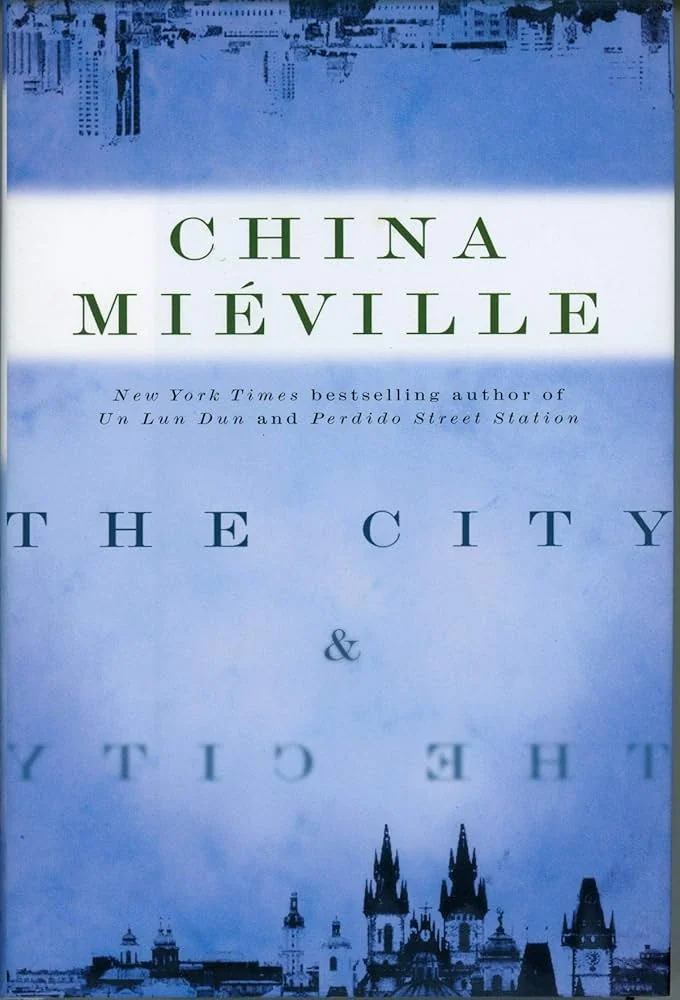
Chapter One
Inspector Tyador Borlú arrives at a crime scene in Pocost Village, a run-down estate area in Besźel, where a young woman's body has been discovered by four teenagers who were there to use drugs. The body was found partially hidden under a mattress, with the victim nearly naked except for stockings and one high heel. The scene is managed carefully by police, though two officers, Shushkil and Briamiv, compromised some evidence by moving the mattress before proper documentation.
The examination of the body reveals a young woman with clean brown hair in pigtails, heavy but natural-toned makeup, and significant trauma including chest wounds and a distinctive cut along her face. While Detective Naustin suggests she was likely a sex worker killed by a client, Officer Lizbyet Corwi points out inconsistencies with this theory, noting the victim's well-maintained hair and conservative makeup choices that differ from typical street workers in the area. The pathologist, Stepen Shukman, estimates the time of death at around twelve hours prior and confirms she was killed elsewhere.
Borlú assigns Corwi to investigate further, impressed by her attention to detail and previous work. He manages the crime scene, dealing with the press who have begun to gather, and experiences a strange moment where he sees an elderly woman who he realizes he 'should not have seen,' causing him to quickly look away. This occurs in a peculiar way that suggests something unusual about the nature of the city and its surroundings, though the exact meaning remains unclear.
Key Events
- Discovery of a murdered young woman's body
- Initial examination of crime scene and victim
- Assignment of Lizbyet Corwi to the case
- Questioning of teenage witnesses
- Strange incident with Borlú seeing a woman he 'should not have seen'
Characters Introduced
- Inspector Tyador Borlú
- Lizbyet Corwi
- Bardo Naustin
- Stepen Shukman
Themes
- Urban decay and social marginalization
- Forensic investigation and evidence analysis
- Class distinctions in victim profiling
- Forbidden perception and spatial boundaries
- Professional intuition versus assumptions
Chapter Two
Following the discovery of the murdered woman's body, Inspector Borlú continues his investigation by exploring the area around Pocost Village and GunterStrász. He discusses with Corwi whether the murder could involve a 'breach,' though they conclude it's unlikely given the location. The investigation reveals that witnesses saw a grey van in the area on the night of the murder, speeding away suspiciously.
While managing several other cases, including the murder of Avid Avid and an elderly man named Styelim, Borlú receives updates about the questioning of the teenage witnesses. Detective Naustin's aggressive interrogation tactics with one of the teens draws criticism, though the witnesses' stories consistently describe the van's appearance and movements. Commissar Gadlem grants Borlú leeway to pursue the case, despite its seemingly routine nature.
Borlú and Corwi conduct a late-night canvass of the area, showing the victim's photograph to local sex workers and street-level criminals. Despite their efforts, no one recognizes the woman, leading Borlú to decide to distribute posters throughout the city's divisions. The following day, Shukman's forensic examination reveals crucial details: the victim was 24-25 years old, killed by four puncture wounds to the chest after being struck in the head. The body showed unusual rust marks and strange puncture wounds on the scalp, with evidence of being dragged postmortem.
Key Events
- Investigation of the van sighting by teenage witnesses
- Commissar Gadlem authorizes continued investigation
- Nighttime canvass of the area with victim's photograph
- Decision to distribute identification posters citywide
- Forensic examination reveals detailed cause of death and unusual rust marks
Characters Introduced
- Commissar Gadlem
- Shenvoi
- Ramira Yaszek
- Sergev
- Sayra
Themes
- Urban division and boundaries
- Police procedure and investigation methods
- Social and ethnic tensions in the city
- Bureaucratic politics and resource allocation
- Cultural coexistence and segregation
Chapter Three
The investigation into the murdered woman continues as identification posters are distributed throughout Besźel, including near Borlú's own apartment on VulkovStrász. The area where Borlú lives is described as heavily crosshatched between cities, requiring careful navigation to avoid seeing things that should not be seen, including trains that pass close to his window but belong to the other city.
A significant breakthrough occurs when police locate the van suspected of being involved in the murder. Found abandoned between buildings, the vehicle contains various pieces of junk and debris covered in rust, which matches the rust marks found on the victim's body. Blood matching the victim's type is discovered in the van, and forensics confirms it belongs to their Jane Doe (referred to as Fulana).
The van is traced to Mikyael Khurusch, a man with previous convictions including assault and soliciting prostitutes. When brought in for questioning, Khurusch claims the van was stolen three days prior, though he never reported the theft. He provides an alibi for the night of the murder, stating he was at a Gamblers Anonymous meeting in Vyevus, which is partially corroborated by witnesses. Despite finding Khurusch's DNA on the victim in the form of arm hairs, the evidence proves inconclusive due to his regular use of the van. The investigation is left with more questions than answers, particularly regarding the mysterious collection of rubbish found in the van with the victim.
Key Events
- Distribution of victim identification posters throughout Besźel
- Discovery of the suspected murder van
- Identification of van owner Mikyael Khurusch
- Confirmation of victim's blood in the van
- Khurusch's alibi partially verified by GA meeting attendees
- Discovery of inconclusive DNA evidence linking Khurusch to victim
Characters Introduced
- Mikyael Khurusch
- Ljela Kitsov
- Zyet (Bean)
Themes
- Urban division and crosshatching between cities
- Inconclusive forensic evidence and investigative dead ends
- The unreliability of alibis and witness testimony
- The significance of unreported crimes
Chapter Four
Several false leads regarding the murdered woman's identity, including tips about an office assistant and a prostitute named Rosyn 'The Pout,' prove fruitless until Inspector Borlú receives a crucial anonymous phone call. The caller, speaking with a foreign accent, reveals he knew the victim from Ul Qoma, identifying her as 'Marya,' a politically active foreigner involved in underground movements. Most significantly, the caller admits to recognizing her from identification posters distributed throughout Besźel - a confession that reveals a serious breach of the cities' separation protocols, as it means someone in Ul Qoma was able to see materials from Besźel.
This information presents Borlú with a profound dilemma. While he now has a potential lead on the victim's identity and political background, acting on information obtained through breach violations would make him complicit in breaking the fundamental laws governing the separation between the cities. Despite the legal and ethical implications, Borlú decides the investigation must continue, even if it means transgressing deeply ingrained protocols.
Unable to sleep and troubled by his decision, Borlú spends the night drinking wine and making notes. He leaves Corwi a carefully worded message to investigate unificationist groups while deliberately obscuring his true motivations for this direction. He also contacts Taskin Cerush in administration to inquire about procedures for referring cases to the Oversight Committee and Breach. The chapter concludes with Borlú's own minor transgression - deliberately looking at forbidden Ul Qoma from his window, watching its trains and people, a symbolic act that foreshadows the larger violations to come.
Key Events
- Anonymous phone call reveals victim's name as Marya and her connection to Ul Qoma
- Borlú learns of victim's involvement in underground political movements
- Borlú decides to pursue the investigation despite breach implications
- Borlú leaves misleading instructions for Corwi to investigate unificationist groups
- Borlú contacts administration about Oversight Committee procedures
Characters Introduced
- Taskin Cerush
- DJ Radic
- Coirsa Yakov
Themes
- Cross-border information as forbidden knowledge
- The corrupting necessity of breaking taboos for justice
- Anonymous testimony and untraceable sources
- Administrative protocols for handling breach violations
- Symbolic transgression as psychological preparation
Chapter Five
A detailed exploration of the linguistic and historical differences between Besźel and Ul Qoma reveals that despite their apparent distinctions, the languages share common ancestry. Following Corwi's lead, Borlú visits a unificationist headquarters at 68 BudapestStrász, where they meet Pall Drodin, who provides crucial information about the victim's identity and activities from three years ago.
Drodin reveals that the victim went by the name Byela Mar (a punning pseudonym meaning 'nothing worth noting') and had spent several weeks researching in the unificationist library. She was particularly interested in Orciny, a mythical third city supposedly existing in the disputed zones between Besźel and Ul Qoma. Her obsession with these folkloric elements and dangerous questions eventually led to her being asked to leave. According to Drodin, she had planned to go to Ul Qoma officially.
Following the meeting, Borlú takes Corwi to lunch in Besźel's Ul Qomatown, where they discuss the implications of their discoveries. They conclude that the case likely involves breach - either in the victim's return to Besźel or in her murder. Borlú begins the process of referring the case to the Oversight Committee through Taskin Cerush, though he learns the process may take longer than expected due to political complications. The chapter concludes with Corwi obtaining the victim's true identity and file from Ul Qoma, confirming their suspicions about her movements between the cities.
Key Events
- Meeting with Pall Drodin at unificationist headquarters
- Discovery of victim's alias 'Byela Mar' and her research into Orciny
- Revelation that victim had planned to go to Ul Qoma officially
- Discussion about referring case to Breach via Oversight Committee
- Corwi obtains victim's true identity from Ul Qoma
Characters Introduced
- Pall Drodin
- Ya Ilsa
Themes
- Political tensions between cities
- Folklore and urban mythology
- Bureaucratic obstacles to justice
- The complexities of cross-border investigations
- Historical revisionism and cultural identity
Chapter Six
Inspector Borlú presents his case about Mahalia Geary's murder to the Oversight Committee at Copula Hall, a unique building that exists in both Besźel and Ul Qoma. The committee consists of forty-two members, twenty-one from each city, including notable Besź politicians like Shura Katrinya, Mikhel Buric, Major Syedr, and Nyisemu. Borlú explains that Mahalia was a 24-year-old American archaeology PhD student who had been living in Ul Qoma for over two years, working at the Bol Ye'an dig site.
The presentation reveals more details about Mahalia's history, including her previous controversial visit to Besźel three years ago for an academic conference where she caused a stir with comments about Orciny. Major Syedr challenges Borlú's request to invoke Breach, arguing that there hasn't been sufficient investigation and expressing concern about ceding too much authority to what he calls an 'alien power.' This creates tension among the committee members, though Chairman Nyisemu ultimately supports referring the case to Breach.
The chapter provides crucial insight into how Breach operates within the two cities through Borlú's childhood memory of witnessing Breach respond to a traffic accident. He recalls how Breach agents seemed to materialize from nowhere to contain the situation, demonstrating their extraordinary powers while highlighting the careful balance maintained between the cities and Breach. The chapter concludes with reflections on Copula Hall's unique role as the sanctioned crossing point between the cities, where people can legally travel from one city to the other through careful protocols and checkpoints.
Key Events
- Borlú presents Mahalia Geary case to Oversight Committee
- Major Syedr challenges the invocation of Breach
- Committee indicates they will likely approve transfer to Breach
- Revelation of Mahalia's previous controversial visit to Besźel
- Description of Borlú's first childhood encounter with Breach
Characters Introduced
- Shura Katrinya
- Mikhel Buric
- Isabelle Nancy
- Prime Minister Gayardicz
- Hurian
Themes
- Political tension between cities
- Bureaucracy vs emergency response
- Power dynamics between cities and Breach
- Childhood indoctrination into city separation
- Nationalism and sovereignty
Chapter Seven
Inspector Borlú and Corwi meet Mahalia Geary's grieving parents at Besźel Airport following the Oversight Committee meeting. As untrained visitors granted compassionate entry, the Gearys present a unique challenge - they lack the usual tourist training in distinguishing between the cities and must be constantly monitored to prevent accidental breaching. Borlú and Corwi escort them to view their daughter's body, where they formally identify her amid their profound grief.
During lunch at the Queen Czezille hotel, joined by American embassy representative James Thacker, the Gearys learn more about Breach's involvement in the case. They express frustration at learning they won't be able to participate in or even witness any trial, as Breach operates in complete secrecy. The conversation reveals crucial new information about Mahalia's academic interests - she had been asking questions about Orciny, a mythical third city, and had apparently made enemies among nationalist groups in both cities.
Mr. Geary's emotional outburst brings to light that Mahalia had faced threats from both Besźel's True Citizens and Ul Qoma's nationalist group Qoma First. She had apparently been making some kind of breakthrough progress in her research shortly before her death, which had angered certain parties. After the Gearys are settled in their hotel under police supervision, Borlú suggests to Corwi that they should continue investigating, despite the imminent handover to Breach, intrigued by Mahalia's ability to antagonize multiple extremist groups across both cities.
Key Events
- Arrival and meeting with Mahalia's parents at the airport
- Formal identification of Mahalia's body by her parents
- Lunch meeting with James Thacker explaining Breach's role
- Revelation of threats against Mahalia from nationalist groups
- Discovery of Mahalia's recent research breakthrough before her death
Characters Introduced
- James Thacker
- Mr. Geary
- Mrs. Geary
Themes
- Bureaucratic complexity of the two cities
- Parental grief and loss
- Political extremism and nationalism
- Academic research as a source of conflict
- The mysterious nature of Breach
Chapter Eight
Borlú contacts Professor Isabelle Nancy at Bol Ye'an to learn more about Mahalia's academic work. Nancy reveals that contrary to previous assumptions, Mahalia was not studying Orciny but was conducting legitimate archaeological research on pre-Cleavage artifacts. She explains that while Mahalia had once been a 'Bowdenite' - a follower of David Bowden's controversial theories about Orciny - she had abandoned those beliefs to pursue proper archaeological studies. Nancy describes Mahalia's work as technically competent but surprisingly lackluster, given her intelligence and work ethic.
The conversation introduces David Bowden, author of the banned book 'Between the City and the City,' which first popularized modern Orciny theories. Nancy explains that Bowden has since repudiated his earlier work and now lives in Ul Qoma, teaching at Prince of Wales University. She reveals that the archaeological sites they study contain inexplicable combinations of artifacts from different time periods, making them particularly significant for research into the cities' origins.
The chapter takes a dramatic turn when Borlú receives an emergency call from Officer Ceczoria at the hotel - Mr. Geary has breached by accidentally crossing into Ul Qoma while attempting to conduct his own investigation into his daughter's murder. Breach immediately intervenes, rendering Mr. Geary unconscious. At the airport, Mrs. Geary reveals that Mahalia had been receiving threats from various nationalist groups in both cities due to her research, and that she had recently made some kind of breakthrough before her death.
The chapter concludes with the Gearys being deported, Mr. Geary still unconscious from Breach's intervention. As they board their plane, Borlú secretly takes a paper from Mrs. Geary's bag containing an address for True Citizens, the organization Mr. Geary had been attempting to investigate when he breached. This evidence suggests that Mahalia's murder might be connected to political extremists who had opposed her work since her first visit to Besźel years ago.
Key Events
- Professor Nancy reveals the true nature of Mahalia's archaeological research
- Background of David Bowden and the Orciny theory is explained
- Mr. Geary breaches while attempting to investigate his daughter's murder
- Breach intervenes and renders Mr. Geary unconscious
- The Gearys are deported
- Borlú steals evidence about True Citizens from Mrs. Geary's bag
Characters Introduced
- Agim Ceczoria
Themes
- Academic integrity vs conspiracy theories
- Parental grief and desperate actions
- The power and swift justice of Breach
- The intersection of political extremism and academic research
- The consequences of violating city boundaries
Chapter Nine
Despite knowing that Breach will soon take over the case, Borlú and Corwi visit the True Citizens (TC) headquarters using the address Borlú secretly took from Mrs. Geary. They encounter a group of intimidating TC members, including a bodybuilder, a man with an antique Besź-aristo haircut, and others dressed in paramilitary gear. When initially confronted, the TC members attempt to block their entry, displaying aggressive and dismissive behavior toward the officers.
The confrontation takes an unexpected turn with the arrival of Harkad Gosz, a high-end barrister representing the True Citizens. Gosz demonstrates suspicious knowledge of both Borlú's identity and details about Mahalia's research that hadn't been publicly released. He presents a politically charged interpretation of Mahalia's work, suggesting she was an enemy of Besźel who used Orciny research as a cover for undermining the city, possibly even working as an Ul Qoman agent. The confrontation reveals that the TC members had advance knowledge of Mahalia's identity before it was officially released to the press.
After leaving the TC headquarters, Borlú and Corwi discuss the implications of the encounter, particularly the concerning connection between the TC and Syedr's National Bloc. While Corwi assumes they're merely waiting for Breach to take over, Borlú's continued investigation suggests he may have reservations about completely surrendering the case, though he acknowledges Breach's involvement is necessary. The chapter ends with them sharing American coffee, a small detail that highlights the cultural tensions present throughout the investigation.
Key Events
- Confrontational visit to True Citizens headquarters
- Unexpected arrival of TC barrister Harkad Gosz
- Revelation that TC had advance knowledge of Mahalia's identity
- Gosz's suggestion that Mahalia was an Ul Qoman agent
- Discovery of possible connection between TC and Major Syedr
Characters Introduced
- Harkad Gosz
- Caczos
Themes
- Political corruption and influence
- Nationalism versus unification
- Information control and surveillance
- Power dynamics between law enforcement and political groups
- Conspiracy and hidden agendas
Chapter Ten
Summoned to Commissar Gadlem's office following the True Citizens confrontation, Borlú receives shocking news: the Oversight Committee has refused to invoke Breach for the Mahalia Geary case. The committee presents surveillance footage showing Khurusch's van legally passing through Copula Hall's checkpoints between Besźel and Ul Qoma on the night of the murder, proving that while crimes were committed, no technical breach occurred. This revelation fundamentally changes the nature of the investigation, as without Breach's involvement, the case must proceed through normal channels.
The implications of this development are far-reaching, as Gadlem explains the complex legal distinctions between actual breach and other cross-border crimes. While smuggling and murder remain illegal, the use of official border crossings means Breach cannot be invoked, regardless of the criminal intent. The timing of this evidence's emergence, shortly after Borlú's confrontation with the True Citizens and Major Syedr's angry call to Gadlem, suggests political manipulation to keep Breach out of the investigation.
As a result of these developments, Borlú is assigned to continue the investigation, but must do so by traveling to Ul Qoma as a guest consultant to their militsya's Murder Team. Despite his protests and request to bring Corwi along, Gadlem insists he must go alone. Before his departure, Borlú obtains a copy of the controversial book 'Between the City and the City' and makes arrangements with Corwi to conduct some final unauthorized investigation into the van's border crossing, suggesting there may be more to uncover about how the vehicle managed its legal passage between cities.
Key Events
- Oversight Committee refuses to invoke Breach
- Discovery of surveillance footage showing legal border crossing
- Borlú assigned to continue investigation in Ul Qoma
- Major Syedr's threatening call to Gadlem about True Citizens confrontation
- Borlú obtains illegal copy of 'Between the City and the City'
- Borlú and Corwi plan unauthorized investigation of van's border crossing
Themes
- Political manipulation of justice systems
- Bureaucratic technicalities versus actual justice
- Complex nature of cross-border jurisdiction
- Tension between official and unofficial investigation methods
- The role of legal boundaries in defining crime
Chapter Eleven
Borlú and Corwi confront Khurusch about his AQD (Any Qualified Driver) visa that would have allowed the vehicle to pass through Copula Hall. Under pressure, Khurusch admits that he had left his travel papers in the van when it was stolen - a serious violation of border regulations. His previous history reveals a pattern of careless handling of travel documents, including a past incident where he had to bribe officials to keep his pass after leaving it in his vehicle.
Borlú's suspicions lead him to assign Corwi to investigate all van thefts reported on the night of Mahalia's murder. Their late-night analysis reveals a disturbing pattern: out of thirteen stolen vans that night, three had Ul Qoma passes, and all three owners had previous warnings for improper storage of travel documents. Two of the vans were found quickly dumped after the thieves discovered their passes were not present, while Khurusch's van - the last targeted - still had its papers inside.
The investigation uncovers evidence of what appears to be an inside job by someone with access to border control records, who systematically targeted vehicles likely to contain travel papers. This revelation leaves Borlú and Corwi deeply unsettled, uncertain whom they can trust within the police force or border authorities. With Borlú's imminent departure for Ul Qoma and the possibility that powerful forces are involved, they agree to maintain their investigation quietly, communicating only with each other. The chapter ends with both investigators acknowledging the dangerous territory they've entered and their isolation in pursuing the truth about Mahalia's murder.
Key Events
- Confrontation with Khurusch about his missing AQD visa
- Discovery of systematic van theft pattern targeting vehicles with border passes
- Revelation of likely inside job involving border control records
- Decision by Borlú and Corwi to investigate secretly
- Confirmation that someone deliberately sought border crossing papers
Themes
- Institutional corruption
- Systematic exploitation of border documentation
- Police partnership under pressure
- Bureaucratic manipulation
- Cross-border criminal coordination
Chapter Twelve
Inspector Borlú travels to Ul Qoma through Copula Hall, accompanied by Constable Dyegesztan. The complex border crossing process reveals the unique nature of the checkpoint between the two cities, where officials can legally see across to their counterparts. Upon crossing, Borlú is met by Senior Detective Qussim Dhatt, an Ul Qoman officer who immediately establishes his authority over the investigation.
The chapter provides detailed insight into Borlú's preparation for entering Ul Qoma, including an accelerated orientation course with advanced computer simulations designed to help citizens navigate the complex task of 'unseeing' their home city while 'seeing' Ul Qoma. The training highlights the sophisticated modern approaches to managing the psychological challenges of crossing between the cities, a stark contrast to the older, more ethnically-focused methods of the past.
As Dhatt drives Borlú through Ul Qoma, the stark differences between the two cities become apparent. Ul Qoma appears more prosperous, with modern financial districts alongside traditional architecture, though recent UNESCO involvement has led to some preservation efforts. The foreign environment forces Borlú to actively unsee familiar Besźel locations while adjusting to Ul Qoman streets and culture.
The chapter concludes with a significant development when Dhatt reveals that Mahalia's best friend, Yolanda Rodriguez, has disappeared. This news comes from an anonymous student caller, suggesting a possible connection between the two incidents and adding a new urgency to the investigation. Dhatt's initial reluctance to characterize it as a disappearance, and Borlú's insistence on calling it what it is, establishes their different approaches to the case.
Key Events
- Borlú crosses into Ul Qoma through Copula Hall
- Introduction to Senior Detective Dhatt and establishment of investigation parameters
- Description of Borlú's accelerated orientation process for entering Ul Qoma
- First glimpse of Ul Qoma's modern cityscape and culture
- Discovery that Yolanda Rodriguez has disappeared
Characters Introduced
- Constable Dyegesztan
- Senior Detective Qussim Dhatt
- Colonel Muasi
Themes
- Cultural and physical boundaries between cities
- Psychological complexity of unseeing/seeing
- Power dynamics between cooperating police forces
- Modernization versus tradition
- The nature of disappearance and perception
Chapter Thirteen
Following the Oversight Committee's decision, Borlú settles into his role in Ul Qoma, making a late-night reconnaissance visit to Bol Ye'an archaeological site despite being warned against such unauthorized activities. During his nighttime exploration, he encounters Ul Qoman police officers who, though initially suspicious, escort him back to his hotel after confirming his identity. This unauthorized excursion draws mild criticism from Dhatt the next morning, highlighting the delicate nature of Borlú's position as a foreign investigator.
The investigation at Bol Ye'an reveals a complex web of academic relationships and tensions. Professor Rochambeaux claims limited knowledge of Mahalia despite evidence suggesting otherwise, while David Bowden appears unexpectedly, revealing himself as Yolanda Rodriguez's supervisor and expressing shock at her disappearance. Isabelle Nancy provides crucial context about Mahalia's past controversies, particularly her earlier interest in Orciny and the subsequent embarrassment at an academic conference in Besźel, while also confirming that Mahalia and Yolanda were best friends.
Interviews with students yield new insights into both Mahalia and Yolanda's characters and activities. The students reveal that while Mahalia had apparently moved away from her Orciny obsession, Yolanda had become increasingly involved in it. Notably, none of the students mention Breach as a possible factor in the disappearances, an unusual omission for foreigners in the cities. The chapter concludes with a curious interaction with Aikam Tsueh, a security guard who shows particular interest in whether the killer could have escaped the city, raising Borlú's suspicions.
Key Events
- Borlú's unauthorized nighttime visit to Bol Ye'an
- Meeting with David Bowden and discovery of his connection to Yolanda
- Interviews with archaeology students revealing Yolanda's growing interest in Orciny
- Confirmation that Mahalia and Yolanda were best friends
- Suspicious interaction with security guard Aikam Tsueh
- Discovery that students are notably avoiding mention of Breach
Characters Introduced
- Aikam Tsueh
- Bernard Rochambeaux
- Rebecca Smith-Davis
- Robert
- Thau'ti
- UlHuan
Themes
- Academic politics and rivalries
- The tension between official and unofficial investigation methods
- The relationship between archaeological research and political controversy
- The conspicuous absence of Breach in foreigners' discussions
- The connection between academic research and dangerous knowledge
Chapter Fourteen
At a teahouse meeting, Borlú and Dhatt's professional relationship begins to thaw despite Dhatt's lingering hostility as they discuss the investigation's progress. The conversation reveals significant cultural differences between the cities, with Ul Qoma appearing more diverse and prosperous than Besźel, though still maintaining strict immigration controls. During their discussion, Dhatt demonstrates a pragmatic approach to the investigation, suggesting that someone with access to bureaucratic records likely helped reveal the van's border crossing to prevent Breach involvement.
The conversation takes a dramatic turn when Borlú reveals that his initial lead about Mahalia's identity came from an anonymous phone call from Ul Qoma - an admission of breach that makes Dhatt both excited and concerned. This revelation prompts Dhatt to drive them immediately to a known unificationist hangout, despite such groups being technically illegal in Ul Qoma. The subsequent raid reveals the complex political situation in Ul Qoma, where President Ul Mak's reforms have created a tentative tolerance for previously banned political groups.
At the unificationist hideout, Dhatt employs aggressive interrogation tactics, forcing the five occupants to speak so Borlú can identify the voice from the phone call. Despite the violent methods, including physically assaulting one of the members, Borlú is unable or unwilling to identify the caller. The chapter ends with tension between the investigators, as Dhatt becomes frustrated with Borlú's reluctance to pursue what he sees as their best lead. Their interaction reveals fundamental differences in their approaches to law enforcement and their attitudes toward breach, with Borlú maintaining a more cautious stance while Dhatt suggests a more flexible interpretation of the rules.
Key Events
- Borlú and Dhatt's strategic meeting at the teahouse
- Borlú's revelation about the anonymous phone call from Ul Qoma
- Raid on the unificationist hideout
- Dhatt's violent interrogation of unificationist members
- Borlú's refusal to identify the caller despite pressure from Dhatt
Characters Introduced
- Dahar Jaris
- President Ul Mak
- Yohan
- President Umbir
Themes
- Cross-cultural law enforcement tensions
- Political reform and tolerance in authoritarian states
- Ethical boundaries in police interrogation
- Anonymous informants and breach protocol
- Professional duty versus moral conscience
Chapter Fifteen
Borlú and Dhatt visit David Bowden's apartment after learning that surveillance cameras have failed to track Khurusch's van after it passed through Copula Hall. Bowden's second-floor apartment reveals much about both the man and Ul Qoma's history - filled with artifacts from both cities and their precursor, the space reflects the complex relationship between foreign academics and the city's authorities, who historically housed them together for easier surveillance.
The conversation with Bowden yields crucial information about his relationship with Mahalia Geary and the academic politics surrounding Orciny research. Bowden explains his fall from academic grace following the publication of 'Between the City and the City,' which led to his current marginal position as a 'Corresponding Lecturer' at Prince of Wales University. He reveals that Mahalia had initially approached him as an admirer of his controversial work, even attempting to smuggle his banned book into Besźel's University Library, but he rejected her advances and refused to supervise her studies.
The investigation takes a darker turn when Bowden reveals that Yolanda had recently begun asking questions about Orciny and dissensi (disputed zones between the cities), despite knowing his opposition to such theories. When confronted about a recent break-in at his apartment where nothing was stolen, Bowden becomes visibly alarmed at the investigators' suggestion that someone might be targeting people investigating Orciny. The chapter ends with the implication that both Mahalia and Yolanda's research may have attracted dangerous attention, regardless of whether Orciny itself exists.
Key Events
- Visit to David Bowden's artifact-filled apartment
- Revelation about Mahalia's attempted smuggling of Bowden's banned book
- Discovery that Yolanda had recently shown interest in Orciny research
- Information about Bowden's previous burglary where nothing was taken
- Discussion of dissensi (disputed zones) between the cities
- Suggestion that researchers of Orciny might be targeted
Themes
- Academic exile and professional marginalization
- Surveillance architecture in divided cities
- The magnetism of forbidden scholarship
- Cross-border academic relationships and their risks
- The weaponization of theoretical knowledge
Chapter Sixteen
A late-night phone call from Dahar Jaris provides Borlú with a crucial breakthrough in the investigation. The unificationist who had originally identified Mahalia in Besźel reveals that she had been using unificationist resources not for their cause, but to research Orciny. According to Jaris, Mahalia had claimed to have actually found Orciny - hidden places that each city believes belongs to the other - and was working with them in some capacity before becoming frightened. She had begun carrying a knife for protection, suggesting she had discovered something dangerous about Orciny that ultimately led to her death.
While processing this revelation, Borlú makes a risky call to Mrs. Geary to inquire about Mahalia's personal life and potential relationships in Ul Qoma. Mrs. Geary confirms that while someone from political circles had shown interest in Mahalia, her daughter hadn't reciprocated due to it being 'too complicated.' She also reveals that Mr. Geary's breach had been part of a systematic plan to investigate all nationalist groups, starting with the Besź ones simply because they were easier to locate in the city where they were staying.
During this period of investigation, Borlú also examines Mahalia's academic work, finding a stark contrast between her sedate thesis chapters and her passionate margin notes in textbooks. He also reads Bowden's controversial book 'Between the City and the City,' finding it simultaneously ingenious in its archaeological analysis and paranoid in its conclusions about Orciny. The chapter ends abruptly with an early morning call from Dhatt announcing that someone has sent a bomb, suggesting an escalation in the case's violence.
Key Events
- Dahar Jaris reveals Mahalia had claimed to find Orciny
- Jaris confesses Mahalia was working with Orciny before her death
- Phone call with Mrs. Geary reveals details about Mahalia's relationships
- Borlú examines Mahalia's academic work and Bowden's book
- News of a bomb being sent
Themes
- Mahalia's dangerous discovery of Orciny's reality
- Academic research as a cover for forbidden investigations
- The intersection of political movements and personal safety
- The duality of scholarly brilliance and paranoid obsession
- Violence as a response to unwanted revelations
Chapter Seventeen
Borlú and Dhatt investigate a bomb discovered at Bol Ye'an's mail room. The device, expertly crafted and directed to cause maximum damage to its intended target, was intercepted by Aikam Tsueh before it could reach its recipient, David Bowden. The bomb, sent from Besźel with an Illitan inscription reading 'The heart of a wolf,' represents a clear assassination attempt rather than a mere threat.
The investigation reveals that this isn't the first time Bowden has been targeted, as Professor Nancy discloses that he received similar threats years ago after his book's publication, with nationalist groups from both cities opposing his work. The timing of the bomb, following Mahalia's murder and Yolanda's disappearance, suggests a pattern targeting those involved with Orciny research. Dhatt and Borlú debate whether Qoma First might be responsible, though Dhatt insists that unlike Besźel's nationalist groups, Ul Qoma's ultranationalists maintain no visible presence or organization.
A crucial revelation comes from Kai Buidze, who admits that foreign students regularly commit minor breaches at the archaeological site, explaining why none mentioned Breach during previous interviews. The crosshatched nature of Bol Ye'an makes it impossible to prevent students from occasionally seeing across borders or even collecting souvenirs from the other city, though they typically avoid flagrant violations. The chapter concludes with the alarming news that Bowden has disappeared from his apartment, despite knowing about the bomb and that officers were coming to speak with him.
Key Events
- Discovery of a sophisticated bomb intended for David Bowden
- Revelation that Bowden has been targeted before by nationalist groups
- Admission that foreign students regularly commit minor breaches at Bol Ye'an
- Discovery that David Bowden has disappeared
- Debate over potential involvement of Qoma First nationalist group
Characters Introduced
- Tairo
- Kai Buidze
Themes
- The complexity of maintaining borders in crosshatched areas
- Rising violence against those investigating Orciny
- The different nature of nationalist movements in Besźel versus Ul Qoma
- The practical limitations of enforcing total separation between cities
Chapter Eighteen
Jaris's revelations about Orciny force Dhatt and Borlú to reconcile their different investigative approaches. After an initial confrontation about Borlú withholding information about Jaris's phone call, they reach an understanding at a local police bar. This leads to Dhatt inviting Borlú to dinner at his home, where Borlú meets Dhatt's younger wife Yallya, providing a moment of personal connection amid the investigation.
After dinner, Borlú takes a solitary walk through Ul Qoma, during which he passes near his own house in Besźel, leading to an unsettling encounter with mysterious figures whose city affiliation seems deliberately unclear. The experience leaves him deeply disturbed, particularly when an old woman and others appear to exist in an impossible space between the cities. This encounter pushes him to formulate a plan involving surveillance of Bol Ye'an.
The next morning, Borlú executes his plan by disguising himself in Ul Qoman clothes and hiring a local child to deliver a message to Aikam Tsueh at the dig site. He follows Tsueh through the city to a run-down housing project, where he confronts both Tsueh and the missing Yolanda Rodriguez. The chapter ends with Borlú assuring a terrified Yolanda that he means to help her, suggesting she's been hiding from threatening forces connected to the investigation.
Key Events
- Dhatt and Borlú reconcile their investigative differences over dinner
- Borlú encounters mysterious figures of unclear city affiliation during his walk
- Borlú disguises himself in Ul Qoman clothing and surveils Bol Ye'an
- Borlú tracks Aikam Tsueh to a housing project
- Discovery of hiding Yolanda Rodriguez
- Confirmation that Yolanda is being pursued by dangerous parties
Characters Introduced
- Yallya
Themes
- Trust and cooperation between cities
- The ambiguous nature of city boundaries
- Hidden threats and conspiracies
- Personal connections amid political tensions
- The blurring of official and unofficial investigations
Chapter Nineteen
Borlú's surveillance of Bol Ye'an leads him to confront Aikam Tsueh and discover Yolanda Rodriguez hiding in an abandoned apartment. After a brief physical altercation with Aikam, Borlú manages to convince them he means to help, establishing an uneasy trust by speaking in both English and Illitan. The hideout, located in a run-down tower block with whitewashed windows, contains minimal furnishings and Yolanda's possessions packed in boxes, suggesting a temporary arrangement maintained by Aikam's occasional visits.
Yolanda reveals crucial information about Mahalia's involvement with Orciny, explaining that Mahalia had been recruited by them after her controversial conference appearance in Besźel. According to Yolanda, Mahalia received letters in ancient script from Orciny agents, who tasked her with delivering messages and information through designated locations in dissensi. The archaeological artifacts they had been excavating were, Mahalia discovered, not lost items but deliberately placed possessions of Orciny, who had been present before the split between Ul Qoma and Besźel.
In the final revelations, Yolanda explains that Mahalia had become increasingly frightened in her last weeks, believing she had discovered something dangerous that had angered Orciny. She suggests that David Bowden's public rejection of Orciny was merely a facade, and that both he and Mahalia were targeted for knowing too much. Most significantly, Yolanda proposes a shocking theory: that Orciny and Breach might be the same entity, or that invoking Breach might actually be surrendering power to Orciny. She refuses Borlú's suggestion to deliberately breach as a means of escape, fearing that seeking Breach's protection might actually deliver her to her pursuers.
Key Events
- Borlú confronts and subdues Aikam Tsueh
- Discovery of Yolanda Rodriguez in hiding
- Revelation of Mahalia's recruitment by Orciny
- Disclosure of Orciny's claim to archaeological artifacts
- Yolanda's theory that Orciny and Breach might be the same entity
- Yolanda's refusal to deliberately breach for protection
Themes
- Orciny's ancient claim to archaeological legitimacy
- The potential identity between opposing powers (Orciny/Breach)
- Archaeological evidence as planted political messaging
- The manipulation of academic research for hidden agendas
- Paranoia about seeking protection from potentially compromised authorities
Chapter Twenty
Borlú confronts Yolanda and Aikam in their hideout, where despite Yolanda's protests and fears about both cities being controlled by Orciny, he promises to help her escape to Besźel, where he believes he can better protect her. After ensuring they have enough supplies to stay hidden for a few more days, he leaves through an abandoned apartment to avoid detection.
Borlú then seeks out Dhatt, meeting him at Kaing Shé Station after carefully watching to ensure he came alone. Despite Dhatt's initial anger at being kept in the dark, Borlú convinces him of the gravity of the situation by sharing Yolanda's fears and the discovery of a warning note in Precursor script left at Bowden's now-empty apartment. The two investigators, both increasingly uncertain about whom to trust, begin to consider the possibility that something sinister - perhaps even Orciny itself - might be operating within the power structures of both cities.
Working together in secret, Borlú and Dhatt devise a plan to smuggle Yolanda out of Ul Qoma and into Besźel. They spend the night moving through crosshatched areas, eventually ending up at an underground club where Borlú contacts Corwi. Through this call, they learn that Bowden has been attempting to reach Borlú through Corwi's desk, using a disguised voice and refusing to leave his name. Recognizing Bowden's fear and desperation, Borlú arranges for him to contact them through Yallya's phone number, seeing it as their best chance to help both Bowden and Yolanda escape whatever forces are pursuing them.
Key Events
- Borlú promises to help Yolanda escape to Besźel
- Meeting with Dhatt at Kaing Shé Station
- Discovery of Precursor warning note in Bowden's empty apartment
- Development of plan to smuggle Yolanda out of Ul Qoma
- Learning of Bowden's attempts to contact Borlú through Corwi
- Arrangement of secret communication channel through Yallya's phone
Characters Introduced
- Ute Lemper look-alike
Themes
- Trust and betrayal in bureaucratic systems
- Paranoia and surveillance
- The hidden power structures within cities
- The complexity of cross-border operations
- The blurring of official and unofficial actions
Chapter Twenty-one
Borlú and Dhatt meticulously plan an escape operation to get Yolanda safely to Besźel. They arrange for police uniforms and documentation while maintaining contact with Bowden through Yallya's borrowed phone. Bowden makes several cryptic calls, clearly terrified but unwilling to reveal his location, eventually agreeing to meet them at Copula Hall at seven in the evening if he decides to attempt the crossing.
Borlú spends his final day in Ul Qoma carefully covering his tracks, taking an extended taxi tour of the city to detect any surveillance. The Kurdish taxi driver's pride in Ul Qoma and his description of learning to 'unsee' provides a poignant backdrop to Borlú's mounting tension. When Borlú finally reaches Yolanda, he finds her significantly deteriorated, looking thin and startled. Despite Aikam's protests, they leave him behind and meet Dhatt, who provides them with police uniforms to aid their crossing.
The escape attempt at Copula Hall turns tragic when they spot Bowden in the crowd, acting suspiciously. As Borlú approaches him, shots ring out, striking both Dhatt and Yolanda. The chapter ends in chaos as people scatter from a distant figure with a rifle at the far end of the hall, suggesting a coordinated attack on the group attempting to cross the border.
Key Events
- Planning of Yolanda's escape operation
- Multiple cryptic phone calls from Bowden
- Borlú's final day reconnaissance of Ul Qoma
- Collection of Yolanda from her hideout
- Attempted border crossing at Copula Hall
- Shooting of Dhatt and Yolanda
- Appearance of mysterious rifleman
Characters Introduced
- Kurdish taxi driver
Themes
- Surveillance and counter-surveillance tactics
- The psychology of 'unseeing' and urban perception
- Coordinated violence at border crossings
- Deterioration under hiding and stress
- Failed rescue operations
Chapter Twenty-two
Chaos erupts at Copula Hall as Borlú pushes Bowden down and disarms him, but the fatal shot has already been fired. Dhatt reports being wounded while Yolanda lies dead from a precise head shot. The shooter - revealed to be Yorjavic - begins his calculated escape through the panicked crowd, deliberately avoiding any breach of the cities' boundaries as he moves through the confusion.
Unable to pursue directly through Copula Hall's checkpoints, Borlú commandeers Dhatt's police car and races around the building's perimeter in Ul Qoma, maintaining proper observation protocols while tracking Yorjavic's movements in Besźel. From atop the police car, Borlú spots the killer and recognizes him, though he struggles to place exactly where they've encountered each other before. The pursuit begins in earnest, with Borlú in Ul Qoma chasing Yorjavic through Besźel, each man carefully maintaining his presence in his respective city.
The chase leads toward the Old Towns, where the cities are most closely crosshatched. As Yorjavic approaches a total street - one existing only in Besźel - he pauses to give Borlú a triumphant smile, knowing he's about to escape into territory where no one in Ul Qoma can follow. In that critical moment, Borlú makes his fateful decision and shoots Yorjavic, deliberately breaching the separation between cities. Breach agents immediately materialize from the crowd, taking Borlú into custody as his consciousness fades to their distinctive pronouncement of 'Breach.'
Key Events
- Shooting at Copula Hall results in Yolanda's death and Dhatt's injury
- Borlú pursues the killer while maintaining strict city separation protocols
- The killer attempts to escape into Besźel-only territory
- Borlú deliberately breaches by shooting across cities
- Breach appears and takes Borlú into custody
Themes
- The consequences of deliberately breaking societal boundaries
- The tension between justice and law
- The physical and psychological complexity of divided cities
- The power and mystery of Breach
- The relationship between choice and duty
Chapter Twenty-three
Under Breach custody after his deliberate breach in shooting Yorjavic, Borlú awakens in a stark grey room. His initial interrogation reveals that while Yorjavic killed Yolanda Rodriguez and severely wounded Dhatt at Copula Hall, he technically never breached since he shot across borders legally. Borlú, however, committed a clear breach by shooting Yorjavic from Ul Qoma into Besźel, placing him under Breach's complete authority.
During his extended interrogation, Breach shows particular interest in the Orciny connection to the murders. They reveal that Yorjavic was a former military sniper working under unknown instructions, not directly for the True Citizens. Breach shows Borlú recorded interrogations of Bowden, who vehemently denies Orciny's existence despite being in hiding, and Dhatt, who despite his skepticism about Orciny acknowledges that unexplained forces are at work. Aikam is also shown, simply weeping through his questioning.
The interrogation takes a crucial turn when Borlú realizes that Breach itself is investigating Orciny, suggesting the possibility of a parasitic city existing in the spaces between Besźel and Ul Qoma that even Breach cannot fully control. This revelation leads to a tentative collaboration between Borlú and Breach, as they share a common goal in uncovering the truth behind Mahalia and Yolanda's murders. The chapter ends with Borlú claiming he knows where to find Mahalia's crucial notes that supposedly contain the truth she discovered before her death.
Key Events
- Borlú wakes up in Breach custody
- Revelation that Yorjavic was a military sniper working under unknown orders
- Viewing of recorded interrogations of Bowden, Dhatt, and Aikam
- Discovery that Breach is actively investigating Orciny
- Borlú claims to know location of Mahalia's revealing notes
- Confirmation of Yolanda Rodriguez's death and Dhatt's permanent injury
Themes
- Power dynamics between law enforcement and higher authorities
- The nature of justice and punishment
- The blurred lines between reality and myth
- Institutional fear of losing control
- The complexity of truth in divided spaces
Chapter Twenty-four
Borlú spends the night reviewing interrogation footage of various witnesses in his stark Breach holding room. The recordings reveal that while Corwi remained defiantly loyal despite threats to her job, most of the True Citizens denied knowledge of Yorjavic's actions. One nationalist's testimony suggests that Yorjavic might have been working for a more hidden organization rather than solely for the True Citizens, leading Breach to acknowledge their own interest in investigating possible Orciny connections.
The next morning, Borlú is escorted from the Breach facility by an agent who introduces himself as Ashil. In a significant development, Borlú experiences the unique perspective of Breach agents as they move freely between both cities, neither unseeing nor seeing but existing in both simultaneously. Ashil demonstrates this by taking Borlú to breakfast across city boundaries, purchasing food in Besźel and drinks in Ul Qoma, helping Borlú adjust to this new way of perceiving both cities at once.
The investigation leads them to the UQ University Library, where Borlú locates Mahalia's annotated copy of 'Between the City and the City.' The book contains years of her detailed notes and marginalia, which Borlú believes holds crucial information about Orciny. The discovery of her extensive annotations, ranging from skeptical rejections to careful cross-references, suggests that Mahalia had developed a deeper understanding of Orciny than anyone else, potentially explaining why she became a target.
Key Events
- Review of interrogation footage reveals Yorjavic may have worked for hidden organization
- Introduction of Ashil as Borlú's Breach handler
- Borlú experiences moving between cities as a Breach agent
- Discovery of Mahalia's annotated copy of 'Between the City and the City'
- Revelation that Breach is actively investigating Orciny connections
Characters Introduced
- Ashil
Themes
- The nature of perception and reality
- The power of knowledge and hidden truths
- The blurring of boundaries between cities
- Institutional power and surveillance
- The relationship between official and unofficial histories
Chapter Twenty-five
Borlú examines Mahalia's annotated copy of 'Between the City and the City' while in Breach custody. Working with Ashil, his Breach handler, he experiences the unique perspective of moving freely between both cities, neither unseeing nor seeing but existing in both simultaneously. During crisis meetings at Breach headquarters, there's growing concern about increasing numbers of small breaches and unusual activities in both cities, suggesting something larger is brewing.
Borlú and Ashil investigate Bol Ye'an archaeological site, where they discover Mahalia had been systematically stealing artifacts from old collections and replacing them with mundane items. Through careful observation of the site's layout and protocols, Borlú deduces Mahalia's method: she would volunteer for lock-up duty, take items from old collections, and deposit them in crosshatched areas where someone from Besźel could retrieve them without technically breaching. This revelation suggests a sophisticated operation using the dig site's unique position between the cities.
The investigation takes a crucial turn when Borlú examines Mahalia's annotations more carefully, discovering that her later notes cite Sherman, Rosen, and Vijnic - authors who argued against the existence of Orciny. This leads to the shocking realization that Mahalia wasn't killed because she discovered Orciny's secrets or even because she realized they were using her; she was killed because she had stopped believing in Orciny's existence altogether. Meanwhile, Breach remains on high alert, sensing an impending crisis as reports of minor breaches increase across both cities.
Key Events
- Borlú experiences moving between cities as a Breach agent
- Discovery of Mahalia's artifact theft system at Bol Ye'an
- Revelation that Mahalia had ceased believing in Orciny before her death
- Increasing reports of minor breaches across both cities
- Discovery of replaced artifacts in archaeological collections
Characters Introduced
- Raina
- Samun
- Byon
Themes
- Disillusionment and loss of faith
- The complexity of truth versus belief
- Systematic exploitation of borders
- Growing social unrest
- Archaeological authenticity versus deception
Chapter Twenty-six
Borlú and Ashil investigate the dates when Mahalia volunteered for lockup duty at Bol Ye'an, cross-referencing them with Chamber of Commerce trade events. Despite Borlú's frustration at being denied contact with Corwi and Dhatt, they discover that these dates coincidentally align with visits from various international companies. Most significantly, they identify that representatives from Sear and Core, particularly their CEO Gorse, were present at every single event corresponding to Mahalia's volunteer shifts.
The investigation reveals a complex corporate conspiracy: rather than nationalist groups being behind Mahalia's death, it appears that Sear and Core had been manipulating events to acquire Precursor artifacts, using the myth of Orciny to control Mahalia. Borlú theorizes that the company, interested in the rumored unusual properties of these artifacts, orchestrated an elaborate scheme to have Mahalia steal and deliver items under the belief she was working with Orciny. This explains both the sophisticated nature of the operation and the involvement of high-level corporate executives at seemingly minor trade events.
The chapter takes a dramatic turn when a crisis erupts in both cities - two buses carrying refugees are deliberately crashed in a crosshatched area, causing widespread breaching as untrained refugees wander between cities. As Breach declares a complete lockdown of both cities, Borlú realizes this chaos is actually a diversion orchestrated by Sear and Core. He deduces that the company, having detected Breach's investigation into their activities through database inquiries, has engineered this crisis to distract Breach while key figures attempt to flee the cities. The chapter ends with Borlú desperately trying to convince Ashil to focus on the Sear and Core building rather than the manufactured unificationist uprising.
Key Events
- Discovery of correlation between Mahalia's lockup duties and Chamber of Commerce events
- Revelation of Sear and Core's involvement in artifact theft scheme
- Orchestrated bus crash causing refugee crisis and widespread breaching
- Declaration of complete Breach lockdown of both cities
- Borlú's realization that the crisis is a corporate-engineered diversion
Characters Introduced
- Gorse
Themes
- Corporate conspiracy versus nationalist conflict
- Manipulation of cultural myths for profit
- The vulnerability of strictly maintained social orders
- The exploitation of civil unrest for personal gain
- The limitations of authority systems in crisis situations
Chapter Twenty-seven
The revelation about Sear and Core's involvement triggers widespread unificationist riots across both cities, creating the chaos that Borlú and Ashil must navigate as they pursue the conspiracy. The manufactured crisis serves as a diversion orchestrated by those attempting to flee, while Breach agents work to contain the widespread breaching occurring throughout the cities. Despite being vastly outnumbered, Breach maintains control through strategic deployments and brutal efficiency, though Ashil reveals they have lost some avatars in the process.
The investigation leads them to Sear and Core's headquarters, where they discover a helicopter preparing for evacuation on the rooftop. There, they confront not only Ian Croft of CorIntech, but also Buric, confirming his role as the mastermind behind the artifact theft operation. Buric attempts to rally the True Citizens guards by painting Breach as anti-Besźel, while Borlú strategically positions himself as a Besź police officer investigating local murders to create doubt among the nationalist guards.
The confrontation turns violent when Buric draws his weapon, leading Ashil to shoot him fatally. The True Citizens respond by shooting Ashil, though his body armor saves his life. While the True Citizens flee and Croft escapes via helicopter, defiantly dismissing Breach's authority by citing international political realities, Borlú begins to question the narrative. The inconsistencies in Buric's involvement suggest a larger conspiracy, particularly regarding the attempts on Bowden's life and the systematic targeting of those investigating Orciny. The chapter ends with an injured Ashil entrusting Borlú with his Breach sigil and keys, suggesting a critical next phase in the investigation.
Key Events
- Unificationist riots erupt across both cities as a planned diversion
- Confrontation at Sear and Core headquarters rooftop
- Revelation of Mikhel Buric's involvement in the conspiracy
- Fatal shooting of Buric and wounding of Ashil
- Escape of Ian Croft via helicopter
- Ashil gives Borlú his Breach sigil and keys
Characters Introduced
- Ian Croft
Themes
- Corporate manipulation of nationalist movements
- The intersection of local law enforcement and international jurisdiction
- Manufactured chaos as political strategy
- The personal cost of institutional loyalty
- Truth versus convenient narratives in conspiracy
Chapter Twenty-eight
With Ashil injured, Borlú takes his Breach sigil, phone, and weapon to continue the pursuit of Bowden. Through coordinated calls with both Dhatt and Corwi, Borlú learns that Bowden has been spotted at Copula Hall, walking in a way that makes it impossible to determine which city he's in. This unprecedented behavior leaves law enforcement from both cities paralyzed, as they cannot risk breaching by engaging someone who might not be in their jurisdiction.
As dawn breaks, Borlú orchestrates a careful pursuit using both Dhatt and Corwi, positioning them in their respective cities while he approaches Bowden directly. The confrontation reveals the full truth behind Mahalia's murder: Bowden had orchestrated the entire Orciny deception, using Buric's resources and Sear and Core's greed to create an elaborate scheme. His primary motivation wasn't profit but a desperate attempt to vindicate his discredited theories about Orciny by manufacturing evidence and manipulating Mahalia.
The final confrontation reveals that Mahalia was killed when she discovered the truth about Bowden's deception, believing she was protecting him from what she thought was someone else's conspiracy. Bowden admits to orchestrating Yolanda's death as well, using her murder to camouflage his own involvement and manipulating Buric's True Citizens. When cornered, Bowden attempts to maintain his precarious position between cities, but Borlú, acting under his temporary Breach authority, finally captures him by pulling him out of both cities and into Breach itself.
Key Events
- Borlú coordinates with Dhatt and Corwi to track Bowden
- Discovery of Bowden's unique method of avoiding capture by walking between cities
- Final confrontation revealing full truth about Mahalia's murder
- Revelation of Bowden's complete orchestration of the Orciny deception
- Borlú's capture of Bowden by pulling him into Breach
- Confirmation that Bowden arranged both Mahalia and Yolanda's murders
Themes
- The power of deliberate ambiguity
- The destructive nature of academic obsession
- The complex relationship between truth and deception
- The boundaries between cities and identities
- Justice across jurisdictional boundaries
Chapter Twenty-nine
Bowden's capture leaves Borlú spending several days with an injured Ashil, learning the ways of Breach. The aftermath of Riot Night affects both cities differently - Ul Qoma responds with increased police presence and a new 'Vigilant Neighbours' campaign, while Besźel retreats into subdued silence. The crisis resulted in thirty-five deaths across both cities, not counting disappeared refugees, and drew increased attention from foreign journalists attempting to interview Breach representatives.
Borlú grapples with the legality of Bowden's detention, noting that he never technically breached. Ashil reveals that Breach will manufacture evidence if necessary, stating 'If we say he breached, he breached.' Meanwhile, Sear and Core maintains its presence in Besźel despite Buric's exposed activities, though rumors circulate about CorIntech being sold. The investigation's loose ends are quietly settled, with Mahalia's body finally returned home for burial.
The chapter culminates in Ashil revealing the truth about Breach - all its members were once citizens of either city who committed breach and were recruited. Ashil explains that Borlú can never return to his former life, as once someone breaches for more than a moment, they can never truly 'unsee' again. Borlú is permitted one final glimpse of his old life, watching Dhatt and Corwi from afar but unable to speak with them. The chapter ends with Borlú accepting his new role as an avatar of Breach, living in both cities and neither, tasked with maintaining the separation between worlds.
Key Events
- Aftermath of Riot Night revealed in both cities
- Death toll confirmed at 35 across both cities
- Revelation that all Breach agents are former citizens who breached
- Borlú's final silent farewells to Dhatt and Corwi
- Borlú's official transition to becoming a Breach avatar
- Confirmation that Mahalia's body was returned home
- Implementation of Ul Qoma's 'Vigilant Neighbours' campaign
Themes
- The irreversible nature of forbidden knowledge
- Institutional power to rewrite reality and truth
- The transformation from citizen to enforcer of boundaries
- Loss of personal identity in service to larger systems
- The melancholy of necessary isolation
- The paradox of belonging everywhere and nowhere