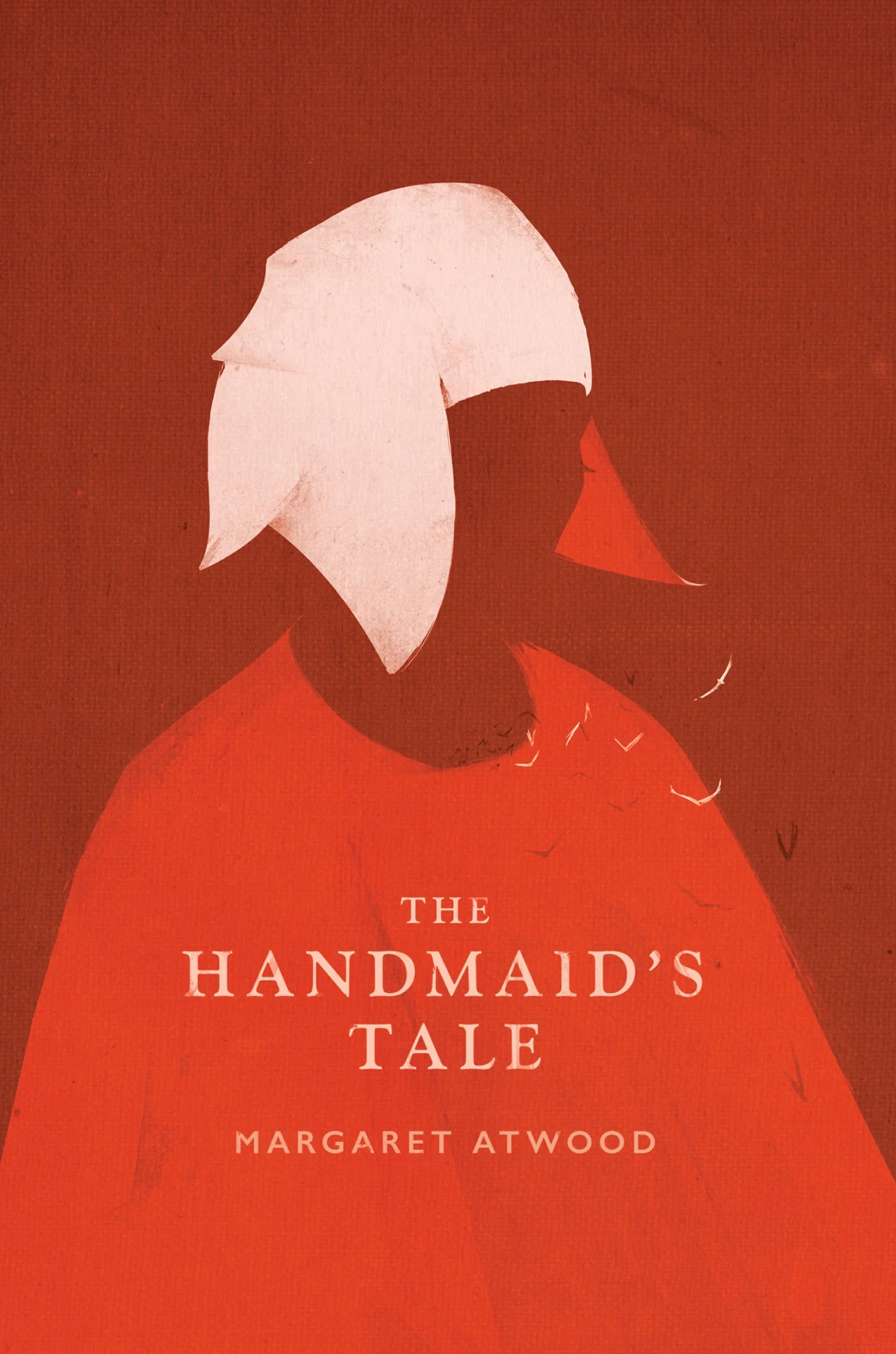
Chapter 1 Chaper 1
Varnished wooden floors and basketball hoops, the gymnasium once buzzed with the energy of dances and social gatherings, filled with the scents of sweat, chewing gum, and perfume. These memories evoke a sense of longing and the palpable presence of past emotions, including old sex, loneliness, and unfulfilled expectations. The narrator and her fellow women yearn for a future that always seemed just beyond reach, a feeling deeply ingrained in the culture of their time.
Now, the gymnasium serves as a dormitory for women under strict surveillance. They sleep in army cots arranged in rows, with spaces between them to prevent communication. The lights are dimmed but not extinguished, and Aunts Sara and Elizabeth patrol with electric cattle prods, ensuring discipline. The women are restricted to the building, except for supervised walks around the football field, now surrounded by a chain-link fence topped with barbed wire. The Angels, male guards, stand watch outside the fence, creating an atmosphere of fear and tension. Despite the harsh conditions, the women find ways to communicate secretly, exchanging names and forming bonds through whispers and lip-reading.
The chapter sets the stage for the dystopian world of Gilead, where the narrator and other women are stripped of their freedoms and subjected to strict control. The contrast between the past, with its vibrant social life and youthful aspirations, and the present, marked by oppression and surveillance, highlights the loss of personal autonomy and the dehumanization of the women. The women's determination to maintain some form of connection and identity, despite their circumstances, suggests a resilience and hope that will likely play a significant role in the narrative.
Key Events
- The narrator and other women sleep in a former gymnasium under strict surveillance.
- Aunts Sara and Elizabeth patrol the area with electric cattle prods to maintain order.
- The women find ways to communicate secretly, exchanging names and forming bonds.
Characters Introduced
- Aunt Sara
- Aunt Elizabeth
- Alma
- Janine
- Dolores
- Moira
- June
Themes
- Loss of freedom and autonomy
- Resilience and hope
- Surveillance and control
- Nostalgia for a lost past
Chapter 2 Chaper 2
The narrator's living quarters are a stark, controlled environment designed to prevent any form of self-harm. Her room, with its single bed, chair, and a window that only partially opens, reflects the regime's efforts to strip away individuality and control every aspect of the women's lives. The absence of mirrors and the presence of shatterproof glass underscore the regime's paranoia and the women's lack of autonomy. Despite the oppressive setting, the narrator finds small moments of solace in the ordinary objects around her, such as the sunlight, the flowers, and the polished wood floor. These elements, while seemingly trivial, serve as reminders of her humanity and the world she once knew. The narrator reflects on the uniformity of her surroundings, wondering if all the Handmaids' rooms are identical, and recalls Aunt Lydia's teachings about the importance of rationing thoughts to survive. This mindset is a coping mechanism in a world where thinking too much can be dangerous.
Preparing to leave her room, the narrator puts on her red shoes and gloves and descends the stairs to the kitchen. There, she encounters Rita, a Martha, who is making bread. Rita's demeanor is cold and disapproving, reflecting the social hierarchy and the tensions between the Handmaids and the Marthas. The narrator overhears a conversation between Rita and Cora, another Martha, discussing the Handmaids' roles and the limited choices available to them. Despite the animosity, the narrator longs for the camaraderie and simple exchanges that once defined her life, highlighting her isolation and the psychological toll of her situation.
Before leaving, the narrator accepts tokens from Rita to purchase groceries. The tokens, with their images of eggs, cheese, and meat, symbolize the regulated and restricted nature of their existence. The narrator's interaction with Rita is formal and distant, underscoring the rigid boundaries imposed by the regime. As she leaves the house, the narrator reflects on the irony of her situation—how her confinement is presented as a privilege rather than a punishment, and how the small acts of defiance and human connection are crucial for her survival.
Key Events
- The narrator describes her living quarters and the controlled environment.
- The narrator reflects on the importance of small moments of solace and the need to ration thoughts.
- The narrator overhears a conversation between Rita and Cora about the Handmaids' roles.
- The narrator accepts tokens from Rita to purchase groceries and prepares to leave the house.
Themes
- Control and Oppression
- Isolation and Loneliness
- Survival and Resilience
- The Role of Memory in Endurance
Chapter 3 Chaper 3
In the Commander’s garden, the narrator reflects on the controlled environment and the remnants of her past. The garden, meticulously maintained by the Commander’s Wife, is a microcosm of Gilead’s ordered world. She recalls her own past garden, where sensory details connected her to nature and a sense of freedom. Wondering about the Commander’s Wife’s whereabouts, she considers her usual activities like sewing or knitting elaborate scarves for the Angels, suspecting these tasks are more about keeping the Wives occupied than serving a practical purpose.
The narrator envies the Commander’s Wife her knitting, seeing it as a small, attainable goal in a world where such simple pleasures are rare. Reflecting on her first encounter with the Commander’s Wife, she remembers the tension and hostility of that meeting. Serena Joy, blocking the doorway, asserts her control and makes the narrator feel unwelcome. Despite the Wife’s cold demeanor, the narrator notices small details, like the diamonds on her ring finger and the cigarette she smokes, hinting at the possibility of bending rules within the regime.
During their initial meeting, Serena Joy makes it clear that she views the narrator as a necessary evil, a business transaction rather than a person. She warns the narrator against causing trouble and emphasizes the permanence of her marriage to the Commander. The narrator feels a sense of disappointment, having hoped for a more maternal or supportive relationship. Serena Joy’s transformation from a television personality to a bitter, controlling figure underscores the dehumanizing effects of the regime. The narrator recognizes Serena Joy from her childhood, seeing the stark contrast between her former public persona and her current, diminished role.
The chapter delves into the complex dynamics between the Handmaids and the Wives, highlighting the power imbalances and the psychological toll of living in a society that strips away personal agency. The narrator’s reflections on Serena Joy reveal the broader themes of resistance, adaptation, and the struggle to maintain one’s humanity in a dystopian world.
Key Events
- The narrator explores the Commander’s garden, reflecting on her past and the controlled environment.
- The narrator remembers her first encounter with Serena Joy, the Commander’s Wife, and the hostility of that meeting.
- Serena Joy emphasizes the business-like nature of their arrangement and warns the narrator against causing trouble.
- The narrator recognizes Serena Joy from her childhood, noting the stark contrast between her former public persona and her current role.
Themes
- Control and Resistance
- Loss of Personal Agency
- Dehumanization in Dystopian Societies
- Nostalgia for Past Freedom
- Contrast Between Past and Present
Chapter 4 Chaper 4
The narrator walks through the Commander’s garden, her footsteps crunching on the gravel path. The damp grass and the worms beneath it symbolize the fertile yet controlled nature of her new life. She observes Nick, one of the Guardians, washing the Commander’s expensive car. His casual demeanor and the hidden cigarette suggest he has something to trade on the black market. Despite the risk, Nick winks at her, and the narrator quickly averts her gaze, wary of potential consequences.
Continuing her walk, the narrator reflects on Aunt Lydia’s teachings and the oppressive nature of their new reality. She meets Ofglen, her assigned shopping partner, and they exchange the ritualistic greetings required among Handmaids. Ofglen provides updates on the war and recent events, though the narrator remains cautious, unsure if Ofglen is a true believer or a spy. They proceed to a checkpoint, where they are inspected by young Guardians. One of them tries to catch a glimpse of the narrator’s face, leading to a brief moment of mutual recognition and a small act of defiance.
The narrator contemplates the power dynamics and the restricted lives of the Guardians, who are not allowed to touch women. She subtly sways her hips, aware of the Guardians’ gaze and the forbidden nature of their attraction. This moment of power, however small, brings her a sense of satisfaction, though she is also aware of the moral implications of her actions. As they continue their walk, the weight of their situation presses down on them, a silent but palpable presence.
Key Events
- The narrator observes Nick, a Guardian, and their brief interaction.
- The narrator meets Ofglen, her shopping partner, and they exchange ritualistic greetings.
- The narrator and Ofglen are inspected by young Guardians at a checkpoint.
- The narrator experiences a moment of power and defiance by subtly attracting the Guardians' attention.
Characters Introduced
- Nick
Themes
- Control and Oppression
- Resistance and Defiance
- Power Dynamics
- Moral Ambiguity
Chapter 5 Chaper 5
The narrator and Ofglen continue their walk through the streets of Gilead, passing by large, well-maintained houses that resemble the idealized homes from old magazines. The streets are eerily quiet, devoid of children, and the atmosphere is one of a preserved, almost museum-like quality. The narrator reflects on the past, remembering the times she and Luke walked these same streets, dreaming of buying and fixing up an old house, and having a garden and children. These dreams now seem impossibly distant and weightless.
As they continue their walk, the narrator contrasts the current oppressive environment with the freedoms of the past. She recalls the unspoken rules women followed to stay safe, such as avoiding strangers and not stopping to help motorists. The narrator thinks about the control she once had over her life, from choosing her own clothes to earning her own money. Now, they walk in red pairs, and no man dares to shout or touch them. Aunt Lydia’s words about different kinds of freedom echo in her mind, emphasizing the trade-off between freedom to and freedom from.
They visit a store called Lilies of the Field, where the Handmaids’ dresses are sold, and then proceed to Milk and Honey, a grocery store. The narrator notices oranges, which are rare due to the war, and decides to inform Rita about them. Inside the store, they encounter a pregnant Handmaid, Ofwayne, who is a source of envy and desire among the other women. Her pregnancy is a symbol of hope and salvation, but also a reminder of the dangers and special security she requires. The narrator recognizes Ofwayne from the Red Center and feels a mix of jealousy and disdain for her flaunting behavior.
After shopping, they encounter a group of Japanese tourists, whose attire and behavior are a stark contrast to the Handmaids’ regulated appearance. The tourists’ short skirts, high heels, and exposed hair are both fascinating and repelling to the narrator and Ofglen. An interpreter approaches them, asking if they can take a picture. The narrator, knowing the risks, refuses to make eye contact and declines. When asked if they are happy, the narrator reluctantly responds affirmatively, aware of the curiosity and judgment of the tourists.
Key Events
- The narrator and Ofglen walk through the streets of Gilead, reflecting on the past and the freedoms they once had.
- They visit the grocery store Milk and Honey, where the narrator notices rare oranges and a pregnant Handmaid named Ofwayne.
- The narrator and Ofglen encounter Japanese tourists, whose attire and behavior are both fascinating and repelling.
- An interpreter asks the narrator and Ofglen if they can take a picture and if they are happy, to which the narrator reluctantly responds affirmatively.
Themes
- The loss of personal choice and autonomy in Gilead
- Contrast between past and present
- Envy and jealousy among Handmaids
- Surveillance and control in Gilead
Chapter 6 Chaper 6
Ofglen and the narrator decide to take the longer route past the church, a decision that momentarily lightens their spirits. The church, now a museum, stands as a relic of the past, with its old gravestones and weathered monuments. The narrator reflects on the beauty of the past, contrasting it with the controlled and oppressive present. The walk is a momentary escape, allowing them to glimpse the remnants of a freer life, such as the old dormitories and the river, which they are no longer permitted to visit.
As they approach the church, Ofglen bows her head in a gesture of piety, though the narrator suspects it might be for show. They eventually turn to face the Wall, a centuries-old structure now fortified with barbed wire and floodlights. Hanging from hooks on the Wall are the bodies of men, their heads covered in white bags, and placards around their necks identifying them as former doctors who performed abortions. The sight is both chilling and surreal, with the blood-stained bags adding a macabre touch.
The narrator feels a mix of emotions—relief that none of the men is Luke, blankness, and a sense of detachment. She reflects on the retroactive nature of the men's crimes and the regime's need to make examples of them. The narrator's thoughts drift to the tulips in Serena Joy’s garden, finding no connection between the beauty of the flowers and the grimness of the hanged men. She clutches her basket tightly, determined not to betray any emotion. The chapter ends with the narrator noting the ordinary nature of this horror, as Aunt Lydia once taught, and the effort she puts into making distinctions to maintain her sanity.
Key Events
- Ofglen and the narrator decide to take the longer route past the church.
- They observe the Wall, where the bodies of former doctors hang as a warning.
- The narrator reflects on the retroactive nature of the men's crimes and her mixed feelings about the scene.
Themes
- Retroactive Punishment and State Control
- Memory and the Past
- Emotional Detachment and Survival
Chapter 7 Chaper 7
Lying in her room under the watchful eye of the plaster eye in the ceiling, the narrator finds a momentary escape in the solitude and freedom of the night. Her mind drifts to the past, beginning with a vivid recollection of Moira, her close friend, who often visited her dorm room in college. Moira’s casual, rebellious attitude and their shared experiences studying subjects like psychology and economics are sharply contrasted with the regimented life of a Handmaid.
Another memory surfaces, this time of a childhood incident with her mother. They are in a park, ostensibly to feed the ducks, but the real reason is a book-burning event. The narrator, young and curious, is drawn to the fire and the crowd’s ecstatic faces. Her mother, initially hesitant, allows her to participate by throwing a magazine into the flames. The image of the naked woman on the cover, and the burning pages that float away like black ash, leaves a lasting impression. This memory is interwoven with the narrator’s reflections on the loss of her daughter, a traumatic event that she struggles to fully recall.
The chapter delves deeper into the aftermath of losing her child, a period marked by confusion, pain, and a sense of unreality. The narrator describes the disorienting experience of waking up in unfamiliar places, being told that her daughter is in ‘good hands,’ and shown a photograph of her child with a stranger. The emotional distance and the feeling of being ‘unfit’ are palpable, and the narrator’s desperate attempts to reconnect with her daughter highlight the profound loss and trauma she has endured.
Finally, the narrator reflects on the nature of storytelling and its role in her survival. She contemplates whether her experiences are a story she is telling to herself, a coping mechanism to regain a sense of control. The idea of addressing an unnamed ‘you’ becomes a way to maintain a connection to the outside world and to preserve her humanity in the face of dehumanization. The chapter ends with the narrator’s acknowledgment of the duality of her existence—both a victim of the regime and a storyteller with the power to shape her narrative.
Key Events
- The narrator reflects on the solitude and freedom of the night.
- The narrator recalls a memory of Moira visiting her college dorm room.
- The narrator remembers a childhood incident where she participated in a book-burning event with her mother.
- The narrator reflects on the trauma and confusion following the loss of her daughter.
- The narrator contemplates the nature of storytelling and its role in her survival.
Themes
- Memory and the Past
- Loss and Trauma
- Storytelling and Survival
- Nighttime Reflections and Inner Freedom
Chapter 8 Chaper 8
Returning from the Wall, the narrator and Ofglen walk in the warm, May-like weather, their spirits dampened by the sight of three new bodies hanging there—a priest and two Guardians accused of Gender Treachery. Ofglen’s silent grace irritates the narrator, who cannot determine if Ofglen is grieving or gloating. They pass a small funeral procession of Econowives, one carrying a small black jar symbolizing a lost pregnancy. The Econowives scowl at them, and one spits on the sidewalk, underscoring the tension and resentment between the groups.
Back at the Commander’s house, the narrator encounters Nick, who is polishing the Commander’s car. He whistles and asks if she had a nice walk, to which she nods without speaking, adhering to the rules. The narrator reflects on the rules and the temptation to break them, recalling Aunt Lydia’s warnings about setting boundaries. In the garden, Serena Joy sits alone, her face sunken and defeated, a stark contrast to her former public persona. The narrator ponders Serena Joy’s past, her speeches, and the attempts on her life, feeling a mix of pity and contempt for the former televangelist.
Inside the house, the narrator interacts with Rita and Cora, the Marthas, who are preparing the chicken and discussing the upcoming bath. Rita is critical of the groceries, while Cora seems more supportive. The narrator offers to bring oranges the next day, trying to ingratiate herself with Rita. The kitchen’s familiar smells of yeast and bread trigger nostalgic memories, which the narrator quickly suppresses. She retreats to her room, where she encounters the Commander in the hallway. His unexpected presence and his brief, polite interaction with her are puzzling, leaving the narrator uncertain about his intentions and the implications of his actions.
Key Events
- The narrator and Ofglen observe three new bodies on the Wall, including a priest and two Guardians.
- They encounter a funeral procession of Econowives, highlighting the tension between different groups in Gilead.
- The narrator reflects on Serena Joy’s past and her current state of defeat.
- The narrator interacts with Rita and Cora, offering to bring oranges and preparing for the bath.
- The narrator encounters the Commander unexpectedly in the hallway, leaving her puzzled about his intentions.
Themes
- Tension and resentment between different social groups in Gilead
- The psychological toll of witnessing public executions
- The struggle to maintain personal dignity in a dehumanizing environment
- Ambiguity and uncertainty in power dynamics
Chapter 9 Chaper 9
The narrator retreats to her room, a small sanctuary within the oppressive walls of Gilead. She contemplates the previous occupant, imagining a woman much like herself, and recalls the freedom and intimacy of hotel rooms from her past. These memories, bittersweet and filled with nostalgia for the carefree moments she once shared with Luke, stand in stark contrast to her current, controlled existence.
While exploring the room, the narrator discovers a hidden message scratched into the floor of the cupboard: 'Nolite te bastardes carborundorum.' This cryptic message, though enigmatic, brings her a small sense of joy and connection to the unknown woman who wrote it. She envisions this woman as someone like Moira—quirky and resourceful—and wonders about her fate. The discovery of the message and the imagined bond with its author offer a glimmer of hope and solidarity in her otherwise isolated life.
Later, the narrator discusses the previous occupants with Rita, the Martha. Rita reveals that several women have stayed in the room before her, some sent away for various reasons. Rita hints at the existence of an underground network but remains tight-lipped about the specifics, emphasizing the secrecy and danger of inquiring too deeply. The narrator’s curiosity and the message she found fuel a growing resolve to uncover more about her predecessors and the nature of her own situation.
Key Events
- The narrator discovers a hidden message in the cupboard.
- The narrator imagines the previous occupant as someone like Moira.
- The narrator discusses the previous occupants with Rita, who reveals that several women have stayed in the room before her.
Themes
- Isolation and Connection
- Hidden Resistance
- Personal History and Legacy
Chapter 10 Chaper 10
Singing to herself in her head, the narrator recalls hymns and old songs that are now outlawed in Gilead. These songs, with their themes of freedom and grace, evoke a sense of nostalgia and longing for her past life, where such expressions of emotion were still possible. She remembers her mother's old cassette tapes and the times she would play them during gatherings with friends, a stark contrast to the current silence and control in her life.
The narrator contemplates the lack of music in her current home, noting the occasional humming of Rita and the faint sounds of Serena Joy listening to old records. The warmth of the house and the stagnant air make her wish for the freedom to open the window wider, a small but significant desire in her controlled environment. She reflects on Aunt Lydia’s teachings about the dangers of past behaviors, such as sunbathing and public displays of affection, which are now seen as vulgar and inappropriate.
Her thoughts shift to her past, particularly her friendship with Moira. She recalls Moira’s visits to her dorm room, their shared laughter, and Moira’s entrepreneurial spirit, including her plan to host an ‘underwhore party’ selling provocative lingerie. These memories highlight a life of freedom and spontaneity, sharply contrasting with the regimented and oppressive world of Gilead. The narrator reflects on how they lived by ignoring the darker aspects of their society, a gradual process that led to the current dystopian reality.
From her window, the narrator observes the Commander and Nick. She watches as the Commander leaves for what seems to be a casual outing, noting his gray hair and the stiffness of Nick’s posture. Despite her awareness of the Commander’s role in her oppression, she finds her feelings towards him complex, unable to muster the expected hatred. Instead, she experiences a mixture of emotions, highlighting the psychological toll of her situation and the internal conflict she faces.
Key Events
- The narrator sings to herself, recalling outlawed hymns and songs.
- The narrator reflects on the lack of music and the controlled environment of her room.
- The narrator remembers her friendship with Moira and their past lives.
- The narrator observes the Commander and Nick from her window, reflecting on her complex feelings towards the Commander.
Themes
- Nostalgia and Longing
- Silence and Censorship
- Memory and Identity
- Internal Conflict and Emotional Complexity
Chapter 11 Chaper 11
Monthly visits to the doctor are a grim necessity in Gilead. Escorted by a Guardian in a red car, the narrator’s journey is silent and tense. Upon arrival at a modern office building, she joins other Handmaids in a waiting room, all dressed in red, covertly assessing each other’s fertility prospects.
The doctor, a tall man with a diagonal scar on his cheek, performs the standard tests. Unlike others, he breaks protocol by speaking to her, expressing sympathy for her plight. He reveals that many Commanders are impotent or sterile, a forbidden topic. The doctor offers to help her conceive, a temptation and a threat, given the severe penalties for such actions.
Torn between her desire for a child and the danger of accepting the offer, the narrator declines, citing the risk, but leaves the door open for future consideration. The doctor’s hand lingers on her thigh, suggesting they revisit the idea the following month. Her hands shake as she dresses, realizing the choice he presents is a double-edged sword, offering both a way out and a potential trap.
Key Events
- The narrator is taken to the doctor for routine tests.
- The doctor breaks protocol by speaking to the narrator and offering to help her conceive.
- The narrator declines the doctor’s offer but leaves the door open for future consideration.
Themes
- Control and Resistance
- Sympathy and Exploitation
- Risk and Survival
Chapter 12 Chaper 12
Adorned with blue flowers and matching curtains, the bathroom lacks a mirror and locks, a stark reminder of the regime's control. The bath, a required luxury, allows the narrator to remove her restrictive clothing and feel her own hair, a small but significant moment of personal freedom. The water's softness and the sensation of being held evoke a strong, emotional memory of her daughter, bringing her back to a time when the child was stolen from a supermarket cart.
The narrator's reflections on the theft of her daughter are filled with guilt and regret, as she remembers the incident in vivid detail. She wonders about her daughter's fate, hoping she is alive but acknowledging the psychological ease of believing she is dead. The memory fades, and the narrator returns to the present, where she must quickly finish her bath and prepare for the evening. The scrubbing and cleansing rituals are meticulous, symbolizing a desire for purity and control in a world that denies her both.
Cora, the Martha, brings the narrator's dinner, and the interaction is marked by a rare moment of respect and privacy. The food is bland but nutritious, a reminder of the regime's focus on maintaining the health of the Handmaids. The narrator, feeling nauseous and nervous, forces herself to eat, hiding a small piece of butter in her shoe for later use. She reflects on the opulent dinners downstairs, imagining the Commander and Serena Joy's interactions, and the tension that likely permeates their meals.
The chapter ends with the narrator waiting and composing herself, recognizing that her self is now a constructed entity, a performance she must maintain. The act of composing her thoughts and appearance is a powerful metaphor for the psychological and emotional toll of her existence as a Handmaid.
Key Events
- The narrator takes a luxurious but controlled bath, evoking memories of her daughter.
- The narrator reflects on the traumatic memory of her daughter being stolen from a supermarket cart.
- The narrator forces herself to eat a bland but nutritious meal, hiding a piece of butter in her shoe.
- The narrator composes herself, recognizing the need to maintain a constructed self.
Themes
- Memory and Trauma
- Personal Freedom in a Controlled Environment
- Identity and Performance
- Motherhood and Loss
Chapter 13 Chaper 13
In the quiet moments of her life as a Handmaid, the narrator contemplates the overwhelming boredom and enforced idleness, likening her existence to that of a prize pig or a caged animal. She reflects on nineteenth-century harem paintings, recognizing the underlying themes of boredom and suspended animation. Desperate for a distraction, she wishes for something as simple as a pig ball to break the monotony and prevent her mind from stagnating under the regime's control.
During the afternoons, the Handmaids are required to rest, a practice the narrator now sees as preparation for a life of enforced inactivity. She recalls Moira's defiant arrival at the Red Center, the bruises on her face a testament to her resistance. The two manage to arrange a secret meeting in the washroom, where they share a brief, whispered conversation. Moira's presence offers the narrator a sense of safety and comfort, though their interactions must remain cautious and infrequent.
The chapter delves into the ritual of Testifying, where Handmaids are forced to recount fabricated past traumas to align with the regime's narrative. Janine's repeated story of gang rape and abortion is dissected by Aunt Helena, who leads the Handmaids in chanting blame and punishment. The narrator reflects on the psychological manipulation and the collective despising of Janine, despite their understanding of her suffering. Later, she meets Moira in the washroom again, sharing a moment of connection and the mutual desire for a cigarette, symbolizing their shared humanity and resistance.
Her thoughts turn to her body, now seen as a vessel for the regime's purposes rather than an instrument of her own will. She describes her body as a cloud centered around a pear-shaped object, representing her reproductive function. The monthly fear of failing to conceive is a constant source of despair. The chapter concludes with a vivid dream sequence, where the narrator runs with her daughter through a forest, trying to escape an unseen threat. The dream is a poignant reminder of her past and the loss of her child, ending with the narrator being awakened by the bell and Cora knocking at her door.
Key Events
- The narrator reflects on the boredom and enforced idleness of her life as a Handmaid.
- The narrator arranges a secret meeting with Moira in the washroom.
- The narrator participates in the ritual of Testifying, where Janine's story is dissected and blamed.
- The narrator shares a moment of connection with Moira, expressing their mutual desire for a cigarette.
- The narrator has a vivid dream about running with her daughter, symbolizing her past and the loss of her child.
Themes
- Enforced Inactivity and Mental Stagnation
- Resistance and Connection
- Psychological Manipulation
- Reproductive Control
- Loss and Trauma
Chapter 14 Chaper 14
Kneeling near Serena Joy's chair in the sitting room, the narrator awaits the Ceremony. The room's elegant decor and subtle opulence stand in stark contrast to her restricted life. Serena Joy enters, dressed in a sky-blue dress with embroidered flowers, and settles into her chair, lighting a cigarette and turning on the television to watch the news. Reports of military victories and the arrest of Quakers reinforce the regime's propaganda and control.
Feeling the monotony and discomfort of her position, the narrator longs to steal something from the room as a small act of defiance but knows such an act would be too risky. Nick, standing behind her, touches her foot, and she shifts away, acutely aware of the warmth and danger his touch represents. Cora and Rita resent the disruption to their routines, adding to the tension in the room.
Impatient with the news, Serena Joy changes the channel to a sentimental song before turning it off. The narrator's thoughts drift to a memory of a Saturday morning in September, when she, Luke, and her daughter attempted to flee to Canada. The vivid details of their escape, including the forged passports and the child's innocence, highlight the desperation and fear of their situation. Her internal struggle between hope and despair is evident as she recalls the tension of each stoplight and the fear of being caught.
Lying in her bed at night, the narrator clings to the memory of her real name, a symbol of her past identity and a glimmer of hope for the future. The memory of the failed escape and the loss of her child haunts her, but she resolves to maintain her strength and hope.
Key Events
- The narrator kneels in the sitting room, awaiting the Ceremony.
- Serena Joy watches the news, which features military victories and the arrest of Quakers.
- Nick touches the narrator's foot, and she shifts away.
- The narrator reflects on a failed escape attempt with Luke and her daughter.
- The narrator holds onto the memory of her real name as a symbol of her past identity.
Themes
- Surveillance and Propaganda
- Internal Struggle and Resilience
- Memory and Identity
Chapter 15 Chaper 15
The Commander arrives at the sitting room, bypassing the usual protocol of seeking Serena Joy's permission to enter. This breach of etiquette signals a shift in the household's power dynamics, as Serena Joy is denied even the small satisfaction of keeping him waiting. Dressed in his black uniform, the Commander exudes authority, yet his true nature remains elusive. The narrator and the other women in the room, including Serena Joy, Cora, and Rita, watch him intently, their gazes a mix of curiosity and apprehension.
He retrieves the Bible from a locked box, a symbol of the regime's control over knowledge and religious texts. The Commander reads passages from Genesis, focusing on the stories of Rachel and Leah, which justify the Handmaids' role in the household. The reading is perfunctory, and the Commander's lack of skill suggests a disinterest or discomfort with the ritual. Serena Joy, who is crying quietly, adds a layer of tension to the scene, her tears a silent protest against the proceedings. The narrator, feeling the urge to laugh despite the gravity of the situation, silently prays the Latin phrase 'Nolite te bastardes carborundorum,' a message of defiance passed down from a previous Handmaid.
The chapter flashes back to the narrator's time at the Red Center, where she and Moira conspired to communicate in secret. Moira, determined to escape, shares her plan to fake an illness, hoping to be taken to a hospital. The narrator, worried about Moira's safety, tries to dissuade her. Despite the narrator's concerns, Moira's resolve is unshaken. The flashback is interrupted by the Commander's announcement of the end of the prayer, dismissing the women. The chapter concludes with the narrator reflecting on Moira's eventual capture and the brutal punishment she endured, her feet swollen and damaged, a stark reminder of the consequences of resistance.
Key Events
- The Commander bypasses protocol and enters the sitting room without Serena Joy's permission.
- The Commander reads from the Bible, focusing on passages that justify the Handmaids' role.
- Serena Joy cries quietly during the ceremony, adding tension to the scene.
- The narrator reflects on Moira's plan to escape the Red Center by faking an illness.
- Moira is captured and brutally punished, her feet damaged and swollen.
Themes
- Shift in household power dynamics
- Religious manipulation and control
- Resistance and the consequences of defiance
- Psychological impact of oppression
Chapter 16 Chaper 16
The Ceremony unfolds in the same ritualistic manner, with the narrator lying on her back, fully clothed except for her underdrawers, between Serena Joy's spread legs. The room is chilled, and the scent of Lily of the Valley permeates the air. The canopy above the bed, intricately detailed, evokes a sense of both ethereality and materiality. Serena Joy, fully clothed, holds the narrator's hands, symbolizing her control over the process and its outcome.
The Commander, dressed in his uniform, performs the act with mechanical and detached precision. The narrator reflects on the absence of passion, love, or sexual desire in the room, emphasizing that this is a duty rather than a pleasure. She detaches herself emotionally, focusing on the canopy and the absurdity of the situation. Serena Joy grips the narrator's hands as if she is the one being violated, and the Commander's rhythm is monotonous and impersonal, driven by a sense of duty rather than desire.
The act concludes with the Commander's stifled groan of relief, and he quickly leaves the room, closing the door carefully behind him. Serena Joy, filled with loathing, dismisses the narrator abruptly, refusing to follow the prescribed rest period. The narrator, feeling the physical aftermath of the act, untangles herself from Serena Joy and stands up, noting the Commander's residue running down her legs. Serena Joy, stiff and cold, continues to lie on the bed, gazing up at the canopy, her voice filled with disgust as she commands the narrator to leave.
The narrator reflects on the dehumanizing nature of the Ceremony, questioning whether it is worse for her or for Serena Joy. Her detachment and internal monologue highlight her resilience and the coping mechanisms she employs to survive.
Key Events
- The Ceremony proceeds with the narrator, Serena Joy, and the Commander in the bedroom.
- The Commander engages in the act with mechanical and detached precision.
- Serena Joy grips the narrator's hands, showing signs of loathing and control.
- The act concludes, and the Commander leaves the room quickly.
- Serena Joy dismisses the narrator abruptly, refusing to follow the prescribed rest period.
Themes
- Dehumanization and control
- Resilience and coping mechanisms
- Power dynamics and subjugation
- The psychological impact of ritualized violence
Chapter 17 Chaper 17
The narrator returns to her room after the Ceremony and removes her clothes, replacing them with a nightgown. She retrieves a pat of butter she had hidden in her shoe, intending to use it as a moisturizer since hand lotion and face cream are forbidden. The butter is semi-liquid and has soaked into the napkin, but she rubs it on her face and hands, a ritual she learned at the Red Center. This act of self-care, though makeshift, gives her a sense of hope and a belief that she will one day be free and touched again.
Unable to sleep, the narrator gets out of bed and goes to the window, where she sees the moon through the searchlight that illuminates the house. She reflects on her desire to be held and valued, missing Luke intensely. The thought of stealing something from the house crosses her mind, particularly a knife from the kitchen, but the risk seems too great. Instead, she sneaks into the sitting room, where she finds a withered daffodil from a dried arrangement. She plans to press it and leave it for the next woman who occupies her room.
While in the sitting room, the narrator hears a quiet step behind her. It is Nick, who reassures her not to scream. They share a moment of intense, silent connection, with Nick touching her and kissing her. The narrator feels a surge of desire and hunger, but they both recognize the danger of the situation and pull away. Nick reveals that the Commander wants to see her in his office the next day, which leaves the narrator feeling uneasy and conflicted. The chapter ends with the narrator returning to her room, her mind racing with the implications of the Commander’s request.
Key Events
- The narrator uses butter to moisturize her skin, a ritual she learned at the Red Center.
- The narrator sneaks into the sitting room and takes a withered daffodil.
- Nick surprises the narrator in the sitting room, and they share a moment of intense, silent connection.
- Nick informs the narrator that the Commander wants to see her in his office the next day.
Themes
- Resistance and Survival through Small Acts
- Desire and Danger in Forbidden Moments
- Hope and the Persistence of Memory
Chapter 18 Chaper 18
Still trembling from the encounter with Nick, the narrator lies in bed, her emotions resonating like a glass with a wet rim, on the verge of shattering. She longs for the intimacy and love she once shared with Luke, recalling the safety and connection of lying in bed with him and their unborn child during a thunderstorm. These vivid memories starkly contrast with her current isolation and the sterile, controlled environment of her room.
Reflecting on the nature of love and the human need for physical and emotional connection, the narrator believes that it is not the lack of sex that kills people, but the lack of love. She feels disconnected from everyone around her, as all the people she could love are either dead or elsewhere. Their faces flicker in the darkness, like images of saints in old cathedrals, but they are only fleeting mirages. The narrator feels disembodied and empty, like a room where nothing happens anymore, except for the dust of weeds blowing in from outside.
Her mind wanders through three conflicting scenarios for Luke's fate: lying dead in a thicket, imprisoned and tortured, or successfully escaping to Canada. Each scenario is described in detail, with the narrator hoping for the best but preparing for the worst. She prays that if Luke is dead, his death was quick and painless. If he is alive, she hopes he is being cared for by a resistance movement. The narrator clings to the belief that Luke still loves her and will find a way to rescue her and their daughter. This belief, even if it may never be realized, is what keeps her alive and hopeful.
Interspersed with her thoughts on Luke, the narrator reflects on the nature of belief and hope. She believes in the resistance and the possibility of a message from Luke, even though these beliefs may be contradictory. The chapter concludes with the narrator finding solace in the phrase 'In Hope,' which she associates with a gravestone, symbolizing the enduring power of hope in the face of uncertainty and despair.
Key Events
- The narrator reflects on her emotional state and longing for Luke.
- The narrator envisions three conflicting scenarios for Luke's fate.
- The narrator clings to the belief that Luke still loves her and will rescue her.
- The narrator finds solace in the phrase 'In Hope'.
Themes
- Hope and Despair
- Love and Isolation
- Belief and Uncertainty
- Enduring Love
- Hope in Isolation
Chapter 19 Chaper 19
The narrator is jolted awake by a vivid dream of her daughter running to her in a small green nightgown. The dream feels so real that it takes a moment for her to realize she is still in her room, constrained by the oppressive environment of Gilead. She performs a series of mental tests to confirm her sanity, then contemplates the symbolism of the objects around her, finding intense pleasure in a smooth, grained egg.
As she eats her breakfast, a siren blares, signaling an emergency. The narrator quickly dresses and joins the other Handmaids in the red Birthmobile, heading to Ofwarren’s house for a birth. The atmosphere in the van is tense and emotional, with one woman praying and another laughing and hugging the narrator. The siren, once a harbinger of death, now signals the possibility of new life, yet also the risk of an Unbaby, a malformed child. The narrator reflects on the environmental and medical factors contributing to the high rate of Unbabies and the moral judgments imposed by the regime.
Upon arriving at Ofwarren’s house, the narrator and the other Handmaids are greeted by Guardians and led inside. She recalls a film shown at the Red Center, depicting the old methods of childbirth as shameful and inhumane. The arrival of the blue Birthmobile, reserved for Wives, signals the presence of Serena Joy. The narrator imagines the interactions between the Wives and the Handmaids, noting the patronizing and controlling attitudes of the Wives. She reflects on the dehumanizing nature of their roles and the complex dynamics between the women, all bound by the same oppressive system.
Key Events
- The narrator has a vivid dream about her daughter.
- A siren signals an emergency, and the narrator joins other Handmaids in the red Birthmobile.
- The narrator reflects on the high rate of Unbabies and the environmental causes.
- The narrator and other Handmaids arrive at Ofwarren’s house for a birth.
- The blue Birthmobile arrives, signaling the arrival of Serena Joy.
Themes
- The psychological resilience in the face of oppression
- The symbolism of everyday objects in a controlled environment
- The dehumanizing nature of the regime's childbirth practices
- The complex dynamics and power imbalances among women under oppression
Chapter 20 Chaper 20
The narrator and the other Handmaids gather at Ofwarren’s house for a birthing ceremony. The atmosphere is tense and charged with anticipation as the women cheer on Ofwarren, who lies on the floor, about to give birth. The Commander is conspicuously absent, likely attending to his promotion, while Aunt Elizabeth oversees the proceedings with a stern demeanor. The narrator reflects on the dehumanizing nature of the ceremony, where the Wives and Handmaids are reduced to mere vessels for reproduction. She observes Ofwarren, her eyes squeezed shut, and feels a sense of empathy for her. The narrator ponders the sacrifices and the psychological toll of their roles, recalling Aunt Lydia’s teachings about the transitional nature of their generation.
Amid the tension, the narrator’s mind drifts to her memories of the Red Center. There, the women were shown films to indoctrinate them, ranging from old pornographic content to documentaries about Unwomen, women deemed subversive and wasteful in the old society. One particular film features her mother, young and passionate, participating in a protest with a banner that reads 'TAKE BACK THE NIGHT.' The image stirs a deep sense of pride and longing, highlighting the stark contrast between the freedoms of the past and the oppressive present.
The narrator’s reflections shift to her mother’s life and her own upbringing. She recalls her mother’s strong-willed and independent nature, her struggles as a single parent, and her feminist ideals. Her mother often criticized the limitations placed on women and the societal expectations she defied. Despite their differences, the narrator admires her mother’s courage and resilience, even as she grapples with the loss of her own past and the desire to reclaim it.
Key Events
- The narrator and other Handmaids attend a birthing ceremony at Ofwarren’s house.
- The narrator reflects on the dehumanizing nature of the ceremony and the roles of the Wives and Handmaids.
- The narrator recalls a film shown at the Red Center featuring her mother in a protest.
- The narrator reflects on her mother’s life and her feminist ideals.
Themes
- Dehumanization and Control
- Contrast Between Past and Present
- Feminism and Resistance
- Mother-Daughter Relationships
Chapter 21 Chaper 21
The narrator is at a birthing ceremony for Janine, where the atmosphere is tense and charged with the soft chants of the women. The room is hot, smelling of sweat, blood, and the animal-like scent emanating from Janine. The women follow Aunt Elizabeth's instructions, helping Janine through her contractions and providing her with ice cubes to suck on. Janine's condition worsens, and she becomes restless, doubling over in pain, while the women continue their rhythmic chanting to support her.
Ofglen, the narrator's shopping partner, is present, and the narrator discreetly asks her about Moira. Alma, standing nearby, confirms that Moira is not there but promises to keep an eye out. The narrator reflects on the shared experience of the women, noting how the chanting and the shared pain create a sense of unity. A Martha brings in a tray of grape juice, which the women pass around, and the narrator suspects it has been spiked with alcohol.
Janine progresses to the final stages of labor, and Aunt Elizabeth signals for the lights to be dimmed. The Commander's Wife arrives, and the Wives position themselves around the Birthing Stool. Janine, now calmer, is helped to sit on the stool, and the women chant encouragement as the baby is born. The baby is a girl, and Aunt Elizabeth inspects it, confirming it is healthy. The women are overcome with joy and relief, and the baby is placed in the Commander's Wife's arms, who names her Angela. The Wives congratulate the Commander's Wife, while the Handmaids, still standing between Janine and the bed, share in the victory, though they are also exhausted and emotionally drained.
As the women are transported back to their households in the Birthmobile, the narrator reflects on the irony of this women's culture, which is not what her mother envisioned. She feels a deep sense of failure and longing, thinking of her mother and the hope that she can hear her thoughts, expressing a bittersweet gratitude for the small mercies in their lives.
Key Events
- The narrator attends a birthing ceremony for Janine.
- The women chant and support Janine through her labor.
- The narrator discreetly asks Ofglen about Moira.
- The baby is born, and the Commander's Wife names her Angela.
- The women are transported back to their households, feeling exhausted and emotionally drained.
Themes
- The ritualistic and dehumanizing nature of the birthing ceremony
- The complex bonds and solidarity among the Handmaids
- Irony and disappointment in the women's culture
- Longing and reflection on the past
Chapter 22 Chaper 22
Exhausted from the intense birthing ceremony, the narrator climbs the stairs to her room, seeking solace in solitude. Too tired to sleep, her thoughts drift to Moira, who had once escaped from the Red Center. The narrator pieces together Moira's daring escape from bits of information shared by Alma, Dolores, and Janine. Moira's plan began when she raised her hand to use the washroom during exercises, tricking Aunt Elizabeth into entering the bathroom to fix an overflowing toilet. Using a dismantled toilet lever, Moira overpowered Aunt Elizabeth, taking her cattle prod and whistle, and marched her to the basement. Disguised in Aunt Elizabeth's clothes and adopting a confident demeanor, Moira walked out of the Red Center, fooling the guards. Aunt Elizabeth was later found and interrogated, but Moira remained at large.
Janine, summoned to Aunt Lydia's office to hear the story, was tasked with monitoring the other girls for any signs of involvement. This new responsibility made Janine a figure of suspicion and isolation among the women. The news of Moira's escape spread rapidly, inspiring awe and fear in equal measure. The possibility of Moira's freedom, whether real or imagined, infused the women with a mix of hope and unease. The chapter concludes with the narrator reflecting on the profound impact of Moira's escape, which served as a symbol of resistance and a reminder that the Aunts' control was not invincible.
Key Events
- The narrator returns home after the birthing ceremony, feeling drained.
- The narrator reflects on Moira's escape from the Red Center, pieced together from various sources.
- Moira overpowers Aunt Elizabeth and escapes, dressing in her clothes and fooling the guards.
- Janine is tasked with reporting any involvement from other girls, leading to her being treated with suspicion.
- The women are both inspired and frightened by Moira's audacity and the possibility of her being free.
Themes
- Resistance and Escape
- Symbolism of Hope
- Power Dynamics and Control
Chapter 23 Chaper 23
Still reeling from the emotional and physical toll of the birthing ceremony, the narrator contemplates the nature of reconstruction and storytelling. She emphasizes the impossibility of exact recall and the power of forgiveness, particularly in the context of the Commander's request for a kiss. The underlying power dynamics and the temptation to forgive weigh heavily on her thoughts.
Cora interrupts her reflections by bringing dinner and inquiring about the baby, offering a brief moment of human connection. Later, the narrator realizes she must go to the Commander's study as he requested. She feels a mix of fear and curiosity, aware that her presence there is illegal.
The Commander greets her with an outdated form of politeness, inviting her to sit and play a game of Scrabble. The game, once mundane, is now forbidden and thus dangerous and desirable. They play two games of Scrabble, with the narrator winning the first and letting him win the second, sensing a potential for negotiation. The Commander then asks her to kiss him, and she complies, though the kiss feels mechanical and insincere.
The chapter ends with the narrator reflecting on the Commander's sadness and the complexity of her feelings.
Key Events
- The narrator reflects on the nature of reconstruction and forgiveness.
- Cora brings the narrator dinner and inquires about the baby.
- The narrator is summoned to the Commander's study to play Scrabble.
- The narrator and the Commander play two games of Scrabble.
- The Commander asks the narrator to kiss him, and she complies.
Themes
- Power Dynamics and Control
- Memory and Reconstruction
- Forbidden Acts and Desires
- Emotional Complexity and Ambivalence
Chapter 24 Chaper 24
Exhausted and drained, the narrator returns to her room after the birthing ceremony. In the darkness, she reflects on the need for perspective and the illusion of a deeper life that she no longer believes exists. She acknowledges the necessity of living in the present and making the most of her situation, despite feeling trapped in time. Her thoughts turn to her identity as Offred and the significant changes in her circumstances following her visit to the Commander's study.
A childhood memory surfaces, one of watching a documentary about a concentration camp and the mistress of a man involved in the atrocities. The mistress's denial of the horrors and her continued pride in her appearance, even as she was dying of emphysema, resonate with the narrator. This reflection leads her to consider the Commander and the complex nature of his desires, which she must take seriously.
Suddenly, an uncontrollable urge to laugh overtakes her, a reaction that seems out of place given her circumstances. Fearing discovery, she quickly stifles the laughter, feeling the physical strain of holding it back. She crawls into the cupboard, tracing the message 'Nolite te bastardes carborundorum' with her fingers. Once a source of comfort, the message now seems like a useless hieroglyph, and the narrator feels trapped and hopeless.
Key Events
- The narrator reflects on the need for perspective and living in the present.
- The narrator recalls a childhood memory of a documentary about a concentration camp and its mistress.
- The narrator experiences an uncontrollable urge to laugh, which she must stifle.
- The narrator traces the message 'Nolite te bastardes carborundorum' in the cupboard.
Themes
- The struggle for perspective in a constrained life
- Normalization of the abnormal and denial of reality
- The complexity of human relationships and desires
- Feeling trapped and the loss of hope
Chapter 25 Chaper 25
Cora's scream and the crash of a tray jolt the narrator awake. Cora, finding the narrator on the floor, assumes she has fainted and is worried about the possibility of pregnancy. The narrator plays along, though she was actually hiding in the cupboard after the previous night's events with the Commander. Together, they agree to pretend the narrator ate her breakfast to avoid raising suspicion.
As the seasons change, the narrator observes the garden, noting the decline of the tulips and the rise of irises. She watches Serena Joy tending to the garden, snipping off seed pods, and contemplates the subversive nature of the garden, which seems to defy the regime's control. Her thoughts turn to her arrangement with the Commander, which involves secret meetings signaled by Nick's hat placement. These meetings, initially focused on playing Scrabble, have evolved, and the Commander has begun to give her small gifts, such as a forbidden women's magazine and hand lotion.
The narrator describes her first few meetings with the Commander, detailing the awkwardness and confusion of their interactions. Initially, she found his requests for Scrabble and a kiss strange and unsettling. Over time, she has come to understand the Commander's need for connection and his desire to share forbidden items with her. Serena Joy is largely absent during these meetings, often visiting other Wives or staying in her room. The narrator reflects on the complexity of her relationship with the Commander, recognizing that it is a delicate balance of power and risk.
Key Events
- Cora finds the narrator on the floor and assumes she has fainted.
- The narrator pretends to have eaten her breakfast to avoid suspicion.
- The narrator reflects on the changing seasons and the subversive nature of Serena Joy's garden.
- The narrator describes her secret arrangement with the Commander, involving Scrabble and forbidden items.
- The Commander gives the narrator a women's magazine and hand lotion.
Themes
- Control and Resistance
- Subversion and Symbolism
- Delicate Power Dynamics
Chapter 26 Chaper 26
A few weeks after the last incident, the night of the Ceremony arrives again. The narrator notices a significant shift in the atmosphere. Once, she approached the Ceremony as a mere task to endure, but now, she feels an awkwardness and shyness towards the Commander, who looks at her in a way that makes her uncomfortable. The harsh, clinical lighting of the room, chosen by Serena Joy to avoid any romantic or erotic connotations, exposes the narrator, making her feel uncouth and vulnerable.
The sexual act, once impersonal and detached, has become an embarrassing breach of propriety. The Commander, previously absent and disengaged, is now present and observant, complicating the narrator's feelings. She experiences a new, complex set of emotions towards Serena Joy—while she still hates her, she now feels jealousy and guilt, as if she is an intruder in a territory that should belong to Serena Joy. The narrator recognizes that her secret meetings with the Commander, even if they are just for Scrabble and conversation, are blurring the lines of their roles.
Her newfound power over Serena Joy, though unrecognized by the latter, brings a sense of enjoyment and control. However, she is acutely aware of the risk of the Commander inadvertently revealing their secret through a look or gesture. During the Ceremony, he almost does so by reaching out to touch her face, and she has to subtly warn him off. The next time they meet privately, she firmly tells him not to repeat such actions, as they could lead to her being transferred to the Colonies or worse. The Commander apologizes, acknowledging that the Ceremony feels impersonal to him, and the narrator's tone indicates that their relationship has indeed shifted.
The chapter concludes with the narrator reflecting on the absurdity and ignominy of her position as the Commander's mistress. She acknowledges that men at the top have always had mistresses, but the current arrangement is more integrated into the household. Despite the risks and the complexity of her feelings, the narrator admits to being happier than before. The secret meetings provide her with something to do and think about, filling the void in her life. To the Commander, she is no longer just a body but a person of interest, which brings a sense of validation and purpose.
Key Events
- The narrator feels awkward and shy during the Ceremony, noticing the Commander's changed demeanor.
- The narrator experiences complex emotions towards Serena Joy, including jealousy and guilt.
- The narrator and the Commander have a private conversation where she warns him not to reveal their secret.
- The narrator reflects on her position as the Commander's mistress and her newfound sense of purpose.
Themes
- The blurring of personal and official roles
- Internal conflict and emotional complexity
- Power dynamics and the risks of secret relationships
- Finding purpose and validation in a controlled environment
Chapter 27 Chaper 27
The narrator and Ofglen stroll along a warm, humid summer street, carrying strawberries and fish. The narrator's mind drifts to the past, recalling the ice cream store they used to visit with her daughter and the abundance of seafood that is now a rarity. They discuss the city's transformations, noting the closure of stores selling 'vanities' and the proliferation of Soul Scrolls, a franchise that prints prayers for the regime.
At Soul Scrolls, the narrator and Ofglen engage in a risky conversation about the authenticity of the automated prayers. Ofglen questions whether God listens to these machine-printed prayers, and the narrator shares her knowledge of Tibetan prayer wheels. Their dialogue reveals a shared skepticism and deepens their bond, as they realize they can trust each other. Ofglen hints at the existence of a resistance movement and suggests that the narrator join their group.
As they walk back, the tension rises when a black van with the Eyes pulls up and abducts a man. The narrator is initially terrified, fearing they have been overheard, but Ofglen reassures her. They continue walking, the narrator feeling a mix of relief and fear, acutely aware of the constant threat of surveillance and the dangers of their newfound alliance.
Key Events
- The narrator and Ofglen reflect on the past and the changes in the city.
- Ofglen and the narrator have a risky conversation about the authenticity of automated prayers at Soul Scrolls.
- Ofglen suggests that the narrator join their resistance group.
- A black van with the Eyes abducts a man, causing the narrator to feel relief that it wasn't her.
Themes
- Resistance and Trust
- Surveillance and Fear
- Nostalgia and Scarcity
Chapter 28 Chaper 28
Unable to nap, the narrator sits by the window, feeling the gentle breeze and lost in reflection. She thinks about her conversations with Moira, who disapproved of her relationship with Luke, and the profound changes in their society. Memories of her job at the library, where she transferred books to computer discs, flood back, along with the gradual erosion of freedoms. She recalls the moment the Constitution was suspended and the new regime took hold, leading to the loss of her job and access to her bank account. The narrator and Luke struggled to adapt to the new reality, and their relationship shifted under the weight of these changes.
Key Events
- The narrator reflects on her past conversations with Moira.
- The narrator recalls the gradual erosion of freedoms and the suspension of the Constitution.
- The narrator loses her job and access to her bank account due to the new laws.
- The narrator and Luke struggle with the new reality, and their relationship shifts.
Themes
- Erosion of personal and professional freedoms
- Shifts in personal relationships under political pressure
- Memory and nostalgia in the face of change
Chapter 29 Chaper 29
In the Commander's office, the narrator plays Scrabble, enjoying a more relaxed and familiar interaction. Her body is lax, and the Commander is casual, almost paternal. She wins the game, and his approval makes her feel validated and comfortable. However, she senses a deeper curiosity and interest from him, as if she is a puzzle he wants to solve.
After the game, the Commander offers her a choice of reading material. She has already gone through various magazines and a novel, and while reading, she feels undressed under his watchful gaze, as if the act of reading is a performance. Seeking a different dynamic, she suggests talking instead. Intrigued, the Commander asks what she wants to discuss, leading to a conversation where she prompts him to reveal more about himself. He divulges that he was in market research and later branched out into science, but his responses are vague and evasive.
The conversation shifts to a Latin phrase the narrator remembers from the cupboard: 'Nolite te bastardes carborundorum.' She asks the Commander about its meaning, and he laughs, explaining it is a schoolboy joke that means 'Don’t let the bastards grind you down.' The revelation that the phrase is a joke disappoints her, but she learns that it was likely learned in this very room. The Commander mentions that a previous Handmaid, who wrote the phrase, hanged herself, and Serena Joy had the light fixture removed. This information reveals that the narrator is not the first to have these secret meetings with the Commander.
Feeling a sense of power over the Commander, the narrator confronts him about her suspicions. She states that she wants to know what is happening, and the Commander, with a mix of lightness and intent, agrees to provide more information. The chapter ends with a shift in their dynamic, as the narrator now holds leverage over the Commander, threatening the possibility of her own death and his guilt.
Key Events
- The narrator and the Commander play Scrabble and engage in a more relaxed interaction.
- The narrator suggests talking instead of reading, leading to a conversation about the Commander's background.
- The narrator asks the Commander about the Latin phrase 'Nolite te bastardes carborundorum,' which he reveals is a schoolboy joke.
- The Commander discloses that a previous Handmaid hanged herself in the narrator's room, and Serena Joy had the light fixture removed.
- The narrator confronts the Commander, gaining a sense of power over him.
Themes
- Power dynamics and manipulation
- Secrets and revelations
- The search for knowledge and truth
- The psychological impact of hidden truths
Chapter 30 Chaper 30
Night falls, and the narrator sits by the window, reflecting on the oppressive weight of darkness. She contemplates the nature of night, likening it to a thick curtain or wool blanket pressing down on her. The garden's scent rises strongly, and she notices Nick emerging from the shadows, pausing to look up at her window. They share a moment of intense, silent connection, but the narrator quickly pulls the curtain to block his view, recognizing the danger of their attraction.
Her thoughts turn to the past, specifically to the night before she and Luke attempted to flee. She recalls walking through their house, feeling a sense of finality and sorrow. Luke found the cat hiding under their bed and went to the garage to kill it, a task that weighed heavily on both of them. The narrator regrets not being there with him, feeling responsible for the cat's fate. She reflects on the betrayal that led to their capture, suspecting a neighbor or even the man who provided their forged passports.
The narrator's reflections deepen as she contemplates the nature of betrayal and the psychological manipulation of the regime. She remembers the strict prayer sessions at the Red Center, where Aunt Lydia enforced rigid postures and punished any signs of weakness. The women were taught to pray for emptiness, self-denial, and fertility, and some would become overwhelmed with ecstasy. The narrator now prays in her own way, sitting by the window and looking out at the garden. She prays for the safety of those she loves and for the strength to endure, struggling with the concept of forgiveness and the temptation to know more about the regime's inner workings.
Feeling deeply alone, the narrator questions the presence of a higher power. She wonders why God allows such suffering and feels disconnected from the divine, as if talking to a wall. Despite her doubts, she clings to the phrase 'In Hope,' a symbol of enduring faith in the face of despair.
Key Events
- The narrator reflects on the oppressive nature of night and her connection with Nick.
- The narrator recalls the night before her and Luke's attempted escape, including the killing of their cat.
- The narrator reflects on the strict prayer sessions at the Red Center and her current prayers for safety and strength.
- The narrator feels deeply alone and questions the presence of a higher power.
Themes
- Psychological Manipulation
- Betrayal and Trust
- Faith and Despair
- Isolation and Connection
Chapter 31 Chaper 31
Still reeling from the intense moment with Nick by the window, the narrator finds herself hoping each night to wake up in her own house. However, the reality of Gilead persists, and she marks the passage of time by the phases of the moon rather than the calendar. The oppressive heat of summer exacerbates her physical decline, and she feels the weight of her age and the constraints of her role as a Handmaid.
During her shopping walk with Ofglen, they visit the Wall, where they observe two bodies hanging—one marked with a J, likely a Jehovah’s Witness or Jesuit. Ofglen reveals that some people have escaped by pretending to be Jewish, but the regime has tightened security. She also shares a password, 'Mayday,' which is part of a resistance network. The narrator is skeptical but intrigued by the possibility of resistance.
Returning home, the narrator encounters Serena Joy under the willow tree. Serena, who is knitting, asks the narrator to hold the wool while she winds it. The conversation turns to the narrator’s inability to conceive, and Serena suggests an alternative method: using Nick, a trusted Guardian. Serena offers to arrange it and even suggests she might be able to provide a picture of the narrator’s daughter. Torn between hope and suspicion, the narrator agrees to the plan, and Serena rewards her with a cigarette.
Key Events
- The narrator reflects on the passage of time and her deteriorating body.
- Ofglen reveals a password, 'Mayday,' for a resistance network.
- Serena Joy suggests using Nick to help the narrator conceive and offers a picture of her daughter.
- The narrator agrees to Serena Joy's plan and is rewarded with a cigarette.
Themes
- Desperation and Survival
- The Complexity of Trust
- The Allure of Resistance
Chapter 32 Chaper 32
In the kitchen, the narrator delivers the groceries to Rita, who is meticulously cutting radishes into flower shapes. Rita is initially unresponsive and suspicious when the narrator asks for a match, but eventually relents after the narrator mentions Serena Joy's permission. Rita's reluctance and the careful handling of the matches underscore the controlled environment and the limited trust between the women.
The narrator reflects on the matches and the possibility of using them to smoke a cigarette, which she has been given by Serena Joy. She contemplates the various ways she could use the cigarette, from smoking it to flushing it down the toilet, and even the idea of using the match to start a fire. These thoughts reveal her inner turmoil and the small acts of rebellion she considers in her constrained life.
Her mind then drifts to her interactions with the Commander, particularly the recent evenings spent in his study. She describes the Commander's increasingly relaxed and sometimes childish behavior, especially after drinking, and the games of Scrabble they play. The Commander's attempts to share personal insights and justify the regime's actions to her highlight the complex dynamic between them, where the narrator has gained a degree of power through his confidences.
The chapter concludes with the narrator lying on her bed, feeling the oppressive weight of the room and the lingering presence of the previous occupant, who hanged herself. Her thoughts turn to the possibility of escape, both literal and metaphorical, and the deep sense of entrapment she feels.
Key Events
- Rita reluctantly gives the narrator a match after confirming Serena Joy's permission.
- The narrator contemplates various ways to use the cigarette and match, including the idea of starting a fire.
- The narrator reflects on her interactions with the Commander, including his relaxed behavior and attempts to justify the regime's actions.
- The narrator lies on her bed, feeling the oppressive weight of the room and the lingering presence of the previous occupant.
Themes
- Limited Trust and Control
- Small Acts of Rebellion
- Complex Power Dynamics
- Haunting Memories and Entrapment
Chapter 33 Chaper 33
The late afternoon sky is hazy, the sunlight heavy and diffuse, creating a surreal, oppressive atmosphere as the narrator and Ofglen walk to the Prayvaganza, a religious ceremony. Dressed in their red Handmaid uniforms, the women walk in pairs, resembling a picturesque scene meant to reassure the Eyes. The narrator longs for the simplicity of dandelions, a symbol of the natural world and childhood innocence now absent in this controlled environment.
Upon arriving at the Prayvaganza venue, they pass through a checkpoint and enter a modern building adorned with a banner that reads 'WOMEN’S PRAYVAGANZA TODAY' and 'God Is a National Resource.' The courtyard is divided into sections for different ranks of women, with the Handmaids segregated into a cordoned-off area. The narrator and Ofglen position themselves at the back to exchange news more freely, taking advantage of the noise and crowd to whisper without being overheard.
Janine, now paired with a new woman, enters the courtyard, and the narrator notices her thin, pale appearance. Ofglen reveals that Janine's baby, Angela, was a 'shredder'—a malformed infant—and that this is Janine's second such loss. Janine is blamed for the baby's defects, and the narrator feels a deep sense of emptiness and sorrow. The chapter delves into a flashback of a morning at the Red Center when Janine had a breakdown, sitting motionless in her nightgown and repeating her former life as a waitress. Moira, who was still at the center, snapped Janine out of her trance with harsh words and physical force, warning her of the dire consequences of such behavior.
Key Events
- The narrator and Ofglen walk to the Prayvaganza.
- Janine is seen with a new partner, looking thin and pale.
- Ofglen reveals that Janine's baby was a 'shredder'.
- A flashback shows Janine having a breakdown at the Red Center.
Themes
- Surreal Atmosphere and Oppression
- Loss and Sorrow
- Resistance and Survival
- Emotional Consequences of Dehumanization
Chapter 34 Chaper 34
At the Prayvaganza, a religious ceremony for group weddings, the narrator and Ofglen watch as newly returned Angels and their honor guards march in, followed by the veiled daughters in white, who are about to be married. The Commander delivers a speech, emphasizing the regime's justification for the current social order, particularly the protection and biological fulfillment of women. The ceremony includes a long prayer and a hymn, 'There Is a Balm in Gilead,' which the narrator humorously recalls Moira calling 'There Is a Bomb in Gilead.'
The narrator reflects on the young brides, many of whom are barely fourteen, and wonders if they remember the freedoms of the past. The Commander defends the new system, arguing that it eliminates the inequalities and indignities of the old world, such as the difficulties women faced in finding partners and the lack of respect for mothers. The narrator subtly challenges the Commander, suggesting that love was overlooked in the old system, but he dismisses her with statistics and the historical anomaly of romantic love.
The ceremony also includes the conversion of nuns, who are given a chance to renounce their celibacy and become Handmaids. The narrator notes that these women are often more broken and less comfortable to be around. After the ceremony, Ofglen whispers to the narrator that they know about her secret meetings with the Commander. Ofglen presses for information, and the narrator, feeling coerced, agrees to gather and share any details she can.
Key Events
- The narrator and Ofglen attend the Prayvaganza, a religious ceremony for group weddings.
- The Commander delivers a speech justifying the regime's social order and the protection of women.
- The narrator reflects on the young brides and the loss of past freedoms.
- The ceremony includes the conversion of nuns to Handmaids.
- Ofglen reveals that she knows about the narrator's secret meetings with the Commander and asks for information.
Themes
- The regime's justification for social control and the manipulation of women's roles
- The loss of personal freedoms and the imposition of a new social order
- The complexity of resistance and the risks involved
- The psychological manipulation and control of women
Chapter 35 Chaper 35
In her room, the narrator reflects on the routine of her life, marked by the arrival of dinner, which she likens to being served to an invalid. Her mind drifts back to the day she and Luke attempted to cross the border with forged passports. The border guard took their passports inside, and Luke patted her arm, trying to reassure her. She lit a cigarette to calm herself, watching the soldiers and the gulls on the bridge. Suddenly, Luke returned to the car, saying he was picking up the phone, and they fled quickly, driving into the woods and running to find a hiding place. The narrator reflects on the futility of their escape and the fear that gripped them.
Her thoughts then turn to the nature of love and relationships in the past. Falling in love was a central and intense experience, often fraught with doubt and fear. Women took precautions and prayed for safety, but for the most part, they managed to navigate these dangers. She contrasts this with the current reality, where love and personal agency are severely constrained. The Commander’s dismissive attitude towards love during their conversations further emphasizes the loss of this emotional depth.
Serena Joy interrupts the narrator’s reflections by bringing a Polaroid photograph of her daughter. The photograph shows the narrator’s daughter, now taller and wearing a white dress, as if for a First Communion. The narrator is deeply moved and pained by the image, feeling erased and replaced by the passage of time. Serena Joy explains that the photograph must be returned quickly to avoid detection, hinting at a network of Marthas involved in obtaining such items. The narrator’s emotions are raw as she contemplates the image, feeling both a sense of loss and a connection to her child.
Sitting at her table, the narrator eats creamed corn with a fork, reflecting on her lack of a knife, a symbol of the regime’s control over her. She feels a deep sense of isolation and erasure, yet the photograph provides a fleeting connection to her past and her daughter.
Key Events
- The narrator recalls her and Luke's failed escape attempt at the border.
- The narrator reflects on the nature of love and relationships in the past.
- Serena Joy brings the narrator a Polaroid photograph of her daughter.
- The narrator feels a deep sense of loss and erasure upon seeing the photograph.
Themes
- Loss and Erasure
- Memory and Reflection
- Love and Personal Agency
- Regime Control and Symbolism
Chapter 36 Chaper 36
The narrator knocks on the Commander's door and finds him standing by the fireplace, slightly flushed from drinking. In a courtly mood, he asks if she is up for a little excitement. Sensing his embarrassment and uncertainty, the narrator plays along with his playful demeanor. The Commander reveals a surprise: a theatrical and glittery costume adorned with mauve and pink feathers, sequins, and thigh holes. Despite the costume's questionable origins and the fact that such clothing was supposed to be destroyed, the narrator feels a blend of prudishness and allure.
The Commander explains that the costume is a disguise for a secret outing, providing her with makeup to complete the look. The narrator, feeling both silly and rebellious, puts on the costume and makeup, with the Commander holding Serena Joy’s mirror for her. Dressed in the costume, they set out, with the Commander guiding her through the checkpoints using a borrowed cloak and a false pass. The narrator experiences a sense of thrill and danger, aware of the risk but eager for the break from monotony.
As they drive, the Commander instructs her to hide on the floor of the car to pass through a back entrance. Sweating and uncomfortable under the cloak, the narrator wonders if Nick, the driver, is aware of her disguise and what he thinks of her actions. They arrive at a back entrance of a building, and the Commander helps her out, giving her a purple tag and instructing her to say she is an evening rental if questioned. He guides her through a concrete-block corridor, and she feels a mix of anxiety and curiosity about their destination.
Key Events
- The Commander reveals a theatrical costume for the narrator to wear.
- The narrator and the Commander go on a secret outing, disguised and using false passes.
- The narrator hides on the floor of the car to pass through a back entrance.
- The Commander gives the narrator a purple tag and instructs her to say she is an evening rental.
Themes
- Rebellion and Resistance
- Control and Conformity
- Identity and Disguise
- Risk and Thrill
Chapter 37 Chaper 37
Navigating the dimly lit corridors of the repurposed hotel, the narrator and the Commander make their way to the clandestine club. The hotel is a surreal blend of opulence and decay, with women dressed in a variety of costumes—feathers, sequins, old-fashioned lingerie, and cheerleader outfits—mingling with men in dark uniforms. The atmosphere is a mix of cheerful revelry and eerie tension, a stark contrast to the controlled, austere world of Gilead.
The Commander, basking in his own power, introduces the narrator as a new addition to the club. He boasts about his ability to break the rules, showing off to the narrator and the other patrons. Despite the Commander's bravado, the narrator feels a mix of disgust and fascination, recognizing the women as truants who, though denied by the official creed, still exist in this hidden world.
As the evening progresses, the narrator spots Moira, her friend from the past, dressed in a bizarre and ill-fitting rabbit costume. Moira signals to the narrator, indicating that she should follow her to the women’s washroom. Aware of the risk, the narrator manages to excuse herself to the Commander and heads toward the washroom, hoping to reunite with Moira. The chapter ends with the narrator navigating the crowded room, feeling off balance in her high heels and hoping to avoid detection.
Key Events
- The narrator and the Commander enter a clandestine club in a repurposed hotel.
- The narrator observes women in various costumes and the mixed atmosphere of the club.
- The Commander introduces the narrator as a new addition and boasts about his power.
- The narrator spots Moira, dressed in a bizarre rabbit costume, and receives a signal to meet her in the washroom.
Themes
- Power and Control
- Resistance and Subversion
- Disguise and Deception
- The Hidden Underworld of Gilead
Chapter 38 Chaper 38
The narrator finds the entrance to the women’s washroom at the clandestine club and is greeted by an Aunt who supervises the comings and goings. The atmosphere inside is a mix of relaxation and tension, with women smoking and chatting, and the air filled with perfume and stale smoke. Moira, dressed in a bizarre rabbit costume, emerges from a toilet cubicle and confirms that the narrator is a friend, easing the suspicions of the other women.
Moira and the narrator sit down and catch up, with Moira recounting her escape from the Red Center and her subsequent journey through the underground network. She describes her initial escape, where she overpowered Aunt Elizabeth and walked out in plain sight, and her eventual refuge with a Quaker couple who helped her travel to the border. Moira almost made it to Canada but was caught just as she was about to board a boat. She was then taken to a facility where she was shown a propaganda film about the Colonies, a place where the regime sends those deemed undesirable.
Moira reveals that she was given a choice between working at Jezebel’s, a clandestine club for Commanders, or being sent to the Colonies. She chose Jezebel’s, where she now works as a prostitute. Despite the deplorable conditions, Moira maintains a sense of humor and resilience, though the narrator is concerned about the apparent indifference and lack of volition in Moira’s demeanor. The chapter ends with the narrator feeling a mix of relief and fear, hoping that Moira’s spirit remains intact.
Key Events
- The narrator meets Moira at the women’s washroom at Jezebel’s.
- Moira recounts her escape from the Red Center and her journey through the underground network.
- Moira reveals her choice to work at Jezebel’s rather than be sent to the Colonies.
- The narrator is concerned about Moira’s apparent indifference and lack of volition.
Themes
- Resistance and Escape
- Survival through Compromise
- Resilience and Humor in Adversity
- The Dehumanizing Effects of Oppression
Chapter 39 Chaper 39
The Commander and the narrator arrive at a hotel room, where the Commander presents her with a room key he obtained from the front desk. The room, unchanged from its past appearance, is adorned with heavy flowered drapes, matching bedspreads, and impersonal furniture. Despite the oppressive circumstances, the narrator feels a strange sense of comfort and familiarity. She retreats to the bathroom to freshen up, wetting a washcloth to soothe her head and finding familiar bars of soap. The functioning toilets in the bathroom offer a small sense of normalcy in an otherwise surreal and oppressive environment.
While in the bathroom, the narrator reflects on a conversation with Moira about her mother, who was reportedly seen in a propaganda film about the Colonies. The film depicted her mother wrapped in a gray garment, confirming that she is alive but in a dire situation. The narrator feels a mix of relief and sorrow, remembering the last time she saw her mother, a trivial occasion that now seems significant. She recalls the chaotic and violent raid of her mother’s apartment, where she and Luke found no trace of her. Her thoughts are filled with memories of her mother’s vibrant and independent nature, which she hopes will help her survive the Colonies.
Returning to the present, the narrator feels a sense of urgency to return to the Commander’s house before midnight. She examines herself in the mirror, noting her disheveled appearance and the tawdry costume. Despite her exhaustion and the futility of the situation, she lies down beside the Commander on the bed. The Commander, attempting to be gentle, asks if she enjoys the change of setting. The narrator, feeling cold and detached, questions why he brought her there. The Commander explains that it was an experiment, hoping it would be different. Recognizing the Commander’s disappointment, the narrator tries to summon the energy to participate, but her body remains inert. Disheartened, the Commander suggests turning off the lights. The narrator reflects on the impossibility of escaping her role and the need to fake enthusiasm to get through the night.
Key Events
- The Commander and the narrator arrive at a hotel room.
- The narrator reflects on her mother’s fate, as reported by Moira.
- The narrator and the Commander engage in a futile and detached intimate encounter.
- The narrator tries to summon the energy to participate, but remains inert.
Themes
- Memory and Loss
- Despair and Resilience
- The Futility of Resistance
Chapter 40 Chaper 40
The oppressive heat at night is even more suffocating than during the day, the walls of the narrator's room retaining the heat like a used oven. She hopes for rain, though it would only add to the dampness. The searchlights are off, hinting at either a power failure or Serena Joy's intervention. Fully dressed in her red habit, the narrator removes the spangles and makeup from her earlier encounter with the Commander.
At midnight, Serena Joy arrives as promised. The narrator follows her down the stairs and through the kitchen, where Serena Joy stays to ensure no one wakes up. Serena Joy instructs the narrator to go to a specific door, climb the stairs, and knock. The narrator, aware of the risk of being mistaken for a prowler, hopes Serena Joy has arranged for the Guardians' cooperation. She slips into the garage and up the dark stairway to a spartan, military-style room.
Nick opens the door and offers the narrator a cigarette. The room is minimal, with a fold-out bed and a kitchenette. The narrator and Nick engage in awkward, forced banter, a stark contrast to the intimate moment she had hoped for. Despite the tension, they acknowledge the artificiality of the situation, and Nick finally moves to comfort her. The narrator reflects on the complexity of her emotions, feeling both a sense of betrayal and a desire to be without shame.
Throughout the encounter, the narrator thinks about Serena Joy, who is waiting in the kitchen, and the judgment she might be facing. She contemplates the nature of her response to the situation, recognizing it as a betrayal, not of the act itself but of her own feelings. The chapter ends with the narrator questioning whether knowing Luke is dead would make a difference and wishing for a state of ignorance and shamelessness.
Key Events
- The narrator reflects on the oppressive heat and the power failure.
- Serena Joy arrives and instructs the narrator to meet Nick in a secret room.
- The narrator and Nick engage in an awkward, forced encounter.
- The narrator reflects on her complex emotions and the sense of betrayal.
Themes
- Oppression and Control
- Betrayal and Guilt
- Artificial Intimacy
- Longing for Innocence and Freedom
Chapter 41 Chaper 41
Still reeling from the clandestine meeting with Nick, the narrator reflects on the fragmented and painful nature of her story, expressing a desire for it to be more civilized and meaningful. She wishes it included more positive elements, like love and natural beauty, but acknowledges the pervasive presence of secrecy, fear, and pain. Despite the difficulty of retelling her experiences, she continues to share her story, believing in the existence of her audience and willing them into being.
The narrator reveals that she began a secret affair with Nick, visiting him repeatedly without Serena Joy's knowledge. She describes the risks and the thrill of these meetings, detailing the fear and the sense of freedom she experiences. Each encounter is filled with a mix of gratitude and recklessness, as she becomes increasingly dependent on these moments for solace and connection. The narrator acknowledges the danger of her actions but feels beyond caring, finding a sense of safety and belonging with Nick.
The narrator's relationship with Nick is characterized by a lack of words and a deep, unspoken connection. She trusts him implicitly, despite the risks, and shares personal details with him, including her real name. However, she remains cautious, withholding information about Luke and the previous occupant of her room. The affair is marked by a sense of finality, as if each moment is a precious gift that may never come again. The narrator's trust in Nick is juxtaposed with her growing indifference towards the Commander and her reluctance to engage in Ofglen's resistance activities.
The narrator's interactions with Ofglen become strained, as she loses interest in the resistance and the risks it entails. Ofglen suggests that the narrator could gather information from Nick or even escape, but the narrator is reluctant, feeling too attached to her current life with Nick. She reflects on the adaptability of humanity and the compensations that make her current situation bearable. The chapter concludes with the narrator feeling a sense of relief as Ofglen gives up on her, and she continues to navigate her complex and dangerous life.
Key Events
- The narrator reflects on the fragmented and painful nature of her story.
- The narrator begins a secret affair with Nick, visiting him repeatedly without Serena Joy's knowledge.
- The narrator shares personal details with Nick, including her real name, but remains cautious about other aspects of her past.
- The narrator's relationship with Ofglen becomes strained as she loses interest in the resistance.
- The narrator feels a sense of relief as Ofglen gives up on her.
Themes
- Adaptability and survival
- Secrets and trust
- The power of storytelling
- Intimacy and isolation in a controlled society
Chapter 42 Chaper 42
The bell tolls, signaling the gathering of Handmaids, Wives, Econowives, and Marthas for a Salvaging, a ritual execution. The women file through the main gate, passing by the empty hooks on the Wall, usually reserved for public executions. A heavy contingent of special-detail Angels in riot gear surrounds the area to prevent hysteria. They proceed to the lawn in front of the former library, where a wooden stage with three wooden posts and loops of rope has been set up for the executions.
The women take their places in the standard order: Wives and daughters on folding wooden chairs at the back, Econowives and Marthas around the edges and on the library steps, and Handmaids at the front, kneeling on small red velvet cushions. The narrator reflects on the strangeness of being back at the university, now controlled by the Eyes, and the eerie familiarity of the setting. The rope, thick and brown, winds through the lines of women, symbolizing the collective participation in the execution. On the stage, the three women to be salvaged are seated: two Handmaids and one Wife, a rare occurrence.
Aunt Lydia, flanked by two black-robed Salvagers, steps forward to address the crowd. Her speech is a blend of platitudes and slogans, emphasizing duty and the importance of the event. She announces that detailed accounts of the crimes will no longer be given publicly to avoid encouraging similar crimes. The crowd murmurs in disappointment, as the crimes of others are a secret language among the women, revealing their own potential for transgression. The first woman, a Handmaid named Ofcharles, is brought forward and tied. The narrator, having witnessed this before, describes the ritual of placing the white bag over the woman's head, adjusting the noose, and the collective sigh of the crowd as the stool is kicked away.
Feeling a mix of revulsion and resignation, the narrator focuses on the grass and the rope to avoid the gruesome sight. She reflects on the absurdity and cruelty of the event, the tension it creates, and the complicity of the women in the deaths of others. The chapter ends with the narrator's deep sense of hatred and the realization that she is part of a system that dehumanizes and destroys.
Key Events
- The women gather for a Salvaging, a ritual execution.
- Aunt Lydia announces that detailed accounts of the crimes will no longer be given publicly.
- The first woman, a Handmaid named Ofcharles, is brought forward and prepared for execution.
- The narrator reflects on the tension and complicity of the women during the execution.
Characters Introduced
- Ofcharles
Themes
- Dehumanization and control
- Collective complicity in violence
- Ritual and control
- Resistance and conformity
Chapter 43 Chaper 43
The tension from the Salvaging lingers as the women gather for the conclusion of the ritual. Three bodies hang from the stage, their heads covered in white sacks. Aunt Lydia announces the end of the Salvaging but instructs the Handmaids to form a circle, hinting at an additional event. The women, including the narrator, mill around, jockeying for position, as a sense of anticipation and anger builds among them.
Aunt Lydia introduces a new ritual called a Particicution, where the women are to attack a man convicted of rape. The man, a former Guardian, is dragged onto the stage, his face bruised and swollen. Aunt Lydia recounts the brutality of his crimes, including the death of a pregnant woman's baby. The narrator feels a surge of revulsion and bloodlust, but she is also disturbed by the man's condition and his plea of innocence.
When Aunt Lydia blows the whistle, Ofglen rushes forward and viciously kicks the man, knocking him unconscious. The other women follow, and the scene becomes chaotic and violent. The narrator, feeling shocked and nauseated, confronts Ofglen, who reveals that the man was not a rapist but a political prisoner and a member of their resistance group. Ofglen explains that she acted to put him out of his misery, and the narrator is left grappling with the moral implications of the act.
The Particicution ends with the man's body mutilated, and the women, including Janine, who is holding a clump of the man's hair, are visibly shaken. The narrator reflects on the dehumanizing nature of the event and the complex emotions it has evoked, including a strange sense of hunger and a desire for intimacy. She longs to clean herself and seeks solace in the idea of continuing to exist, despite the monstrous acts she has witnessed.
Key Events
- Aunt Lydia introduces a Particicution, a ritual where the women attack a man convicted of rape.
- Ofglen reveals that the man was not a rapist but a political prisoner and a member of their resistance group.
- The narrator is left grappling with the moral implications of the Particicution.
- Janine is seen holding a clump of the man's hair, indicating her complete breakdown.
Themes
- Dehumanization and violence
- Moral ambiguity and resistance
- The psychological impact of forced complicity
Chapter 44 Chaper 44
Still reeling from the morning's Particicution, the narrator finds solace in the routine of her daily life. She savors a simple lunch and anticipates her shopping trip, seeking comfort in the familiar. On her way to meet Ofglen, she notices that the woman approaching her is not the same Ofglen she knows. The new Ofglen greets her formally, and they begin their shopping trip together. The narrator tries to engage the new Ofglen in conversation, asking about the previous Ofglen's transfer, but the new Ofglen remains vague and cautious. They visit the Wall, and the new Ofglen's bland and toneless voice offers no clear indication of her loyalty or beliefs. The narrator becomes increasingly anxious and cautious, realizing that the new Ofglen might be a spy. She reflects on the dangers of probing too deeply and the potential consequences if Ofglen has been caught and talks. As they near the end of their walk, the narrator, unable to control her curiosity, mentions May Day, a term associated with the resistance. The new Ofglen warns her to clear her mind of such 'echoes,' making it clear that she is not part of the resistance. Just as the narrator is about to lose hope, the new Ofglen leans in and whispers that the previous Ofglen hanged herself after the Salvaging, preferring death to capture.
Key Events
- The narrator notices that the new Ofglen is different from the previous one.
- The narrator and the new Ofglen visit the Wall, where the new Ofglen gives an ambiguous response.
- The new Ofglen warns the narrator to clear her mind of resistance-related terms.
- The new Ofglen reveals that the previous Ofglen hanged herself after the Salvaging.
Themes
- Surveillance and Trust
- Loyalty and Deception
- Fear and Survival
Chapter 45 Chaper 45
Still reeling from the news that the previous Ofglen hanged herself to avoid capture, the narrator feels a wave of relief and gratitude, knowing that Ofglen's sacrifice ensures her own safety. However, the possibility that the new Ofglen might be lying adds a layer of uncertainty to her relief. As she regains her composure, she walks through the garden, past Nick, who is still washing the car. She reflects on her willingness to comply with the regime's demands, even to the point of renouncing her own desires and relationships, in exchange for her survival. This moment of vulnerability reveals her deep-seated fear and the extent to which the regime has broken her spirit.
Serena Joy intercepts the narrator on the steps of the house, confronting her with the discovery of lipstick on her cloak. Serena Joy accuses the narrator of being vulgar and unfaithful, her anger and betrayal evident. The narrator, trying to maintain her composure, remains silent, aware that any admission could lead to further accusations. Serena Joy, enraged, throws the cloak and a purple sequined item at the narrator, calling her a slut and threatening her.
The narrator obediently picks up the discarded items and retreats to her room, feeling a mix of fear and resignation. Despite her internal turmoil, she remains outwardly calm and orderly, aware of the precariousness of her situation and the need to avoid further conflict.
Key Events
- The narrator learns that the previous Ofglen hanged herself to avoid capture.
- The narrator reflects on her willingness to comply with the regime to ensure her survival.
- Serena Joy confronts the narrator about lipstick on her cloak, accusing her of being unfaithful.
- The narrator remains silent and obedient, picking up the discarded items and retreating to her room.
Themes
- Personal Sacrifice and Self-Preservation
- Internal Conflict and Fear
- Betrayal and Accusation
Chapter 46 Chaper 46
The narrator sits in her room, clutching a handful of crumpled stars, her mind wandering through a series of desperate options. Setting the house on fire, attempting suicide—each thought is met with a paralyzing fatigue and a deep sense of resignation. As the light outside fades, she imagines the peacefulness of freezing to death, lying in the snow. Suddenly, the arrival of the black van shatters her reverie. Two men approach the house, and the narrator, bracing for the worst, is surprised when Nick enters her room, whispering that it is Mayday. He reassures her, calling her by her real name and urging her to go with the men. Despite her initial suspicion, she decides to trust him, feeling it is her only option. The men escort her down the stairs, and she sees Serena Joy, the Commander, and the Marthas in the hallway, all reacting with shock and distress. The Commander questions the men about their authorization, but they assure him that everything is in order. Serena Joy, her face contorted with anger and betrayal, calls the narrator a 'bitch.' Cora and Rita, visibly upset, watch as Cora begins to cry. The narrator feels a profound sense of loss, knowing that she was their last hope for a child. As she is led to the van, she reflects on the uncertainty of her fate, stepping into the darkness or possibly the light.
Key Events
- The narrator contemplates various ways to end her life but feels paralyzed by fatigue and indifference.
- The black van arrives, and two men approach the house.
- Nick reassures the narrator that the men are from Mayday and urges her to go with them.
- The narrator is escorted down the stairs, and Serena Joy, the Commander, and the Marthas react with shock and distress.
- The narrator reflects on the uncertainty of her fate as she is led to the van.
Themes
- Indifference and Resignation
- Trust and Betrayal
- Uncertainty and Redemption