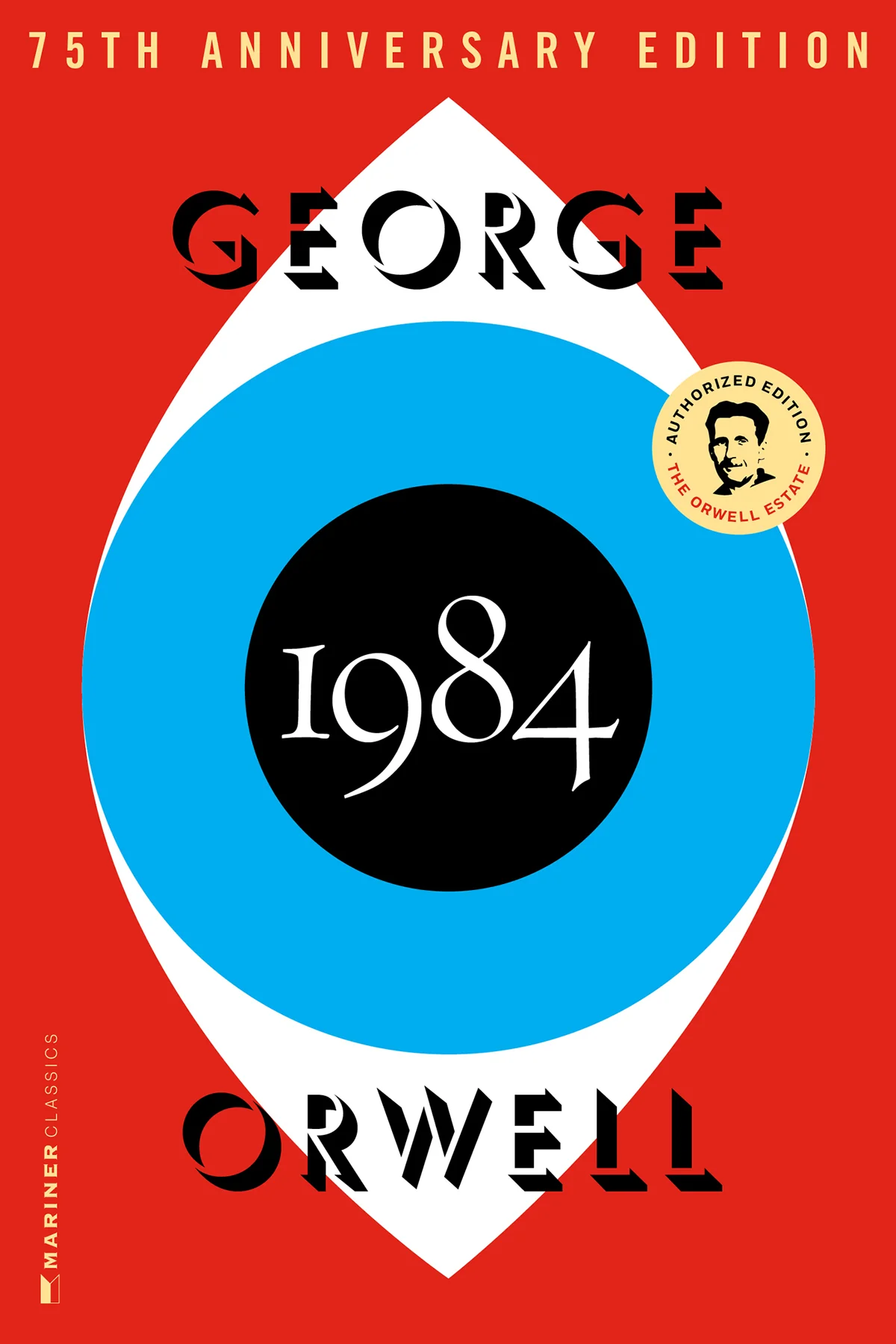
A man's doomed rebellion against a totalitarian regime that seeks to control not just behavior but thought itself, ultimately revealing how absolute power can destroy the very essence of human nature.
Overview
In the grim landscape of Oceania, 1984 presents a world where totalitarian control has reached its ultimate expression through the omnipresent Party and its figurehead, Big Brother. Winston Smith, a thirty-nine-year-old functionary at the Ministry of Truth, exists in a society where telescreens monitor every movement, history is constantly rewritten, and independent thought constitutes the gravest crime. His daily work involves altering historical records to match the Party's current narrative, yet beneath his compliant exterior burns a dangerous ember of rebellion. The city of London, now part of this superstate, bears little resemblance to any recognizable civilization, with its crumbling Victory Mansions, synthetic food, and the ever-present propaganda posters declaring that Big Brother is watching.
Winston's act of keeping a secret diary becomes the first crack in his carefully maintained facade of loyalty, leading him into increasingly perilous territory. His world transforms when he encounters Julia, a dark-haired woman whose seemingly orthodox Party membership conceals a passionate hatred for the regime. Their forbidden love affair unfolds in stolen moments—in secluded woodlands, church belfries, and eventually a rented room above an antique shop where they can briefly escape the surveillance state. Through Julia, Winston discovers not only physical intimacy but also the possibility of authentic human connection in a world designed to eliminate such bonds. Their relationship becomes both an act of rebellion and a desperate assertion of their humanity against a system determined to reduce them to mere extensions of the Party's will.
The lovers' sanctuary proves illusory when O'Brien, an Inner Party member whom Winston believed to be a fellow conspirator, reveals himself as an agent of the very system they sought to resist. Winston's arrest and subsequent imprisonment in the Ministry of Love strips away any romantic notions about resistance or martyrdom. Under O'Brien's methodical torture, Winston confronts the terrifying reality that the Party seeks not merely compliance but the complete reconstruction of human consciousness. The psychological torment reveals the Party's true purpose: not the creation of a better society, but the pure exercise of power for its own sake, a dominion so absolute that it extends even into the realm of objective reality.
The final degradation occurs in Room 101, where Winston faces his deepest terror and commits the ultimate betrayal—not of the Party, but of Julia and his own capacity for love. Released back into society, he becomes a hollow shell of his former self, spending his days in the Chestnut Tree Café, playing chess and drinking Victory Gin. His transformation is complete when he encounters Julia again, and they acknowledge with mutual indifference how thoroughly they have betrayed each other. Orwell's masterpiece stands as a chilling prophecy of how totalitarian power, when perfected, can not only control behavior but fundamentally alter human nature itself, leaving its victims grateful for their own destruction.
Main Characters
- Winston Smith - Ministry of Truth worker who rebels against the Party through forbidden love and independent thought
- Julia - Winston's lover whose pragmatic rebellion masks deep anti-Party sentiment
- O'Brien - Inner Party member who poses as a resistance conspirator while serving as Winston's torturer
- Big Brother - The omnipresent figurehead of the totalitarian Party
Central Themes
- Totalitarian control and surveillance
- The malleability of truth and reality
- Individual rebellion versus state power
- The destruction of human relationships and love
- Psychological manipulation and conditioning
Mood & Atmosphere
Oppressive, paranoid, and deeply pessimistic, with an atmosphere of constant surveillance and the gradual erosion of hope and human dignity