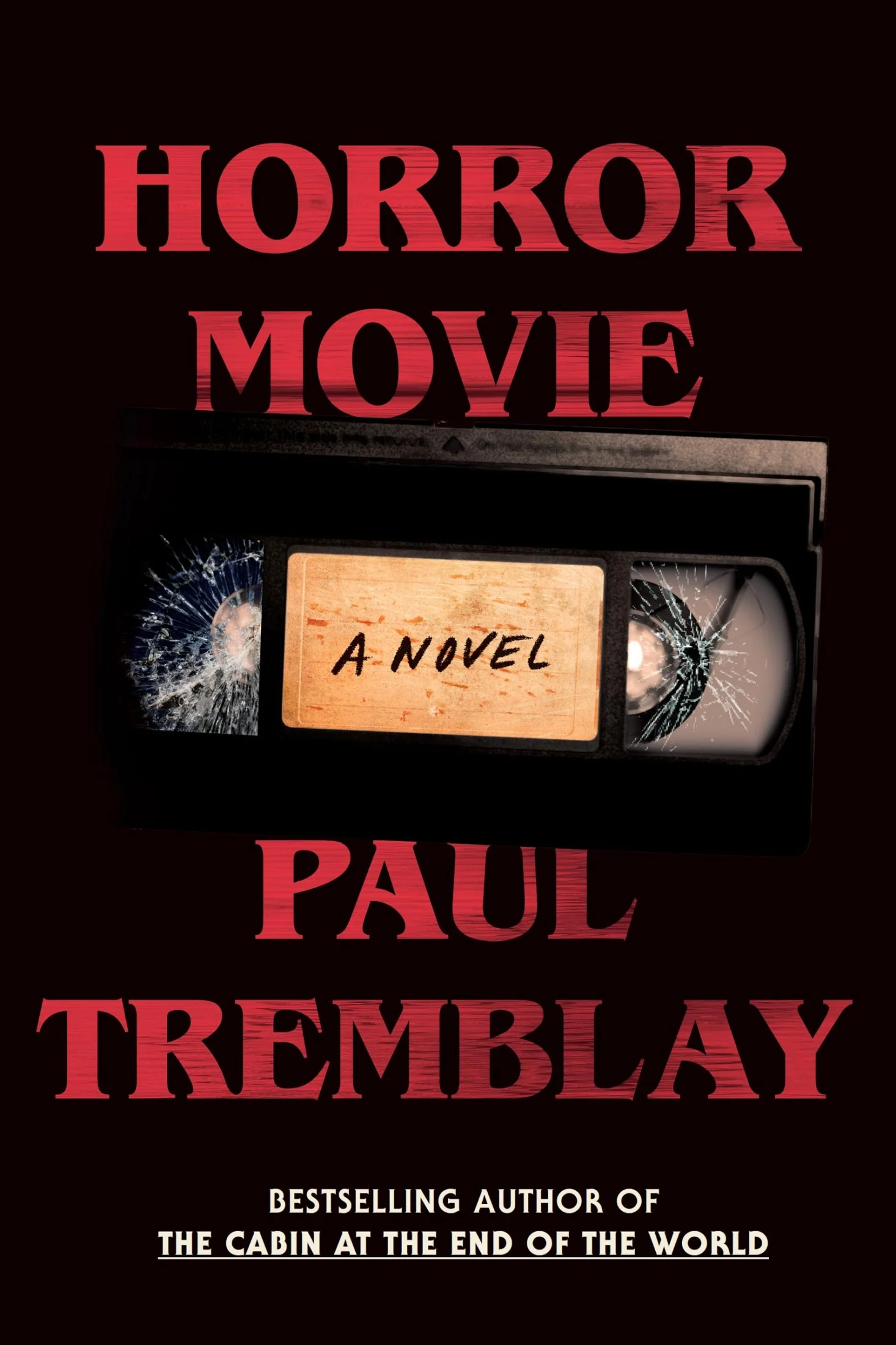
Horror Movie
An actor recounts the fatal, unfinished 1993 production of a cult horror film and his contradictory injuries before murdering his younger replacement to take over its Hollywood reboot.
Overview
In 1993, an unnamed aspiring actor joins a small Rhode Island production of Horror Movie, a low-budget film written by Cleo Picane and directed by Valentina Rojas, both of whom also act alongside Karson. The narrator plays the masked Thin Kid. The movie is never completed or shown in full after Cleo dies during a chainsaw scene near the end of filming. In 2008, Valentina distributes the screenplay, still photographs, and three edited scenes online, and the incomplete movie acquires a devoted horror following. The narrator later attends conventions and becomes involved with producer George and director Marlee Bouton as a studio-backed reboot takes shape. Karson later dies in a 1998 car crash, Melanie is presumed drowned in 2006, Dan dies of a heart attack in 2007, and Valentina dies of cancer in 2008. These later deaths contribute to the film's reputation without establishing a supernatural curse.
The novel moves among the original 1993 shoot, Valentina's 2008 reunion with the narrator, the contemporary reboot, and thirteen excerpts of Cleo's screenplay. These are distinct accounts rather than one uninterrupted chain of events. In the fictional movie, the teenage Valentina, Cleo, and Karson lead the Thin Kid into an abandoned school, strip and isolate him, and subject him to increasingly cruel treatment. The screenplay depicts his mask apparently merging with his skin as he grows scales, escapes his confinement, and becomes dangerous to his tormentors. Its later scenes show Karson being killed, Cleo leading the Thin Kid back to school, and the Thin Kid killing her with a chainsaw. Fictional Valentina then takes him home and conceals him beneath her bed. Even the final resemblance of a bloodstain to the recurring painted symbol is presented as uncertain.
Behind the camera, the narrator describes strict rules against speaking while wearing the mask, a night spent alone in the abandoned school, prolonged physical demands, and escalating safety failures. He initially recounts losing part of his right pinky in a 1993 shears accident, though he acknowledges serious gaps in his memory. At breakfast before the final shoot, Cleo says she does not currently want to die, despite discussing how some fears informed her fictional character. On the original production's final day, the crew uses a running chain for opening shots, removes it for staged fighting, and reattaches it for an effect involving a wooden block and a steel shield intended to protect Cleo. The narrator reports that Cleo pulled the saw toward herself and sat up during the fatal take. He claims she apologized, but the recording does not clearly preserve those words. He attributes her death to suicide, says her family and the courts accepted that conclusion, and acknowledges legal consequences for negligent set safety. He also fears he may have contributed to the fatal movement and cannot fully trust his recollection. The scripted killing and the disputed real filming incident must not be treated as interchangeable.
In 2008, Valentina, terminally ill with pancreatic cancer, explains her plan to release the old footage and build interest in eventually remaking Cleo's work. During the same visit, the narrator gives a different account of his missing fingertip: after he ingests Valentina's medication, she cuts off part of his pinky, and he later swallows it while wearing the mask. This conflicts with the earlier 1993 hospital narrative rather than conclusively resolving the injury's origin. At a 2019 convention, he shows that part of the fingertip really is missing, but not when or how it was lost. In preparation for the reboot, the narrator also displays scale-like growths to the special-effects crew, while sometimes embellishing or concealing parts of his history. The mask's origin and the reliability of his self-presentation remain uncertain.
The narrator hopes Marlee's reboot will finally fulfill the original artists' ambitions, but is disappointed by the professional production and by his own greatly reduced role. He appears for only five takes approaching Karson in a staged death scene, while a younger actor plays the new Thin Kid for the killing itself. Before the reboot is due to film Cleo's chainsaw death, the narrator secretly remains in the younger actor's trailer, plants cameras, and paints the recurring symbol with blood. He describes killing the actor with claws and an enlarging mouth, concealing the body, and reshaping himself to impersonate his replacement. He intends to commandeer the final scene and imagines several incompatible endings, from further violence to a film that follows him walking indefinitely. The novel ends as he is called to set, before any of those proposed conclusions or the completed remake is shown.
Main Characters
- The Narrator - an unnamed actor who played the original Thin Kid, recalls events unreliably, and attempts to reclaim the role during the reboot
- Cleo Picane - the original screenwriter and an actor whose fictional death by chainsaw is separate from her real on-set death
- Valentina Rojas - the original director and an actor who releases the surviving film material in 2008 and proposes preserving Cleo's work
- Karson - one of the original performers and one of the fictional Thin Kid's tormentors, with different fates in the screenplay and the production's aftermath
- Marlee Bouton - the director of the new studio film who intends to use both a younger Thin Kid actor and the original performer
- George - the producer who approaches the narrator about reviving the unreleased film
- The New Thin Kid - a younger replacement actor in the reboot whom the narrator kills and impersonates in his account of the final chapter
Central Themes
- Unsafe filmmaking and responsibility for harm
- The distinction between a screenplay, filming, memory, and the narrator's present account
- Unreliable testimony and contradictory personal history
- Body horror and the loss of boundaries between performer and character
- Exploitation of tragedy and the creation of cult-film mythology
Mood & Atmosphere
Unsettling, sardonic, and increasingly violent, moving between production realism, uncertain recollection, and descriptions of physical transformation without conclusively explaining the mask.
Source Edition
Horror Movie (2024), HarperCollins. How sources are recorded.