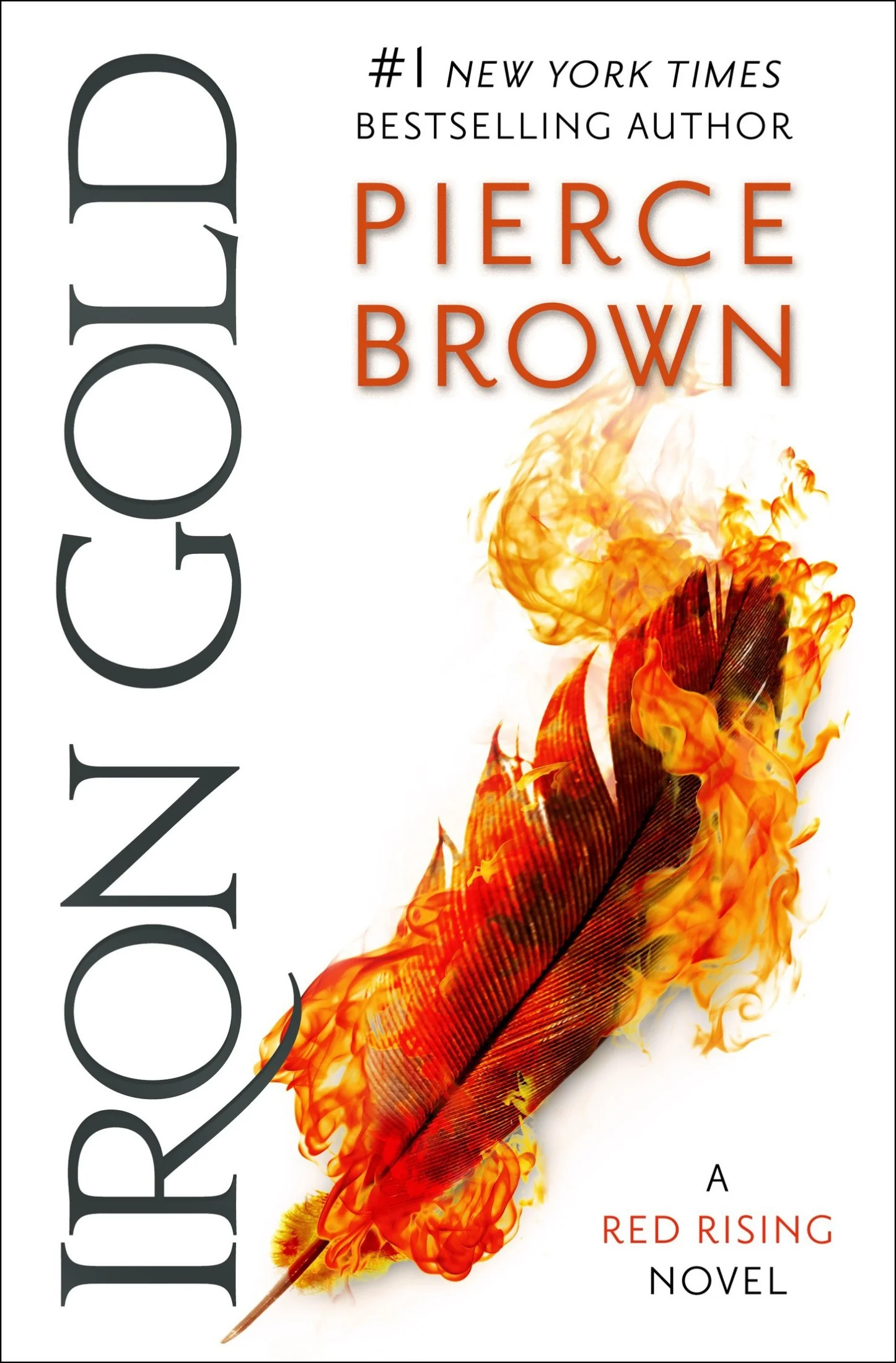
Iron Gold
Ten years into the Republic's unfinished war, Darrow breaks with its institutions, Lyria and Ephraim become entangled in the Syndicate's abduction of Pax and Electra, and Lysander turns toward a Rim campaign against Darrow as the conflict expands rather than ends.
Overview
Ten years after the fall of Octavia au Lune, the Solar Republic has liberated much of the Core but has not ended the war. Darrow returns from an unauthorized Iron Rain on Mercury that cost roughly a million soldiers and asks the Senate for the forces to attack the Ash Lord on Venus. Dancer exposes that Darrow concealed an armistice approach from the Society, the Senate removes Darrow from high command, and an arrest warrant is imminent. Darrow refuses both surrender and a military seizure of the Senate. He leaves Luna with Sevro and a group of Howlers, frees Apollonius au Valii-Rath from Deepgrave, and uses him to reach Venus. There Darrow discovers that Magnus au Grimmus has been incapacitated for three years after Apollonius arranged his poisoning. Magnus reveals that Atalantia has been directing the Society war effort in his name and that the peace initiative was her strategy. He also tells Darrow and Sevro that their children have been taken. After Magnus dies, Darrow and Sevro split: Sevro takes the Nessus back toward Luna and the children, while Darrow chooses the endangered Republic army on Mercury. Iron Gold ends with Darrow putting away Pax's key, consciously setting aside the father, and returning to war as the Reaper.
Lyria is an eighteen-year-old Gamma Red whose mine, Lagalos, was liberated only after years of post-Rising conflict. Two years after reaching the surface, she lives in overcrowded Assimilation Camp 121, where the Republic's promises have yielded poverty, disease, and exposure to the Red Hand. A Red Hand attack kills Tiran, Lyria's father, Ava, and Ava's children, leaving Lyria with her blind nephew Liam. Lyria helps save Kavax au Telemanus during the Republic response, and Kavax brings her and Liam to Luna. There, Ephraim, disguised as Philippe, befriends and manipulates Lyria into carrying a device that disables the Telemanus transport during the abduction of Pax and Electra. Lyria survives the attack, escapes the kidnappers, and returns with information that lets Virginia and Holiday connect the plot to the Syndicate and identify Philippe as Ephraim ti Horn. Virginia acknowledges the Republic's failure toward Lyria's family, and Lyria agrees to testify before the Senate in exchange for help restoring Liam's sight. Her final scene remains unresolved: an unidentified Brown woman sedates her while saying that House Barca sends its regards.
Ephraim ti Horn is a former Son of Ares recruiter and scar hunter who has become a thief, drug user, and freelancer after the death of his fiancé, Trigg. The Syndicate uses an old debt to compel Ephraim, Volga, Cyra, and Dano to abduct Pax and Electra. Cyra and Dano are killed during the job, and Ephraim's attempt to flee Luna collapses after Volga leaves him. Holiday and Lyria intercept him and use Volga's detention to force his cooperation. Ephraim infiltrates the Syndicate base in Endymion, overpowers the Duke of Hands, and finds Pax and Electra alive. He escapes with them but is shot by Gorgo. When the Syndicate Queen remotely seizes control of the stolen ship, Ephraim destroys its propulsion with thermal grenades rather than allow the children to be taken back. His final chapter ends with the ship falling uncontrolled toward the city; Iron Gold does not establish his death.
Lysander au Lune, now twenty, has spent ten years traveling with Cassius au Bellona beyond the Core. Their attempt to help the crew of the Vindabona brings them into contact with Seraphina au Raa and carries them into the Rim. The discovery of a hidden recording proving that Darrow and the Rising, not Roque and Octavia, destroyed the Ganymede Dockyards breaks the political foundation of the Pax Ilium. After Cassius fights a series of duels, Lysander is told that Cassius has died from blood loss; Iron Gold does not independently verify that report. Lysander then rejects Gaia au Raa's plan to free Romulus, sides with Dido's war faction, and witnesses Romulus confess that he knew the truth about Ganymede and concealed it to prevent a ruinous war. Romulus is convicted of treason and dies during the Rim's ritual return to the dust. In Lysander's final chapter, he declares himself an Iron Gold and proposes that Dido send him into the Core to seek his godfather and an alliance against Darrow. Dido smiles, but the source does not state that she accepts the proposal.
The four viewpoints intersect unevenly. Lyria and Ephraim become direct participants in the same Syndicate kidnapping, while Darrow learns only that Pax and Electra have been taken and does not learn the source-established mechanics of the plot within his own narrative stream. Lysander never physically joins the other three viewpoints; his connection is political and historical, through Darrow's concealed destruction of the Ganymede Dockyards and the Rim's resulting turn toward war. By the end, the Republic is politically divided, its Mercury army is threatened, Virginia's peace vote and position remain unsettled, the Rim has lost Romulus and is mobilizing around evidence of Darrow's betrayal, and neither the Core war nor the new political order has reached a stable settlement.
Main Characters
- Darrow - the Republic's former ArchImperator, who defies the Senate, discovers Atalantia has been directing the Society war effort, and ends the book choosing his endangered army over an immediate return to Pax
- Lyria - a Gamma Red survivor of the Camp 121 massacre whose connection to the Telemanuses and Ephraim makes her a key witness to the Syndicate kidnapping
- Ephraim ti Horn - a former Son of Ares recruiter and scar hunter turned thief who helps abduct Pax and Electra, then risks his life trying to rescue them
- Lysander au Lune - the surviving heir of House Lune, raised for ten years by Cassius, who sides with Dido's war faction and proposes seeking a Core alliance against Darrow
Central Themes
- The cost of war and political violence
- Conflicting duties to family, law, and cause
- The instability of liberation without durable institutions
- Memory, grief, and inherited political identity
Mood & Atmosphere
Fragmented and increasingly volatile, moving among political crisis, refugee displacement, criminal coercion, family grief, and renewed interplanetary war.
Source Edition
Iron Gold (2018), Random House Worlds. How sources are recorded.