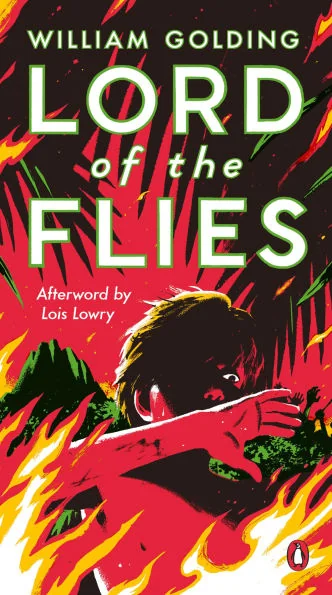
Chapter One: the Sound of the Shell
Two boys, Ralph and Piggy, emerge from the wreckage of a plane crash and find themselves on a deserted island. Ralph, a fair-haired boy, is delighted by the absence of adults, while Piggy, a fat, bespectacled boy, is more concerned about the practicalities of survival and the possibility of rescue. During their exploration, they discover a conch shell, which Piggy recognizes as a valuable tool for gathering the other survivors.
Ralph uses the conch to summon the other boys, who gradually arrive at the platform. Among them is a group of choir boys led by Jack Merridew, a tall, red-haired boy with a commanding presence. An impromptu election is held to choose a leader, and despite Jack’s assertion of his qualifications, Ralph is chosen as chief due to his possession of the conch and his charismatic demeanor. Jack and his choir are designated as hunters.
Ralph, Jack, and Simon, a quiet, sensitive boy, embark on an expedition to confirm that they are indeed on an island. They climb the mountain and, upon reaching the summit, survey the island’s terrain. The boys are elated by their discovery and the sense of ownership over their new environment. However, their initial excitement is tempered by the realization of the challenges they face, including the need to find food and ensure their safety.
During their exploration, the boys encounter a piglet trapped in creepers. Jack, armed with a knife, hesitates, and the piglet escapes. This moment highlights the boys’ inexperience with hunting and the moral hesitation they experience when faced with the prospect of killing. The chapter ends with the boys returning to the platform, where they plan to address the immediate needs of their group and prepare for their potential rescue.
Key Events
- Ralph and Piggy meet and discover the conch shell
- Ralph blows the conch to gather the other boys
- Ralph is elected as chief
- Ralph, Jack, and Simon explore the island and confirm it is an island
- Jack fails to kill a piglet during the expedition
Characters Appearing
- Ralph
- Piggy
- Jack Merridew
- Simon
- Sam and Eric (the twins)
- Maurice
- Roger
- Bill
- Robert
- Harold
- Henry
- Johnny
Themes
- Survival and leadership
- The initial formation of a social hierarchy
- The boys' initial optimism and the challenges of reality
Chapter Two: Fire on the Mountain
Ralph, still energized from the initial meeting, calls another assembly using the conch to organize the boys' efforts on the island. He emphasizes the importance of maintaining order and suggests using the conch to control who speaks, ensuring that discussions remain productive. Jack, though initially resistant, agrees with the idea of rules and emphasizes the need for hunting and exploring the island for any signs of danger, such as the 'beastie' mentioned by a young boy with a birthmark. The boys decide to build a signal fire on the mountain, and Piggy's glasses are used to start it. However, the fire quickly grows out of control, leading to an accidental forest fire. Piggy expresses deep concern about the lack of shelters and the potential loss of a young boy with a birthmark, highlighting the growing tension between the boys' desire for fun and the need for survival.
Key Events
- Ralph calls a second assembly to organize the boys' efforts
- The boys decide to build a signal fire on the mountain
- Piggy's glasses are used to start the fire, leading to an accidental forest fire
- Piggy expresses concern about the lack of shelters and the potential loss of a young boy with a birthmark
Themes
- Leadership and order
- Fear and superstition
- The consequences of recklessness
Chapter Three: Huts on the Beach
Jack, the hunter, is deeply focused on tracking a pig through the dense undergrowth of the island. His appearance has changed since the crash, with longer, lighter hair and a body marked by the elements. Despite his intense efforts, he fails to catch the pig, and his frustration is palpable. Jack returns to the beach, where Ralph is struggling to build shelters with minimal help, primarily from Simon. Ralph is disheartened by the lack of cooperation from the other boys, who prefer swimming and playing to working.
Tensions rise as Jack and Ralph argue over the priorities of the group. Jack is fixated on hunting and providing meat, while Ralph insists on the necessity of building shelters and maintaining the signal fire. The conversation touches on the boys' fears, particularly the younger ones who are plagued by nightmares of a 'beastie.' Simon suggests that the fear might be rooted in something deeper, hinting at a more primal terror. Jack shares his own unsettling experiences in the forest, describing a feeling of being hunted, which adds to the growing sense of unease.
After the argument, Jack and Ralph temporarily reconcile as they watch the signal fire, which is not as effective as it should be. Jack promises to help with the shelters, but his mind is clearly elsewhere, preoccupied with the thrill of the hunt. Meanwhile, Simon, often seen as peculiar by the others, takes a solitary walk into the forest. He helps the littluns gather fruit and then finds a secluded clearing, a hidden spot where he can be alone. The chapter ends with Simon in this peaceful, secluded area, surrounded by the natural beauty of the island, as the day fades into evening.
Key Events
- Jack tracks a pig but fails to catch it
- Ralph and Jack argue over priorities: shelters vs. hunting
- Simon helps the littluns gather fruit and finds a secluded clearing in the forest
Themes
- The conflict between survival needs and immediate desires
- The psychological impact of isolation and fear
- The emergence of leadership tensions and differing priorities
Chapter Four: Painted Faces and Long Hair
The midday heat on the island creates mirages and illusions, which the boys learn to ignore. The littluns, the youngest boys, play in the sand and build castles, leading a separate life from the older boys, or biguns, who engage in more structured activities. Recently relieved from fire duties, Roger and Maurice disrupt the littluns' sandcastles, with Roger showing a growing disregard for the rules of their former society.
Jack, increasingly obsessed with hunting, experiments with face painting to improve his stealth. He applies white, red, and black clay to his face, transforming himself into a nearly unrecognizable figure. This transformation liberates him from his usual inhibitions, and he leads a successful pig hunt, which culminates in the slaughter of a sow. The hunters return triumphantly to the mountain, carrying the pig's carcass and chanting a brutal song about the kill.
Upon reaching the mountain, Jack and the hunters are confronted by Ralph, who is furious that they allowed the signal fire to go out. A ship had been sighted, but without the smoke signal, it passed by without noticing the boys. The tension between Ralph and Jack escalates, with Jack apologizing insincerely and Ralph accusing Jack of prioritizing hunting over the group's survival. The conflict reaches a boiling point when Jack physically assaults Piggy, breaking one lens of his glasses. Despite the tension, the boys eventually come together to rebuild the fire and roast the pig, though the atmosphere remains strained.
Key Events
- Roger and Maurice disrupt the littluns' sandcastles
- Jack paints his face and leads a successful pig hunt
- Ralph discovers the signal fire is out and a ship has passed by
- Jack and Ralph confront each other over the fire and hunting priorities
- Jack physically assaults Piggy, breaking his glasses
Themes
- The breakdown of social order and the emergence of primal instincts
- The conflict between survival and instinctual desires
- The loss of innocence and the descent into savagery
Chapter Five: Beast From Water
The challenges of island life weigh heavily on Ralph, prompting him to call a serious assembly to address the group's issues. He emphasizes the importance of rules and responsibilities, particularly the maintenance of the signal fire, the cleanliness of the camp, and the construction of shelters. Ralph feels the need to assert his authority as chief and ensure that the boys take their tasks seriously.
During the assembly, Ralph outlines the problems they face, including the neglect of the fire, the lack of proper sanitation, and the fear of the 'beast.' He stresses the importance of maintaining the signal fire and using the designated area for waste disposal. Jack interrupts, dismissing the fears of the littluns and asserting that there is no beast on the island. He argues that fear is a normal part of life and that the boys should focus on hunting and survival.
The discussion turns to the origins of the beast, with some boys suggesting it might come from the sea. Simon hesitantly suggests that the beast might be within themselves, but his comment is met with ridicule. The assembly becomes chaotic, with boys arguing and chanting. Ralph tries to regain control, but the meeting dissolves into chaos. Jack's aggressive behavior and the boys' growing savagery become evident, highlighting the breakdown of order and the increasing tension between Ralph and Jack.
After the assembly, Ralph, Piggy, and Simon reflect on the meeting's failure. They discuss the possibility of ghosts and the fear that grips the boys. Piggy expresses his fear of Jack and the potential for violence if Jack gains more power. Ralph contemplates giving up his role as chief, but Simon and Piggy encourage him to continue, emphasizing the importance of his leadership in maintaining some semblance of order.
Key Events
- Ralph calls an assembly to address the group's issues, including the signal fire, sanitation, and the fear of the 'beast.'
- Jack dismisses the fears of the littluns and asserts that there is no beast, focusing instead on hunting.
- Simon suggests that the beast might be within the boys themselves, but his comment is met with ridicule.
- The assembly descends into chaos, with boys arguing and chanting, and Jack displaying aggressive behavior.
- Ralph, Piggy, and Simon reflect on the meeting's failure and the growing tension between Ralph and Jack.
Themes
- The breakdown of order and civilization
- The internal conflict and self-doubt among the boys
- Leadership and the struggle for power
Chapter Six: Beast From Air
The eerie silence of early morning is shattered as a figure descends onto the island under a parachute, landing on the mountain. The wind causes the figure to move, creating an unsettling and lifelike appearance. On duty at the fire, Sam and Eric witness this phenomenon and are terrified, believing it to be the beast. They flee to the shelter, waking Ralph and Piggy with their frantic reports.
Ralph, despite his own fears, decides to investigate the sighting. He calls an assembly, where the twins describe the beast in detail, causing panic among the boys. Jack, eager for a hunt, dismisses the need for the conch and the rules, further straining his relationship with Ralph. Ralph insists on the importance of the signal fire and the need to investigate the beast, emphasizing the group's desire to be rescued.
Ralph leads the older boys to the castle rock, a formidable and isolated area of the island. Jack, initially reluctant, joins Ralph, and they explore the area together. They find no signs of the beast but recognize the strategic value of the castle rock as a fort. Ralph, however, remains focused on the need to return to the mountain and relight the signal fire.
Despite the boys' enthusiasm for exploring and playing, Ralph insists on continuing the search for the beast and ensuring the safety of the group. Jack's interest in the fort and the boys' reluctance to face the mountain highlight the growing divide between the desire for fun and the need for responsible leadership.
Key Events
- A figure descends onto the mountain under a parachute, terrifying Sam and Eric.
- Ralph calls an assembly to address the sighting of the beast, causing panic among the boys.
- Ralph and Jack lead the older boys to the castle rock, finding no beast but recognizing its potential as a fort.
- Ralph insists on returning to the mountain to relight the signal fire, despite the boys' reluctance.
Themes
- The psychological impact of fear and its role in eroding rational thought and cooperation.
- The growing divide between Ralph's responsible leadership and Jack's desire for power and chaos.
- The tension between the boys' need for security and their attraction to the thrill of savagery.
Chapter Seven: Shadows and Tall Trees
Ralph and Jack lead the boys on a hunt, with Ralph reflecting on the deteriorating conditions of their appearance and hygiene. The boys encounter a boar, and Ralph manages to hit it with his spear, though the boar escapes. Their excitement turns to a mock hunt, where they pretend to attack Robert, leading to a violent and unsettling game that mirrors their growing savagery.
Later, the boys reach the mountain, but Jack, Maurice, and the twins express concerns about the beast. Ralph decides to send Simon to inform Piggy that they will return after dark. Jack, Ralph, and Roger decide to climb the mountain to investigate the beast. Jack claims to have seen a bulging creature on the mountain top, and despite their fears, they proceed. On the mountain, they encounter a mysterious, ape-like figure, which terrifies them, and they flee, leaving the creature behind.
The chapter highlights the increasing tension between Ralph and Jack, the boys' descent into savagery, and the growing fear of the unknown. Ralph's leadership is tested, and the boys' fragile sense of order continues to erode as they confront the beast and their own primal instincts.
Key Events
- Ralph and the boys go on a pig hunt, with Ralph hitting a boar with his spear.
- The boys engage in a violent mock hunt, attacking Robert.
- Simon volunteers to inform Piggy that the boys will return after dark.
- Jack, Ralph, and Roger climb the mountain and encounter a mysterious, ape-like figure, which they flee from.
Themes
- The erosion of civilized behavior
- The power of fear and superstition
- The conflict between leadership and chaos
Chapter Eight: Gift for the Darkness
Following the failed assembly and the growing tension between Ralph and Jack, the boys gather to discuss the beast. Ralph, Piggy, and Simon express deep concern about the beast and the safety of the group. Jack, seizing the opportunity, uses the assembly to challenge Ralph's leadership, accusing him of being a coward and unfit to be chief. Despite Jack's fiery rhetoric, the majority of the boys remain loyal to Ralph, and Jack storms off, vowing to form his own tribe.
Simon suggests climbing the mountain to investigate the beast, but the idea is met with dread. Instead, Piggy proposes moving the signal fire to the beach, a suggestion that the boys enthusiastically support. They build a new fire and celebrate, but Piggy notices that several boys, including Maurice, Bill, and Roger, have left to join Jack. Ralph, feeling the strain of leadership, wonders if he can continue.
Meanwhile, Jack and his followers raid the original fire site, taking fire and inviting the others to a feast. During the hunt, Jack and his hunters kill a sow and decapitate it, placing the head on a stake as a gift for the beast. Simon, who has been hiding in the forest, encounters the head, which he perceives as the Lord of the Flies. The head speaks to Simon, revealing that the beast is within the boys themselves and that they will have fun on the island, implying a dark and violent future.
Back at the beach, Ralph and Piggy struggle to maintain the fire and the group's morale. Jack and his hunters arrive, inviting the others to join their feast. The boys are torn between staying with Ralph and joining Jack's more exciting and savage activities. The chapter ends with Simon losing consciousness, overwhelmed by the revelations of the Lord of the Flies.
Key Events
- Jack challenges Ralph's leadership during the assembly.
- Piggy suggests moving the signal fire to the beach.
- Jack and his hunters kill a sow and place its head on a stake as a gift for the beast.
- Simon encounters the Lord of the Flies, which reveals the true nature of the beast.
- Jack invites the boys to join his tribe for a feast.
Themes
- The struggle for leadership and authority
- The internalization of the beast and the loss of innocence
- The conflict between civilization and chaos
Chapter Nine: a View to a Death
As the weather deteriorates, Simon, still recovering from his seizure, makes the arduous journey to the mountain to investigate the beast. Climbing through the dense forest, he reaches the summit and discovers the dead parachutist, realizing that the beast is nothing more than a lifeless body. Despite his exhaustion and the putrid smell, Simon frees the body from the parachute lines, determined to reveal the truth to the others.
Ralph and Piggy, meanwhile, relax by the pool, reflecting on the growing number of boys defecting to Jack's camp. The atmosphere is tense, with the impending storm and the boys' divided loyalties. Deciding to attend Jack's feast in hopes of maintaining some unity, they join the gathering. Jack, now painted and adorned with garlands, asserts his authority and invites the boys to join his tribe, promising protection and enjoyment. Ralph, feeling increasingly marginalized, tries to assert his leadership, but the boys are captivated by Jack's charisma and the thrill of the moment.
The feast quickly turns into a frenzied dance, with the boys chanting and reenacting the pig hunt. Simon, having descended the mountain, approaches the camp, but the boys, in their hysteria, mistake him for the beast. In a brutal and chaotic frenzy, they attack and kill Simon, whose body is later carried out to sea by the rising tide. The chapter concludes with a poignant description of Simon's body floating away, surrounded by phosphorescent creatures, as the storm clears and the sky returns to its serene beauty.
Key Events
- Simon discovers the dead parachutist and realizes the beast is a lifeless body.
- Ralph and Piggy attend Jack's feast, where Jack asserts his authority and invites the boys to join his tribe.
- The feast degenerates into a frenzied dance, and the boys mistakenly kill Simon, thinking he is the beast.
Themes
- The descent into savagery and loss of innocence
- The power of fear and superstition over rational thought
- The conflict between civilization and chaos, and the breakdown of social order
Chapter Ten: the Shell and the Glasses
Still reeling from the brutal murder of Simon, Ralph and Piggy are left grappling with the reality of what they have witnessed and participated in. Ralph, visibly shaken and injured, seeks solace with Piggy, who tries to rationalize the event as an accident. Despite Piggy's insistence, Ralph is haunted by the memory and the realization that their actions were part of a larger descent into savagery. The two discuss the possibility of living separately from the others, but the practicalities of maintaining a fire and their dwindling numbers make this idea seem futile.
Jack, meanwhile, has solidified his position as the leader of the new tribe, which now occupies Castle Rock. His authority is reinforced by his decision to punish Wilfred without explanation, showcasing the arbitrary and cruel nature of his leadership. Maurice and Roger volunteer to accompany Jack on a raid to steal fire from Ralph's group, highlighting their loyalty and the increasing polarization between the two factions.
Ralph, Piggy, and the twins struggle to keep the fire going, but the task proves difficult with limited resources and manpower. The fire struggles to produce the necessary smoke, and the boys' spirits are low. Ralph, feeling the weight of his responsibility, emphasizes the importance of the fire for rescue, but the others are skeptical and weary. As night falls, the group retreats to their shelter, where they are ambushed by Jack and his hunters. The attack is violent and chaotic, with Ralph and the others fighting desperately to protect themselves. The shelter collapses, and the attackers flee, leaving the boys battered but alive.
In the aftermath, Ralph and Piggy realize that Jack and his followers came not just to fight, but to steal Piggy's glasses, which are essential for starting fires. This act further isolates Ralph's group and underscores the ruthless tactics of Jack's tribe. The chapter ends with Ralph and Piggy contemplating their next move, aware that their situation has become even more precarious.
Key Events
- Ralph and Piggy discuss the murder of Simon and the guilt they feel.
- Jack solidifies his leadership and plans a raid to steal fire from Ralph's group.
- Jack punishes Wilfred without explanation, demonstrating his arbitrary power.
- Ralph, Piggy, and the twins struggle to maintain the fire.
- Jack and his hunters ambush Ralph's group, stealing Piggy's glasses.
Themes
- The psychological impact of violence
- The erosion of moral boundaries
- The struggle for survival and leadership
Chapter Eleven: Castle Rock
Ralph, Piggy, and the twins gather around the remnants of the extinguished fire, still reeling from the brutal murder of Simon and the theft of Piggy's glasses. Ralph, determined to confront Jack and his tribe to reclaim the glasses and restore order, is met with Piggy's insistence on carrying the conch and speaking to Jack about justice and fairness, despite his blindness and the danger.
Preparation for their journey to Castle Rock, the stronghold of Jack's tribe, involves a symbolic attempt to present themselves as civilized and reasonable. They wash and attempt to tidy their appearance, a stark contrast to the painted savages they are about to face. As they approach Castle Rock, they encounter a group of savages guarding the entrance. Ralph calls for an assembly, but the savages, led by Jack, mock and threaten them. Jack, now fully entrenched in his role as the savage leader, refuses to return the glasses and orders the twins to be captured.
The situation escalates as Jack and Ralph engage in a physical confrontation. Piggy, holding the conch, tries to reason with the tribe, emphasizing the importance of rules and rescue. However, the tribe's hostility grows, and Roger, from his vantage point above, releases a massive rock that strikes Piggy, killing him and shattering the conch. The tribe, now fully under Jack's control, chases Ralph, who narrowly escapes into the forest. The chapter ends with the twins being forced to join Jack's tribe, leaving Ralph alone and in grave danger.
Key Events
- Ralph, Piggy, and the twins prepare to confront Jack and his tribe.
- Piggy insists on carrying the conch and speaking to Jack about justice.
- Jack and his tribe refuse to return Piggy's glasses and capture the twins.
- Roger releases a rock that kills Piggy and shatters the conch.
- Ralph escapes into the forest as the tribe chases him.
Themes
- The loss of innocence
- The collapse of moral and social structures
- The consequences of unchecked power and violence
Chapter Twelve: Cry of the Hunters
Ralph, now an outcast and hunted by Jack and his tribe, hides in the forest, his body battered and spirit broken. Injured and exhausted, he contemplates his next move. Despite the danger, he resolves to confront Jack and his tribe, hoping to reason with them and reclaim Piggy's glasses. However, the tribe, fully entrenched in savagery, is determined to hunt him down. Ralph overhears Sam and Eric, who have been forced to join Jack's tribe, warning him that the tribe plans to hunt him the next day. They reveal that Roger has sharpened a stick at both ends, hinting at a sinister fate for Ralph.
Ralph spends the night in a thicket, planning his escape. The next morning, the tribe sets the island on fire to flush him out. Driven by fear and desperation, Ralph runs through the burning forest, evading the hunters. The fire spreads rapidly, consuming the island. Cornered on the beach, Ralph collapses in exhaustion and fear. Suddenly, a naval officer arrives, having seen the smoke from the cruiser. The officer is bewildered by the boys' appearance and behavior, asking if they have been playing war games. Overwhelmed with emotion, Ralph breaks down, weeping for the loss of innocence and the darkness of human nature.
The arrival of the naval officer brings an abrupt end to the boys' descent into savagery. Initially amused by the situation, the officer becomes concerned upon learning of the deaths and the destruction of the island. Surrounded by the other boys, Ralph weeps for the loss of Simon, Piggy, and the end of their innocence. The chapter concludes with the boys being taken aboard the cruiser, marking the end of their ordeal on the island.
Key Events
- Ralph hides in the forest and overhears Sam and Eric warning him about the tribe's plans.
- The tribe sets the island on fire to hunt Ralph down.
- Ralph is cornered on the beach and collapses in fear and exhaustion.
- A naval officer arrives, ending the boys' ordeal and rescuing them.
Themes
- The loss of innocence
- The darkness of human nature
- Rescue and redemption