Prologue
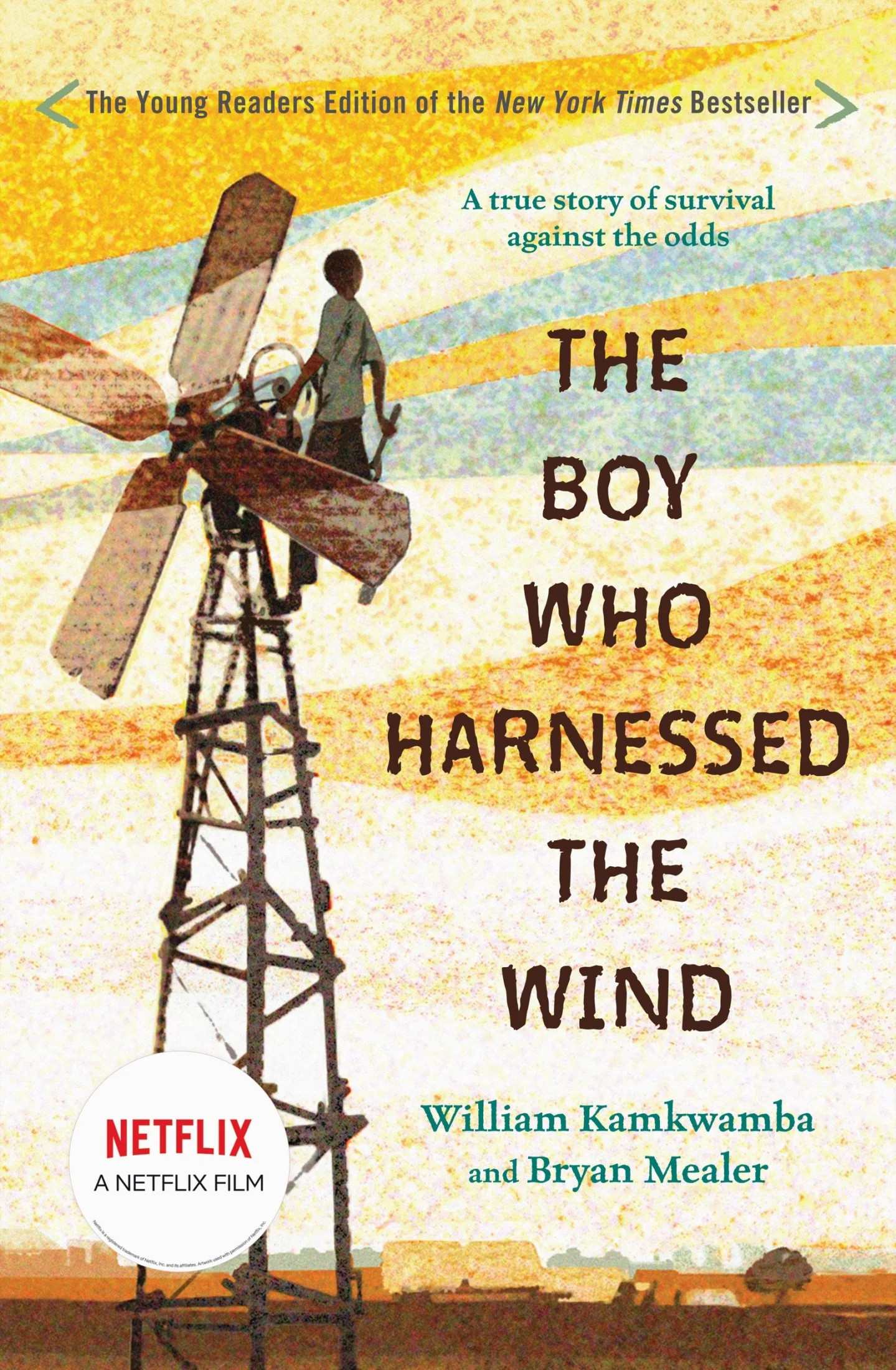
Standing atop a tower he has built, William Kamkwamba prepares to test his invention—a windmill constructed from scavenged materials. Months of hard labor and the skepticism of his community have led to this moment. Despite the physical toll and the doubts, William feels an intense sense of purpose and excitement as he readies to demonstrate the windmill's potential.
As the crowd gathers, including local traders and truck drivers who have previously mocked him, William climbs the tower and connects a small light bulb to the windmill. The tension is palpable as the crowd waits, some still skeptical and others genuinely curious. A strong gust of wind helps the windmill's blades start turning, and William holds his breath, hoping his invention will work. When the light bulb flickers and then glows brightly, the crowd is amazed, and William's dream of bringing electricity to his village becomes a reality.
This moment marks a significant turning point for William, not only validating his efforts but also inspiring hope and belief in his community. The success of his windmill symbolizes resilience, innovation, and the power of determination in the face of adversity.
Key Events
- William completes the construction of his windmill.
- The community gathers to witness the testing of the windmill.
- The windmill successfully generates electricity, lighting a bulb.
Themes
- Resilience and Perseverance
- Innovation and Creativity
- Community and Skepticism
Chapter One: When Magic Ruled the World
Still reeling from the emotional impact of his uncle John's death and the subsequent challenges, William Kamkwamba turns his attention to the vibrant and complex life in his village, Masitala. He paints a vivid picture of the close-knit community and the daily struggles of farming, interspersed with humorous anecdotes that highlight the supportive and loving environment despite the pervasive superstitions and fears.
The chapter delves into the role of magic and witchcraft in Malawian culture, particularly through the figure of the sing’anga, or witch doctor. William recounts his childhood fears of magic, including a traumatic encounter with a local trader and a series of fantastical stories told by his grandfather. These stories, while entertaining, also illustrate the deep-rooted beliefs in supernatural forces that influence daily life and decision-making in the village.
William’s skepticism towards magic begins to grow, influenced by his father’s strong faith and the introduction of Western media, such as action movies, which challenge his understanding of reality. He and his friends engage in creative play, building toy trucks and engaging in imaginative games that reflect both their traditional and modern influences. Despite the allure of magic, William starts to see the world through a lens of reason and curiosity, setting the stage for his future scientific endeavors.
The chapter concludes with a humorous anecdote about William’s attempt to gain superhuman strength through a fraudulent magic ritual performed by Shabani. The failed experiment leads to a painful and embarrassing outcome, reinforcing William’s growing skepticism and setting the foundation for his eventual turn towards science and innovation.
Key Events
- William describes his village and family life.
- William recounts his childhood fears of magic and witchcraft.
- William’s skepticism towards magic grows due to his father’s influence and exposure to Western media.
- William attempts to gain superhuman strength through a fraudulent magic ritual, leading to a painful and embarrassing outcome.
Characters Appearing
- Grandpa
- Shabani
- Mister Ngwata
- Chief Wimbe
- Mister Banda
- Mister Phiri
Themes
- Cultural Beliefs and Superstitions
- Family and Community
- Skepticism and Reason
Chapter Two: Khamba
In January 1997, William's family faced a devastating loss when Uncle John died from tuberculosis. The impact of this tragedy was profound, marking the first time William experienced death and saw his parents cry. Geoffrey, now fatherless, struggled with the loss, and the family feared the difficult times ahead, with William and Geoffrey taking on more responsibilities on the farm.
Shortly after Uncle John’s death, Uncle Socrates lost his job and returned to the village with his seven daughters. Among his belongings was a unique dog named Khamba, who quickly became a part of William's life. Despite initial resistance, William and Khamba formed a strong bond, with Khamba becoming a loyal companion and an effective watchdog for the farm’s livestock.
Khamba’s presence brought a new dimension to William’s life, particularly in their shared love for hunting. Together, they set traps in the forest, using a combination of improvised tools and natural resources. One successful hunt resulted in the capture of several birds, which they cooked and enjoyed, much to the delight of the family. William’s interaction with Khamba highlighted his growing sense of responsibility and his ability to find joy and companionship even in challenging times.
Key Events
- Uncle John dies from tuberculosis, affecting the family deeply.
- Uncle Socrates moves back to the village with his family and brings Khamba, a unique dog.
- William and Khamba form a strong bond and begin hunting together, successfully trapping and cooking birds.
Characters Appearing
- Khamba
Themes
- Loss and grief
- Companionship and loyalty
- Finding joy in adversity
Chapter Three: Discovering a Thing Called Science
Still reeling from the recent losses and the added responsibilities on the farm, William's interests began to shift. He spent more time with Geoffrey and Gilbert, playing bawo and tinkering with old radios. Their curiosity led them to dismantle and repair radios, using improvised tools and scavenged materials, which earned them a reputation as skilled fixers among the villagers.
William's fascination with how things work grew, particularly with dynamos, which he discovered could generate electricity when pedaled. This discovery sparked his imagination and fueled his desire to understand the principles of electricity. Despite the challenges of limited resources and lack of formal education, William and Geoffrey managed to create a makeshift system to power a radio using a bicycle dynamo.
The chapter also highlights the scarcity of electricity in rural Malawi, where only a small percentage of the population has access to it. William's experience with the limited and unreliable power supply at Gilbert's house, which was connected to the grid, further motivated him to find a way to bring electricity to his village. His determination to learn more about science and electricity was reinforced by his upcoming exams for secondary school, which he hoped would provide him with the knowledge and skills to pursue his dreams.
Key Events
- William and Geoffrey start fixing radios and earn a reputation as skilled fixers.
- William discovers how dynamos work and creates a makeshift system to power a radio using a bicycle dynamo.
- William's curiosity about electricity grows, driven by the scarcity and unreliability of power in rural Malawi.
Themes
- Curiosity and Innovation
- Resourcefulness and Ingenuity
- Personal and Community Impact of Limited Access to Technology
Chapter Four: the Uncertain Life of an African Farmer
William reflects on the life of an African farmer, a life marked by intense labor and uncertainty. He describes the arduous process of clearing the previous season’s harvest, preparing the soil, and digging ridges with a hoe, often starting at four in the morning. Despite the grueling work, moments of joy and camaraderie emerge, such as catching and roasting grasshoppers with Geoffrey during the burning of old maize stalks.
The chapter delves into the financial and physical challenges of farming, including the high costs of seeds and fertilizer, which often left little for Christmas celebrations. William and his family worked tirelessly, planting and fertilizing the seedlings, hoping for a bountiful harvest. However, in December 2000, their efforts were thwarted by the government's decision to increase fertilizer prices, followed by severe flooding and a subsequent drought. By May, the maize crop was devastated, with only a fraction of the expected yield surviving.
The chapter concludes with a somber note, as William and his father stand in the field, surveying the damaged crops. The family managed to fill only five bags of maize, a stark contrast to the usual abundance. William’s father’s despair is palpable as he contemplates the uncertain future, reflecting the broader crisis affecting the entire community.
Key Events
- William and his family work hard to prepare and plant the maize crop.
- Government increases fertilizer prices, making it unaffordable for many farmers.
- Severe flooding and drought destroy much of the maize crop.
- The family harvests only five bags of maize, a fraction of the usual yield.
Themes
- The Hardship of Farming
- Financial Strain of Farming
- Community Struggle
Chapter Five: Malawi Begins to Starve
In late September, a growing number of people from distant villages arrive in William and Gilbert’s area, desperately seeking food and work. The government's emergency maize reserves, intended to help in such crises, have been stolen, leaving the population without a safety net. Hunger spreads rapidly across Malawi, with prices doubling and people resorting to extreme measures to survive, such as eating gaga, the chaff from maize kernels, and green mangoes.
As the situation worsens, William's family faces severe food shortages. His father starts selling their goats to buy maize, and the family reduces their meals to just one a day, at night. William's cousin Geoffrey, who has already lost his father, struggles, working ganyu to provide for his family. The famine affects everyone, including Khamba, who grows thinner and weaker due to lack of food.
In December, William's mother devises a plan to sell cakes made from their remaining flour to buy more maize. William embarks on a long and harrowing journey to Chamama to purchase discounted maize from the government store. The trip is chaotic and violent, with a desperate crowd. Despite being cheated, William manages to bring back some maize, providing a temporary reprieve for his family.
Christmas 2001 is a bleak affair. Traditional festivities are canceled, and the family barely manages a meager meal of nsima. Driven by hunger, William, Geoffrey, and Charity resort to cooking and eating goat skins, a stark reminder of the desperation and resilience required to survive.
Key Events
- People from distant villages arrive seeking food and work.
- Government emergency maize reserves are stolen, exacerbating the famine.
- William's family reduces meals to one a day and sells their goats for food.
- William makes a dangerous trip to Chamama to buy maize, managing to bring some back despite being cheated.
- The family celebrates a meager Christmas, and William, Geoffrey, and Charity cook and eat goat skins.
Themes
- Hunger and Desperation
- Community and Survival
- Resilience and Ingenuity
Chapter Six: My School Assignment
William receives his exam results, revealing he will attend Kachokolo Secondary, a poorly equipped school, due to his low grades. Despite the disappointment, he remains hopeful about continuing his education, especially alongside Gilbert. The famine continues to worsen, with rising maize prices and instances of theft and violence, including an attack on William’s mother’s cake stand.
As the new term begins, William and Gilbert face challenges at Kachokolo, including inadequate facilities and the requirement to wear proper footwear. Despite the poor conditions, they remain enthusiastic about their studies, particularly in history and geography. However, the hunger affects their ability to concentrate, and many students drop out due to unpaid fees, including William himself.
William informs his father about the school fees, but the family cannot afford them. He drops out and shares his situation with Geoffrey, who is also struggling with starvation. The chapter ends with William reflecting on the dire circumstances and hoping for a solution.
Key Events
- William learns he will attend Kachokolo Secondary due to his low exam scores.
- William and Gilbert face challenges at Kachokolo, including poor facilities and the requirement to wear proper footwear.
- Many students, including William, drop out of school due to unpaid fees.
- William’s family and community continue to struggle with the famine.
Themes
- Resilience and Perseverance
- Socioeconomic Struggles
- Education and Opportunity
Chapter Seven: a Time of Dying
In the midst of the famine, the situation in William's village deteriorates further as people resort to eating anything available, including pumpkin leaves, banana peels, and tree roots. The physical toll of starvation becomes evident, with many villagers appearing as walking skeletons or suffering from kwashiorkor. William's family is overwhelmed by desperate visitors begging for food, but they have little to offer, and the father repeatedly turns them away, emphasizing the family's own struggles.
One evening, a severely malnourished man intrudes on the family's meal, grabbing a piece of nsima directly from the bowl. Despite the shock, the family remains silent, and the man leaves after asking for more. The trading center becomes a scene of chaos and despair, with people begging for food and traders selling grain at exorbitant prices. Stories of deaths due to starvation and overeating circulate, adding to the village's sense of hopelessness.
William's dog, Khamba, is also suffering from the famine. William tries to feed him but with limited success. His cousins Charity and Mizeck suggest putting Khamba out of his misery, which deeply distresses William. Determined to do the right thing, William decides to take Khamba to the forest. After a painful farewell, William ties Khamba to a tree, believing it is the kindest option. The next day, William and Charity return to find Khamba dead, and they bury him together, concealing the grave to avoid suspicion.
Key Events
- People resort to eating anything available as the famine worsens.
- A starving man grabs food from William's family meal.
- William and his family face constant pleas for food from desperate villagers.
- William's dog Khamba suffers from starvation.
- William and Charity decide to euthanize Khamba to end his suffering.
- William and Charity bury Khamba in the forest.
Characters Appearing
- Mizeck
Themes
- Desperation and Survival
- Compassion and Mercy
- Loss and Grief
Chapter Eight: Twenty Days
Two weeks after burying Khamba, the village is struck by a cholera outbreak, spreading rapidly through contaminated water and food. Despite the clinic distributing chlorine to purify water, the disease continues to claim lives, and the village is haunted by constant funerals. Geoffrey's condition worsens as he develops kwashiorkor, and William's family struggles with severe malnutrition, with William himself experiencing dizziness and weakness.
Key Events
- Cholera outbreak hits the village, causing numerous deaths.
- Geoffrey's health deteriorates severely due to kwashiorkor.
- William and his family experience extreme malnutrition and symptoms of starvation.
Themes
- Survival Amidst Epidemic
- Family and Community Struggle
- Resilience in Adversity
Chapter Nine: the Library
Still reeling from the famine and cholera outbreak, the village begins to show signs of recovery as dowe and pumpkins start to grow, offering some relief. However, William's family continues to struggle financially, and he remains unable to return to school due to unpaid fees. To keep his mind engaged, William decides to visit the library at Wimbe Primary, where he discovers a wealth of knowledge in books from around the world.
At the library, William meets Ms. Edith Sikelo, the librarian, who helps him navigate the collection. He spends hours reading and learning, particularly from science books that explain concepts like electromagnets and energy conversion. With Gilbert's help, William begins to understand complex scientific ideas and starts to formulate a plan to build a windmill. The idea comes to him after reading about windmills in a book called Using Energy, which explains how wind can be harnessed to generate electricity and pump water.
Excited by his discovery, William starts experimenting with a small-scale windmill model using materials he finds around his home. He uses a Bodycare lotion jar, PVC pipe, and a bicycle dynamo to create a prototype. Despite initial setbacks and skepticism from his mother, William and Geoffrey successfully power a radio using the small windmill. This success boosts William's confidence, and he begins planning a larger windmill to bring electricity to his home and potentially solve the village's water and energy problems.
Determined to build his invention, William scours the old tobacco plantation's scrapyard for materials. He finds a tractor fan, a shock absorber, and a ball bearing, which he believes will be essential components for his larger windmill. Despite the challenges, William remains optimistic and driven by the hope of improving his family's and community's lives.
Key Events
- William visits the library at Wimbe Primary and discovers a wealth of scientific knowledge.
- William and Gilbert experiment with a small-scale windmill model and successfully power a radio.
- William scavenges materials from an old tobacco plantation's scrapyard to build a larger windmill.
- William's success with the small windmill boosts his confidence and determination to build a larger one.
Characters Appearing
- Ms. Edith Sikelo
Themes
- Innovation and Creativity
- Resilience and Perseverance
- Self-Learning and Resourcefulness
Chapter Ten: Harvest Time
Despite the small plot of tobacco providing some relief, William's family still struggles financially. His father's efforts to pay the school fees fall short, and William is expelled for non-payment. Feeling defeated and fearing a future similar to his father's, William throws himself into his project of building a windmill. Determined to succeed, he scavenges materials from the scrapyard and gains his father's reluctant permission to use the broken bicycle. Despite facing skepticism and ridicule from others, William perseveres, with Gilbert's unwavering support. He overcomes several obstacles, including finding the necessary bolts and welding the parts together. The final challenge is finding a generator. After weeks of searching, William and Gilbert encounter a cyclist with a working dynamo. With Gilbert's financial help, William acquires the dynamo, completing the last piece of his windmill. The chapter concludes with William's renewed excitement and resolve, driven by the prospect of a brighter future.
Key Events
- William returns to school briefly but is eventually expelled for non-payment of fees.
- William scavenges materials from the scrapyard and gains his father's permission to use the broken bicycle for the windmill.
- William faces skepticism and ridicule from others but persists with his project.
- With Gilbert's help, William acquires the dynamo needed to complete the windmill.
Themes
- Resilience and Perseverance
- Innovation and Creativity
- Skepticism and Support from Friends
Chapter Eleven: the Windmill Comes to Life
The following afternoon, William begins assembling his windmill with meticulous care, connecting the blades to the tractor fan and securing them with bolts and homemade washers. He constructs a temporary bamboo pole to test the windmill, but the dynamo produces too much voltage, frying his father’s radio. Undeterred, William creates a makeshift transformer to reduce the voltage and successfully powers the radio. The next day, William, Geoffrey, and Gilbert build a fifteen-foot tower to permanently mount the windmill. With the help of a borrowed clothesline, they hoist the windmill up the tower, securing it firmly. As the windmill begins to spin, a crowd gathers, initially skeptical but soon erupting in cheers and praise. William demonstrates the windmill’s ability to produce light, and the crowd marvels at his ingenuity. Buoyed by his success, William works on extending electricity to his home. He obtains copper wire from Charity and installs a light in his room, illuminating it for the first time. The family is thrilled, and William’s mother and father express their pride and relief. William reflects on the potential of windmills to combat hunger and improve their lives, setting his sights on building a larger windmill to pump water for their fields. That night, William stays up late reading, inspired by his achievement and eager to tackle the next challenge. The windmill’s success not only proves William’s capabilities but also strengthens his resolve to continue innovating and helping his community.
Key Events
- William assembles and tests his windmill, successfully generating electricity.
- William, Geoffrey, and Gilbert build a permanent tower for the windmill.
- William demonstrates the windmill’s ability to produce light, earning the village's admiration.
- William extends electricity to his home, installing a light in his room.
- William plans to build a larger windmill to pump water for the fields.
Themes
- Resilience and Perseverance
- Innovation and Creativity
- Skepticism to Admiration
Chapter Twelve: Bigger and Brighter
Buoyed by the success of his initial windmill, William continues to innovate and expand its capabilities. Realizing that the windmill cannot generate enough voltage to charge mobile phones, he constructs a step-up transformer based on principles from his physics book. The transformer successfully boosts the voltage, allowing William to charge phones and attract a steady stream of customers from the trading center.
With the addition of a car battery, William enhances the windmill’s functionality further. He installs multiple car bulbs in his house, providing continuous light for several days even without wind. The installation of a parallel circuit ensures that individual bulbs can function independently, enhancing the reliability of the lighting system. However, the poor quality of the wires and the threat of termites pose significant risks, leading to a near-disaster when a termite-infested beam collapses during a storm.
William’s ingenuity is put to the test again when he builds a circuit breaker to prevent fires caused by power surges. The circuit breaker proves effective during a cyclone, saving his home from potential destruction. Despite these successes, the bike chain connecting the windmill’s blades continues to cause problems, leading to injuries and necessitating the use of a pulley system, suggested by Geoffrey. Geoffrey’s advice and the acquisition of a proper belt finally resolve the issue, allowing the windmill to operate smoothly.
The chapter concludes with a humorous interaction between William and a rooster, highlighting the ongoing challenges and occasional frustrations of rural life, even with the benefits of modern technology.
Key Events
- William constructs a step-up transformer to charge mobile phones.
- William installs a car battery and multiple car bulbs in his house.
- William builds a circuit breaker to prevent fires.
- William resolves the bike chain issues with a pulley system and a proper belt.
Themes
- Innovation and Problem-Solving
- Resilience and Perseverance
- Technology and Rural Challenges
Chapter Thirteen: the Restless Inventor
In January, William watches the students return to Kachokolo School, feeling a mix of envy and determination as he reflects on his own expulsion. He worries about becoming like the aimless boys he sees in the trading center, living off ganyu with no future plans. To combat this, William continues visiting the library, reading voraciously to stay inspired and learn more. He feels the pressure to innovate further, driven by the success of his windmill and the expectations of his community.
William decides to build a radio station after hearing people compare his windmill to an antenna. With Geoffrey’s help, he experiments with two broken radios, successfully transmitting music and his voice over short distances. Despite initial success, Geoffrey’s fear of legal repercussions and the limited range of the signal temper their enthusiasm. William remains undeterred, seeing this project as another step in his journey of innovation.
Next, William focuses on building a water pump for the family’s well, modeling it after a design in his physics book. However, the pump proves too difficult to operate due to friction, and he abandons the project. Undeterred, he attempts to create biogas from goat droppings, but the experiment fails spectacularly, angering his mother and potentially damaging his reputation in the community.
In 2006, another famine strikes Malawi, and superstitions about magic and witches resurface. People begin to blame William’s windmill for the lack of rain, accusing it of being a witch tower. William and Gilbert work to dispel these fears, but the community’s belief in magic and superstition remains strong. The government eventually intervenes with aid, averting a full-scale disaster, but the incident highlights the deep-seated backwardness and fear in the community.
Key Events
- William watches students return to school, feeling envious and determined to avoid becoming aimless.
- William builds a makeshift radio station, successfully transmitting music and his voice over short distances.
- William attempts to build a water pump but finds it too difficult to operate and abandons the project.
- William tries to create biogas from goat droppings, but the experiment fails and angers his mother.
- During a famine in 2006, people blame William’s windmill for the lack of rain, accusing it of being a witch tower.
Themes
- Innovation and Perseverance
- Community and Skepticism
- Superstition vs. Science
Chapter Fourteen: the World Discovers Wimbe
Following the success of his windmill, William's reputation as an inventor grows, leading to an invitation to start a science club at Wimbe Primary. He builds a smaller windmill for the school, which allows students to listen to music and charge phones, and he uses this platform to inspire them with basic science and innovation. Dr. Hartford Mchazime, an official from the Malawi Teacher Training Activity, visits William and is deeply impressed, predicting a bright future for him. Dr. Mchazime arranges for journalists to interview William, and the media coverage spreads his story widely. The Daily Times publishes an article about William, which leads to increased acceptance of his windmill in the community. Software engineer Soyapi Mumba shares the story with Mike McKay, whose blog post draws the attention of Emeka Okafor, the program director of the TED Global Conference. Emeka invites William to apply as a fellow, and after a rigorous process, William is selected to attend the conference in Arusha, Tanzania.
Dr. Mchazime also helps secure William's admission to Madisi Secondary, a public boarding school. William packs his belongings and bids farewell to his family and friends, his heart swelling with a mix of anticipation and trepidation. At Madisi, he faces challenges such as cramped living conditions and teasing from younger students, but he quickly earns respect by sharing his story and excelling in his studies. Despite the difficulties, he is grateful to be back in school and immerses himself in learning.
In June, William prepares to attend the TED conference. He travels to Lilongwe and boards a plane, where he coincidentally meets Soyapi Mumba. The experience of flying and the realization that he is part of a global community of innovators fill William with a profound sense of accomplishment and anticipation.
Key Events
- William starts a science club at Wimbe Primary and builds a smaller windmill for the school.
- Dr. Hartford Mchazime and other officials visit William and are impressed by his inventions.
- Journalists interview William, and his story gains widespread media attention.
- William is invited to apply for the TED Global Conference and is selected as a fellow.
- William is admitted to Madisi Secondary, a public boarding school, and faces new challenges and opportunities.
- William travels to Arusha, Tanzania, to attend the TED conference, coincidentally meeting Soyapi Mumba on the plane.
Characters Appearing
- Dr. Hartford Mchazime
- Everson Maseya
- Mike McKay
- Emeka Okafor
- Kennedy
Themes
- Global Recognition and New Opportunities
- Education and Innovation
- Media and Public Perception
Chapter Fifteen: Meeting Ted and Tom
Upon arriving in Arusha for the TED Global Conference, William is initially overwhelmed by the similarities between Tanzania and Malawi, as well as the grandeur of Mount Kilimanjaro. However, the chaos of the hotel lobby and the presence of many foreigners make him anxious. Tom Rielly, the organizer of corporate sponsors, approaches William and introduces him to the wonders of technology, including the Internet, laptops, and smartphones. William is particularly fascinated by the vast information available on Google and the ability to see images of his village from space.
During the conference, William is introduced to a diverse group of African innovators and scientists, each contributing to the betterment of the continent. Despite his nervousness, William delivers his presentation on the windmill, which receives a standing ovation from the audience. This recognition fills William with a sense of belonging and validation. Tom and other attendees pledge to support William’s future projects, including funding his education and helping him build a larger windmill to irrigate his family’s crops.
After the conference, Tom visits William’s village and is impressed by the windmill’s functionality and artistic value. Together, they upgrade the electrical system with better batteries and solar panels, ensuring a more reliable power supply. William is also accepted into the African Bible College and Christian Academy in Lilongwe, where he lives with Gerry Douglas, a British-American computer scientist who becomes a mentor and friend. Gerry helps William improve his English and understand complex technologies like helicopters and solar power.
With his newfound resources, William significantly improves his family’s living conditions, including installing iron roofs, better bedding, and a deep well with a solar-powered pump. He also supports his siblings and cousins by paying for their education. In 2007, William travels to the United States, where he marvels at the advanced technology and infrastructure, particularly the windmills in California. This experience deepens his resolve to bring similar advancements to Malawi, fueling his ongoing journey of innovation and education.
Key Events
- William arrives at the TED Global Conference in Arusha and is introduced to various technologies by Tom Rielly.
- William delivers a successful presentation on his windmill, receiving a standing ovation and support from attendees.
- Tom and other supporters raise funds to help William build a larger windmill and improve his family’s living conditions.
- William is accepted into the African Bible College and Christian Academy in Lilongwe and lives with Gerry Douglas.
- William travels to the United States and visits the windmills in California, deepening his resolve to bring similar advancements to Malawi.
Characters Appearing
- Chuck Wilson
- Lorilee Maclean
- Nancy
- Blessings Chikakula
Themes
- Technological Empowerment
- Global Recognition and Support
- Educational Advancement
Epilogue
In 2007, while traveling in America over Christmas, William learns he has been awarded a scholarship to the African Leadership Academy (ALA) in Johannesburg, South Africa. The prestigious school, which selects only 106 students out of 1,700 applicants, offers a rigorous academic program designed to train the next generation of African leaders. William joins the ALA in August, finding the academic rigor challenging but ultimately rewarding. Despite initial struggles with English and math, he gradually improves and forms close friendships with fellow students from diverse backgrounds, including Miranda Nyathi, Paul Lorem, and Joseph Munyambanza.
At ALA, William participates in community service projects, such as helping a local orphanage tend their garden. He also learns multiple languages and takes courses in leadership and entrepreneurship. His parents, along with Geoffrey and Mister Blessings, visit him for his graduation, marking a significant moment of pride for his family. Following his graduation, William works on his autobiography, 'The Boy Who Harnessed the Wind,' which is published in 2009. The book tour takes him across America, where he inspires young people with his story of perseverance and innovation.
William considers several colleges but chooses Dartmouth, drawn by its engineering program and the presence of other African students. At Dartmouth, he faces academic challenges but excels over time, engaging in projects like building a non-electric refrigerator and a solar-powered phone-charging vending machine. After graduating in 2014, William plans to intern at IDEO in San Francisco before returning to Malawi to focus on his projects and initiatives.
Back in Malawi, William initiates several community improvement projects through his nonprofit, Moving Windmills Project. He collaborates with buildOn.org to rebuild Wimbe Primary School, providing better facilities and resources. He also solar-powers Kachokolo Secondary and installs a WiFi network for the community. William supports his family's education and businesses, including a maize mill and a transportation service. His ultimate goal is to open an innovation hub in Lilongwe to foster technological solutions and empower young African inventors.
Key Events
- William receives a scholarship to the African Leadership Academy (ALA) in Johannesburg.
- William faces academic challenges at ALA but forms close friendships and improves over time.
- William’s parents and friends visit him for his graduation, marking a significant moment of pride.
- William’s autobiography, 'The Boy Who Harnessed the Wind,' is published and he embarks on a book tour across America.
- William chooses Dartmouth College and excels in his engineering projects.
- After graduating, William plans to intern at IDEO and then return to Malawi to focus on community projects.
- William initiates several community improvement projects, including rebuilding Wimbe Primary School and solar-powering Kachokolo Secondary.
Themes
- Perseverance and Determination
- Leadership and Community Service
- Technological Innovation and Empowerment