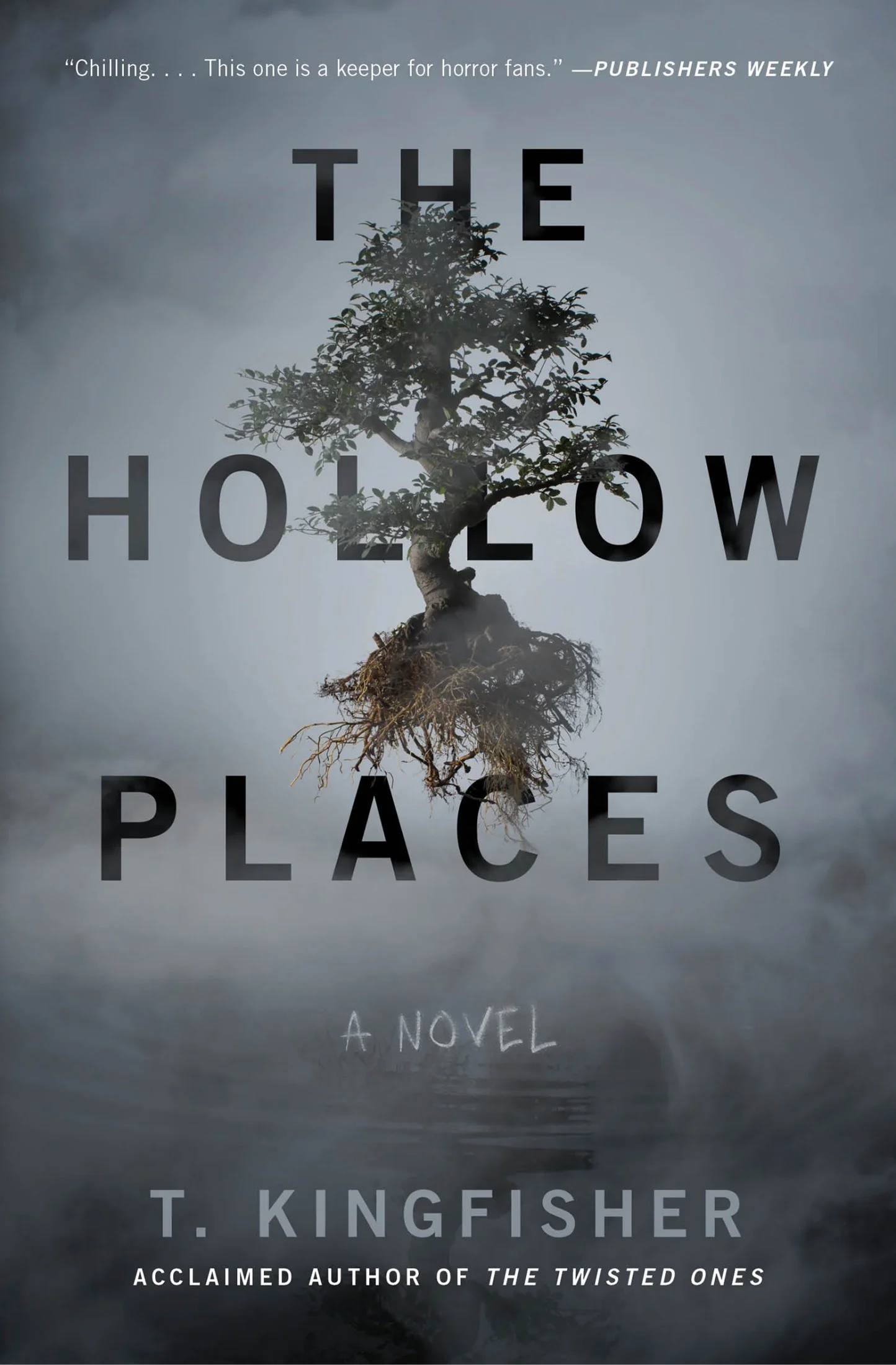
Chapter 1
After her marriage to Mark ends, thirty-four-year-old Kara, usually called Carrot, needs an affordable place to live. Returning to her mother's home would mean constant conflict, so an invitation from Uncle Earl offers a practical and emotionally welcome alternative. Earl owns the Glory to God Museum of Natural Wonders, Curiosities, and Taxidermy in Hog Chapel, North Carolina, where Kara spent much of her childhood. Its displays combine real specimens, dubious claims, odd souvenirs, and Earl's enthusiasm for mysteries. Kara remembers arguing with him as a teenager about evolution and his belief in Bigfoot, but she also remembers his kindness and the freedom she felt in the museum. His collection never frightened her when she was young.
When Earl calls with an offer of the museum's spare room, Kara accepts. The decision gives her somewhere to stay after the divorce and restores her connection to a place and relative she trusts. The contrast between the museum's harmless eccentricity and what its walls will later conceal is established without any supernatural discovery yet.
Key Events
- Kara's marriage ends and she cannot afford to remain on her own.
- The prospect of moving in with her mother makes Kara anxious because their personalities clash.
- Uncle Earl offers her the museum's spare room, and Kara accepts.
Themes
- Family refuge and belonging
- Divorce and financial instability
- Affection for eccentricity
Chapter 2
Kara moves into the Wonder Museum on a rainy Monday and finds that Uncle Earl has prepared her room, including a place for Prince, the mounted elk head she loved as a child. Earl's gout, back pain, and increasing difficulty walking make Kara's help especially valuable. She begins learning the museum's daily routine and how much effort it takes to keep such an unconventional business running.
Next door, at the Black Hen coffee shop, Kara becomes reacquainted with Simon, an extravagantly dressed barista whose sister Martha runs the business. Simon has visual difficulties, including unusual color perception associated with one eye, and says doctors have discussed chimerism involving a twin he did not survive alongside. This possible explanation is his reported medical history, not a supernatural fact established by the narration. Simon's humor and warmth make the neighboring shop a useful refuge. Earl encourages Kara to inventory his loosely organized exhibits, and she starts a spreadsheet with Prince. The task looks enormous, but it gives her both work and a routine.
Key Events
- Kara moves into Earl's museum and is reunited with the elk head Prince.
- Earl's physical limitations give Kara a practical role in operating the museum.
- She reconnects with Simon at the Black Hen and learns about his unusual eyesight.
- She begins cataloging the collection, starting with Prince.
Characters Appearing
- Simon
Themes
- Rebuilding a routine
- Family care
- Friendship and practical cooperation
Chapter 3
Over the following weeks, Kara settles into museum work, freelance graphic design, and visits to Simon's coffee shop. Earl's unusual acquisitions arrive regularly, making her cataloging job difficult. A package from his friend Woody Morwood contains assorted objects and an old carved wooden figure, one side resembling an otter and the other a corpse. Kara labels it the corpse-otter carving and puts it near the display of a giant river otter. At this point it is merely another unsettling item in Earl's collection, and Kara has no reason to associate it with the apparently normal walls of the building.
Earl's knee problems worsen, and he must go away for surgery and recovery. Kara's mother arranges to take care of him, leaving Kara in charge of the museum. Kara reassures Earl that she can handle the exhibits, customers, and paperwork while he recovers. She cares about protecting his life's work, even though the building and its contents are difficult to manage. The arrival and placement of the carving precede the first opening into the other world.
Key Events
- Woody sends unusual artifacts, including the two-sided corpse-otter carving.
- Kara places the carving near the giant river otter display.
- Earl leaves for knee surgery, and Kara becomes responsible for the museum.
Themes
- Responsibility for loved ones
- Ordinary objects with hidden significance
- Attachment to place
Chapter 4
While running the museum without Earl, Kara discovers a surprising hole in the upper-floor drywall near the otter display. Assuming a visitor damaged it, she asks Simon for help repairing the wall. As they widen the opening, however, they discover that it looks into a dark concrete corridor instead of the expected building structure. The corridor cannot reasonably fit inside the museum or the neighboring shops.
They take lights and crawl through to investigate. The concrete passage is silent, damp, and much larger than the available space behind the wall. It leads around a bend toward a circular area with water stains, graffiti, and an old metal door. They speculate about abandoned tunnels and institutions, but none of those explanations accounts for the geometry. The immediate discovery is an impossible interior space, not yet an identified alternate universe. Their curiosity outweighs their unease, and the damaged museum wall becomes an accessible entrance.
Key Events
- Kara notices a hole in the museum drywall and asks Simon to help patch it.
- Opening the wall reveals an impossible concrete corridor rather than ordinary studs and insulation.
- They enter and reach a strange circular area with graffiti and a metal door.
Themes
- Curiosity versus caution
- Impossible spatial relationships
- The unfamiliar inside the familiar
Chapter 5
Kara and Simon continue examining the concrete complex and its heavy, rusted door, but choose not to force the door open without preparing. Beau, the museum's cat, startles them, reminding Kara how readily the eerie place has affected her nerves. They cover the damaged museum wall and discuss possibilities over food and coffee, including ordinary explanations that neither finds convincing.
Determined to learn more, they return equipped with flashlights and basic tools. They investigate a second direction in the network of passages rather than immediately opening the exterior door. A room beyond the corridor contains a human body lying on a cot. The discovery changes the problem from an odd architectural mystery to a potentially dangerous situation involving a dead person. The chapter ends with the body newly discovered, before Kara and Simon have established how long it has been there or why it died.
Key Events
- Kara and Simon decide to postpone opening the rusty metal door.
- They cover the wall opening and return with better lighting and tools.
- They locate a small room containing a human corpse.
Themes
- Escalating danger
- Curiosity and reluctance to involve others
- Limits of ordinary explanations
Chapter 6
The body is long dead and badly decayed. Kara considers calling the police, but Simon discloses that he has an outstanding warrant in Florida connected with an old LSD-dealing case and fears being questioned. Kara also cannot explain how the room could exist behind the museum. They decide against reporting it, and Simon covers the remains.
Back at the museum opening, they test the boundary between spaces: the wall is drywall on their side but thick concrete where the corridor should be, and cutting the opening alters both surfaces in ways normal construction cannot explain. The corridor is therefore not just a hidden room inside the building. Their attention returns to the rusted exterior door. Simon removes its corroded bolts, and they open it to find concrete steps leading up into daylight and a foggy, watery landscape, although it is night in Hog Chapel. They emerge onto a small grassy mound surrounded by water. This is their first direct view of an environment outside their own world, though they do not yet know what kind of place they have reached.
Key Events
- They examine the old corpse and decline to call police because of Simon's warrant and the inexplicable location.
- Testing the museum wall exposes a contradictory drywall-to-concrete boundary.
- Simon frees the rusted metal door and they climb out onto a small island in a misty, daylight river.
Themes
- Moral and practical uncertainty
- Physical boundaries between worlds
- Curiosity leading into danger
Chapter 7
Standing in daylight while their own town remains dark, Kara and Simon survey an unfamiliar river filled with remarkably uniform, grassy islands. Numerous islands have metal bunker doors set into them; willow-covered sandspits lie between. Kara recognizes that the landscape resembles a network of thresholds, but she cannot explain where the passages lead. Before venturing away from their entrance, Simon installs a new deadbolt on its exterior door. They identify landmarks, wade to the shore, and plant a forked stick to mark which island leads home.
They test other bunker entrances. One door is rusted shut, while another opens onto a flooded, debris-filled room. They also find funnel-shaped depressions in wet sand. Kara initially takes them for ant-lion pits, though this identification is not verified. Both the willows and the very regular terrain make her increasingly uneasy. Farther inland, they discover an old school bus from Byricopa County, its color and lettering slightly wrong for the buses Kara knows. Its interior initially appears empty. When a heavy thunderstorm erupts, they shelter inside. Simon urgently warns Kara not to sit on the passenger seats, without being able to explain why, so they sit near the front to wait for the rain to end.
Key Events
- They discover a river crowded with bunker-like islands and unusual willows.
- Simon bolts their entry door, and they mark the shore with a stick to help find the way back.
- Several neighboring bunkers prove closed or flooded; they observe unexplained funnels in the sand.
- A storm drives them into an apparently empty, oddly colored school bus, where Simon warns Kara away from the seats.
Themes
- Disorientation and navigation
- Unease in familiar-looking nature
- Unexplained perception
Chapter 8
While sheltering in the school bus, Kara dozes and sees children's shapes moving beneath the green vinyl covering its seats. Simon sees them too, while the driver's seat seems occupied by a figure separated from ordinary reality. They flee into the rain. The downpour has swollen the river and submerged the shore where Kara planted her marker, leaving them unable to distinguish their home bunker from dozens of similar islands.
They begin checking entrances as darkness falls but find sealed chambers or the wrong interior arrangements. The lack of a reliable landmark makes the search increasingly desperate. From the stairs of another bunker, they hide as a seemingly human boatman silently poles a raft along the river. Neither knows whether he would help or harm them. With night closing in, they decide to shelter underground and find spent cartridge cases and two enormous warnings scratched into the concrete walls: 'They Can Hear You Thinking' and 'Pray They Are Hungry.' The second message implies danger beyond ordinary predation without explaining what 'They' are. Kara nearly panics, but Simon steadies her, and they continue into the bunker looking for a safer place to rest.
Key Events
- Kara and Simon witness childlike forms trapped beneath the bus seats and flee.
- Floodwater erases their shore marker, and they lose their route home.
- They conceal themselves from a silent boatman.
- In a bunker they discover spent ammunition and two warnings about beings that hear thoughts and might be hungry.
Themes
- Loss of control
- The terror of partial knowledge
- Interdependence under pressure
Chapter 9
Deeper inside the bunker, Kara and Simon find evidence that people once lived there: five cots, makeshift kitchen facilities, personal lockers, a rosary, and a primitive latrine. They secure a door with a working bolt and settle onto adjacent cots, afraid to separate. Simon explains that he perceived the bus driver as an inside-out woman who seemed farther away than the children under the upholstery. The unusual quality of his sight may help him detect something beyond the familiar three-dimensional scene, but he cannot explain it.
They discuss the English lettering on the bus, the unfamiliar markings elsewhere, and the possibility that the river connects more than two worlds. Simon compares it to the Wood between the Worlds from the Narnia books, where apparently identical gateways lead to different places. Kara points out that they have seen only one verified opening between worlds. They also worry that involving an alternate-world military could expose their own world to invasion. Exhausted and unsure of the bunker builders' identity, they sleep. They later wake in darkness, briefly investigate the predawn sky, and notice a disturbing movement in the willows outside.
Key Events
- They find a furnished, abandoned living area and lock themselves inside to rest.
- Simon describes the bus driver as a figure deeper beyond the visible world than the trapped children.
- They consider multiple worlds but recognize that they have not proved the other bunker doors are portals.
- At predawn they glimpse unexplained movement in the willows.
Themes
- Attempts to explain anomalous perception
- Isolation and companionship
- Uncertainty about parallel worlds
Chapter 10
In the gray light before dawn, Kara and Simon watch strange forms rise through the gaps between willow branches. These silver and amber shapes resemble bodies made from negative space rather than ordinary solid organisms. They appear indifferent to the observers, and Kara feels wonder as well as fear. The forms vanish when a much larger, dark, apparently solid presence passes through the willows, bending the branches. This second presence alarms both explorers and sends them back to their bolted sleeping room. They do not know whether either phenomenon is responsible for the warnings on the bunker walls.
With food exhausted and no safe drinking water yet identified, they search the abandoned footlockers. They find warm clothing and packaged field rations marked as property of the UNA government, then eat the rations. Other objects include a pornographic magazine with unfamiliar cultural references, a Bible whose contents differ from the one Kara knows, and an expedition log. The log states that a group entered the 'vacuae' with equipment, occupied an already abandoned fortification, and recorded several days of exploration before the entries stop. The named participants include Steen, Petrov, Marco, and Chang. These objects suggest visitors from a world unlike Kara's and raise the possibility of multiple independent routes into the willow landscape, but do not explain the entities or establish who built the bunkers.
Key Events
- They witness fleeting willowlight figures and a separate, more threatening dark presence.
- They retreat, then find and eat alternate-world military field rations.
- A strange Bible, magazine, and expedition log suggest visitors from another world.
- The log describes entering the 'vacuae' and occupying a fortification already abandoned.
Themes
- Distinguishing awe from threat
- Survival and material evidence
- Cross-world contact
Chapter 11
After sleeping, Kara and Simon emerge thirsty enough to drink directly from the river. They notice willows atop an island where they did not remember seeing them before, though they cannot prove that the plants moved. A low, gong-like hum repeatedly sounds around them. Continuing their systematic search for the home bunker, they inspect funnel-shaped sand pits. When Simon prods the depressions and finds no ant lions, the supposed insect explanation begins to fail.
They discover a human figure half-hidden in water in a bunker: Martin Sturdivant, a severely emaciated former park ranger who says he entered this world through a hollow formed by kudzu and could not find his way out. He explains that the place borders many other places, that the willows are connected to powerful entities he calls 'They,' and that thinking about Them may attract Their attention. He warns that when hungry They consume people, but when not hungry They may dissect, transform, or keep victims alive in hideous conditions. According to Sturdivant, concrete slows the encroachment of willow roots, while the strange light can briefly bring otherwise unreal shapes to life. He also warns against the boatman and describes being unable to escape the willow-dominated country beyond the river. He presents personal experience and conjecture, not a complete theory of the other world.
As Sturdivant rises in the water, Kara and Simon see that his lower body is partially dismantled and his exposed organs have been floating around him. Horrified, they flee before they can learn more.
Key Events
- Kara and Simon drink river water, hear a pulsing hum, and investigate empty funnel marks.
- They meet Martin Sturdivant, who entered through kudzu and warns of the willow-linked entities.
- Sturdivant describes the entities' predatory and experimental treatment of visitors, and the limited protection afforded by concrete.
- His mutilated but living body becomes visible, causing them to flee.
Characters Appearing
- Martin Sturdivant
Themes
- Survival through incomplete information
- Altered bodies and fear of transformation
- Vulnerability of world boundaries
Chapter 12
Shaken by Martin Sturdivant's mutilation, Kara and Simon escape to another shore and struggle against despair. They cannot know whether their original portal has remained open, so they continue searching the nearly identical bunkers. Kara injures her toe while wading. From a low bluff they discover a wrecked ship with a partly legible name; its size and position suggest it came from elsewhere rather than having sailed the shallow, island-filled river.
Near the wreck, a vast presence moves through the willows without occupying ordinary visible space. They hear the familiar humming and take shelter inside the damaged ship. The entity comes directly over them and seems to respond to their thoughts. Simon urges Kara to think of something else. Attempts to recite a childhood song are too easy to interrupt with fear, but deliberately dwelling on grievances about her ex-husband and online fan fiction eventually helps her focus on anything except the creature. The hum recedes. Simon describes perceiving an additional spatial aspect of the thing, as though it moves behind the visible surface of their world; this remains his impression, not a settled physical explanation.
They resume checking bunkers. Kara has nearly given up hope when Simon's abandoned toolbox appears at the foot of a stairwell. Their original corridor and the opening into the museum are still there. They rush through and finally return to their own world.
Key Events
- A damaged ship wreck and a strange humming, nearly invisible presence interrupt their door-to-door search.
- They hide in the wreck while Kara uses distracting personal thoughts to stop attracting the entity.
- Simon's visual impressions support, but do not prove, a higher-dimensional explanation.
- They identify their original bunker by Simon's toolbox and escape through the still-open museum portal.
Themes
- Thought and attention as survival factors
- Fragile hope
- Unverified models of another world
Chapter 13
Back at the museum, Kara answers a late-night call from her mother, who has been unable to reach her or Simon throughout Saturday. It is 1:27 a.m., and Kara realizes they have not lost days or weeks in the other world. She invents an emergency-room story involving Simon's allergic reaction to flavored coffee syrup to explain the closure of the museum and the coffee shop.
Although both dread re-entering the concrete corridor, they go through the portal once more to shut and bolt the outer bunker door. Returning to the museum, Simon covers the opening with a rough drywall patch, hangs a batik over it, and moves a taxidermy case partly in front. The repair does not erase their knowledge of what lies beyond. Kara retrieves the repeatedly misplaced corpse-otter carving from the corridor area and sets it on the raccoon case without recognizing its significance.
They part after a close hug. Kara showers, cries, feeds Beau, and finds comfort in the mounted elk Prince. The next day she opens the museum, repeats the emergency-room explanation to neighbors and regulars, and resumes routine work. The trauma surfaces in tears when she is alone; being home has not restored a sense of safety.
Key Events
- Kara learns that only the expected day has passed and invents a hospital visit to explain their absence.
- She and Simon bolt the exterior bunker door, then patch and conceal the museum opening.
- Kara handles the corpse-otter carving again without understanding its role.
- The next day's ordinary business is interrupted by delayed fear and grief.
Themes
- Concealment and responsibility
- Psychological aftermath
- Unrecognized continuing danger
Chapter 14
Kara and Simon confirm their visit was real through physical souvenirs, including field rations, an olive sweater, and Kara's alternate-world Bible. Using the Black Hen's internet connection, Kara finds no Byricopa County matching the school bus. She looks up the term 'vacuae' and notices its association with empty or apparently unoccupied space. That definition reminds her of beings she could sense but not ordinarily see, though it does not establish exactly how the alternate-world expedition used the word.
After closing, Kara visits Simon's apartment. Over popcorn and tequila, they discuss the impossible chance that a supposedly accidental hole in museum drywall opened a path into another world. Kara later dreams she is back in the concrete corridor, seeing Sturdivant and unable to return. She wakes coughing. The next morning her fingertips are sore and injured; she initially attributes this to handling taxidermy and old preserving chemicals. Simon has nightmares too, and both remain uneasy about the thin drywall barrier. They nevertheless feel obliged to look after Earl's museum and the Black Hen.
To test whether every part of the building touches the other world, Kara pierces a different section of drywall downstairs and photographs the opening with her phone. It reveals ordinary insulation and studs. The portal is associated with a particular location, not every wall in the museum.
Key Events
- Physical items confirm that the other-world journey was not a shared hallucination.
- Kara researches Byricopa County and the word 'vacuae' without finding a decisive explanation.
- Both survivors have nightmares, and Kara develops unexplained fingertip injuries.
- A test opening elsewhere in the museum reveals an ordinary wall, suggesting the portal is localized.
Themes
- Evidence versus speculation
- Trauma after apparent escape
- Spatial specificity of the opening
Chapter 15
Kara creates more small test openings around the museum, all showing normal walls. In her room, she tries using chopsticks and paper to imagine how universes and connecting passages might fit together. Her theories remain speculative. She retrieves the altered Bible from the bunker and discovers extensive handwritten marginal entries by an unidentified expedition member. The writer describes a formally equipped military crossing through the 'vacuae,' with security, a shiny membrane, and decontamination procedures on the home side. His party occupied the bunkers rather than building them and was supposed to return when its entry point reopened. The log records fear, disagreements, strange willowlight, and a commander who disappeared.
The diary then describes finding the commander dead with conical wounds through his flesh and skull. The writer explicitly compares them with funnels in the sand. Kara realizes that the pits she and Simon treated as possible insect nests marked something dangerous moving or acting in that landscape. Elsewhere, an unexpected call from Mark reveals how far her concerns have shifted since the divorce: she is barely interested in his plans to sell the former marital home.
Her own nightmares now leave physical evidence. She discovers plaster dust under her nails and deep gouges in the drywall patch, in positions consistent with her clawing at it during sleep. She cannot prove exactly what has been calling to her, but recognizes that she has been trying to open the passage from her side. Hearing from Earl reminds her she cannot simply abandon the museum and leave him exposed; she resolves to tell Simon.
Key Events
- Repeated test holes show that the opening is not present throughout the museum.
- The Bible's handwritten expedition diary describes a controlled interworld crossing and an abandoned fortification.
- Its account of the commander's conical wounds identifies the sand funnels as signs of the lethal phenomenon.
- Kara discovers that her own sleepwalking damaged the portal patch and chooses to warn Simon rather than flee.
Themes
- Source evidence changing earlier interpretations
- Dangerous persistence of a connection
- Duty to loved ones
Chapter 16
Kara tells Simon that she has been clawing through the patched wall in her sleep. They consider abandoning or destroying the building, but burning it might leave a larger opening and would devastate Earl. Simon first repairs the drywall and secures Kara's wrist to her bed with a removable restraint to interrupt automatic sleepwalking. That night she seems to dream of the river and a beckoning boatman, only to notice the restraint still on her wrist. She has physically returned through the passage and unbolted the outer bunker door.
Simon, also drawn into the other world while asleep, awakens with sudden pain in his unusual eye and reaches Kara just before she can approach the raft. The boatman reveals a distorted, screaming face and legs rooted into the raft by pale willow-like tendrils. He lashes at them with a pole and batters the metal bunker door. In the struggle Kara badly injures her knee, an injury that later shapes every decision she makes. The pair flee through the museum opening while the boatman continues attacking the door, loosening its hinges. Simon admits that he too had been sleepwalking, undermining Kara's fear that she alone was acting irrationally.
They stay together and try to remain awake at Simon's apartment. They hypothesize that something across the boundary is calling them, but cannot identify its mechanism or prove that the boatman belongs to the same class of being as the humming entities. Simon later fastens a heavy sheet-metal barrier over the portal, hides it behind the batik, and places an immense wooden Bigfoot statue in front. Kara moves the persistently falling corpse-otter carving into the raccoon display case. She ties herself to bed and passes one night without another episode.
Key Events
- Kara and Simon discuss her sleepwalking and attempt a restraint and stronger barrier.
- Both are drawn into the other world, where Simon rescues Kara from the boatman.
- The boatman attacks their bunker, and Kara sustains a serious knee injury.
- Simon installs a sheet-metal patch and moves Bigfoot in front of it while the carving is put in a taxidermy case.
Themes
- Compromised autonomy
- Improvised safeguards
- Friendship under existential threat
Chapter 17
Kara's injured knee makes ordinary museum work difficult, but the reinforced patch and Bigfoot statue remain in place. A family of tourists reports broken glass upstairs. Kara finds the raccoon display case smashed and its albino raccoon missing, even though she could not have broken the glass with her injured hands and the case was no longer obstructing the portal. She and Simon consider ordinary theft or a prank; Kara posts about the disappearance, and they do not yet connect it to the carving she put inside the case. A stuffed fisher appears to be missing as well.
Kara takes a brief day off in Southern Pines, then resumes reading the Bible diary. The expedition encountered Singer, a researcher from another world who had survived several weeks in the willows after losing most of her own group. She warned that the creatures might hear thoughts and had theories about their ability to evade attacks by moving in dimensions beyond human perception. The writer describes the squad hoping to return when the controlled opening is activated. This provides independent but incomplete corroboration of Sturdivant's warnings and Simon's impressions.
One night, Beau becomes furious at something scratching at Kara's bedroom door. Believing it is a large rat or other intruding animal, she opens the door and the cat attacks a pale, surprisingly substantial shape. Beau eventually returns with superficial scratches. The next day Kara shifts a display case and finds the torn-open, previously mounted albino raccoon, its stuffing scattered. It had been dead for years, making the encounter far more disturbing than an ordinary fight with a living raccoon.
Key Events
- The raccoon display case is broken and the mounted albino raccoon and a fisher go missing.
- The Bible describes Singer, another-world survivor, and her researcher's account of the dangers.
- Beau battles a pale intruder in the museum at night.
- Kara finds the destroyed taxidermied raccoon behind a case, raising the possibility that the dead exhibit moved.
Characters Appearing
- Singer
Themes
- Evidence of horror crossing home boundaries
- Unrecognized links between artifacts
- Fear confronted through practical action
Chapter 18
Trying to explain the raccoon's apparent movement, Kara inspects its hollowed stuffing and considers the possibility of a rat living inside it. That remains an attempted mundane explanation, not what the novel later establishes. She disposes of the damaged raccoon, tends Beau's scratches, and shares her concerns with Simon. A separate call from Mark reveals that he had become involved with Riley before ending the marriage. Kara finds this betrayal comparatively unimportant and refuses to provide the emotional confrontation he expects.
Kara finishes the expedition account in the alternate Bible. A creature that entered the bunker and was shot proves to be a transformed missing member of Singer's team, recognizable by his tattoo and dental work. Later, the expedition is devastated while trying to approach its return point. Marco appears to unravel into strands, Steen is similarly attacked, and Petrov suffers a different disfiguring assault. Singer saves the anonymous diarist by causing pain and interrupting their attention; the beings seem unable to locate them reliably while their minds focus elsewhere. The last entry says Singer and the diarist will attempt to reach the opening again, but their ultimate fate is unknown. Kara chooses to imagine they escaped rather than assert they did.
That night a familiar silver and amber light travels through the museum's lower floor, followed by strange movements. A taxidermied fisher leaps at Kara and bites her shoulder. She strikes it repeatedly with a cane, badly worsening her injured knee. As it falters, a small form moves inside its chest: the corpse-otter carving. Kara recognizes the link among the missing taxidermy, the animate exhibits, and the object placed in the raccoon case.
Key Events
- Kara incorrectly considers a rat infestation to explain the gutted stuffed raccoon.
- The diary establishes that creatures can be altered humans and that pain distracted Them during the expedition's disastrous retreat.
- The diarist and Singer plan another escape, but their outcome remains undocumented.
- A willowlit stuffed fisher attacks Kara, revealing the corpse-otter carving inside its body.
Themes
- Abandoned ordinary explanations
- The indeterminacy of survivor outcomes
- Objects as carriers of dangerous power
Chapter 19
Kara realizes that the corpse-otter carving may have created the original wall opening, then repeatedly tried to return to the willow world while she innocently kept replacing it on the display. She suspects, but cannot prove, that it also caused the sleepwalking. The battered fisher carries the carving upstairs, and silver willowlight spreads through the museum, temporarily animating multiple preserved creatures and skeletons.
Kara forces herself up the stairs despite her damaged knee and finds that the carving has moved into the huge taxidermied river otter. The otter, far stronger and more agile than the fisher, shoves the Bigfoot statue aside and tears loose the metal patch, reopening the portal. At first Kara hopes it will simply go home. But Beau's furious challenge attracts the blind otter's attention. It chases her into her bedroom and smashes through the door. Kara tries to protect Beau while Prince, her beloved mounted elk head, moves and impales the attacker on his antlers. Beau tears an eye from the otter, and other animated exhibits subsequently hinder its pursuit. Kara takes these actions as possible protection by creatures cherished by the museum's occupants, though the cause of their behavior is not definitively established.
Believing the carving wants to return home, Kara deliberately lures the giant otter into the concrete corridor. Outside, she finds aggressive willows blocking the path to the top of the entrance island and must jump into the river. The otter follows, moving effortlessly through water and cutting open Kara's calf. Simultaneously she hears the humming beings approaching. She reaches a bunker entrance only to discover its inner door is rusted immovably open. Trapped in the flooded interior with the otter following her, she hears the familiar clicking laugh of Martin Sturdivant.
Key Events
- Kara reconstructs the carving's likely connection to the first hole and recognizes its movement between taxidermied hosts.
- The carving animates the giant river otter and other exhibits, and the otter tears open the metal patch.
- Prince, Beau, and other exhibits interfere with the otter as Kara attempts to lead it back through the portal.
- The otter wounds Kara in the river, and she becomes trapped in a flooded bunker with Sturdivant nearby.
Themes
- Defending home
- Unexpected protective behavior
- Desperate improvisation and unintended consequences
Chapter 20
In the flooded bunker, Martin Sturdivant recognizes Kara and grabs her wrist. He can taste the blood from her wounded calf in the surrounding water. When she says that the animated giant otter is pursuing her, he releases and throws her away. The otter comes toward Sturdivant's voice rather than Kara. As Kara struggles back to the stairs, she looks behind and sees Sturdivant grappling with the creature, entangling its body in his exposed organs. His intervention allows her to escape the bunker; the novel does not establish his eventual fate or conclusively destroy the carving.
Kara wades desperately toward the correct entrance as the familiar humming intensifies. Conical holes appear suddenly in the river water around her, revealing the same mechanism suggested by the sand marks and the dead commander's wounds. One of the beings presses through the boundary of visible reality overhead. Remembering the diary's account of Singer saving the writer with pain, and her own earlier experience when her injured knee briefly disrupted the pursuit, Kara deliberately drops her weight onto the damaged knee. The agony overwhelms her thoughts, and the attacking entity loses her location. She later finds a funnel gouged in the sand beside her face, evidence of how narrowly it missed.
Using pain as her only reliable focus, Kara reaches the broken bunker entrance, passes through the corridor, and collapses in the Wonder Museum at dawn. The supernatural light has vanished and the taxidermy is still again. Her survival depends on Sturdivant's intervention and the painful interruption of the entities' ability to track her, not on defeating Them in direct combat.
Key Events
- Sturdivant releases Kara and entangles the attacking otter in his own exposed organs.
- The pursuing entities leave conical holes in water, matching earlier evidence of their attacks.
- Kara deliberately intensifies her knee injury to overwhelm her thoughts and avoid detection.
- She returns through the museum portal at dawn while the willowlight and animated exhibits become still.
Themes
- Survival aided by another victim
- Pain disrupting perception
- The persistence of unanswered questions
Chapter 21
Simon treats Kara's severe calf wounds and injured knee as best he can, although she cannot afford hospital care. They connect the crisis to the corpse-otter carving, which had arrived in a shipment from Woody Morwood. Kara calls Woody and recounts their experiences. Woody admits he found the carving on an island in the Danube that was riddled with dangerous openings, burned the local willows, and sent the object away because he thought it needed proximity to willow growth to function. He believed he had sent Earl a warning to lock it up in a book included with the artifacts. Kara realizes the book remained unopened, so the warning was never read. Woody's account establishes why the carving came to the museum, but not exactly who created it or how all its effects work.
They report an ordinary break-in to account for the damaged displays. With Kay's help, the museum is cleaned up. Simon and Kara then buy forty bags of fast-setting concrete, stack them within the passage, and wet them to form an internal barrier. Taking Woody's observation that openings disappear when filled with the material that belongs there, Simon does more than cover the hole: he fills its actual boundary from within using mesh and spackle. As he reduces the gap, the impossible drywall-to-concrete transition repairs itself on the museum side too. Kara finishes the last tiny opening with her smallest finger. They celebrate with takeout.
About two weeks later Kara cautiously makes a small test hole in the wall and photographs ordinary studs and insulation, rather than the alien corridor. Simon also reports that the abnormal depth he used to perceive at the site is gone. The evidence supports that this particular opening has closed for now; neither knows whether other openings could form later.
Key Events
- Woody confirms he found the carving near numerous openings on a willow-covered Danube island and mistakenly sent it away as a safeguard.
- Kara discovers Earl's warning was inside an unopened shipment artifact.
- Kara and Simon construct a quick-setting concrete barrier in the corridor and fill the actual wormhole rather than merely covering it.
- A later test photograph shows ordinary wall structure, corroborating closure of this opening.
Themes
- Responsibility and unintended harm
- Repair through understanding the material boundary
- Qualified closure rather than certainty
Chapter 22
Kara lives with the consequences of the encounter. Nightmares, silver reflections, and even ordinary willow trees trigger panic, while a clinic doctor finds her knee badly damaged and recommends surgery that she cannot afford. Earl recovers from his own operation and returns to the museum. He believes the damage there was ordinary vandalism, and Kara protects him from the explanation. She stays rather than move away, partly because someone should recognize any renewed danger and partly because the museum remains her home.
She reflects on the night the taxidermied animals came briefly alive. The corpse-otter carving had animated the creatures, but Prince's intervention and the attacks of other mounted animals protected her against the giant otter. Kara wonders whether decades of affection and Earl's kindness gave their brief animation a protective purpose. She offers this as a personal explanation, not a fact about the animals' surviving souls. Some exhibits have shifted slightly, the cane toads are scattered around the building, and Prince's head remains tilted. The Feejee Mermaid, whose snapping teeth still frighten her, is sent to another museum. Beau remains her companion.
Woody visits in person, and Kara recognizes the look of someone else troubled by the experience. She and Simon continue their friendship, spending quiet evenings together without often discussing the willows. Earl discusses leaving her the museum, and Kara keeps working on its catalog. She hears only silence where the portal once opened, though the possibility of another breach cannot be excluded. The ending is a decision to remain in a place she values and believes has defenders, not a declaration that the other world has been eradicated.
Key Events
- Kara continues to experience lasting trauma and a serious knee injury as Earl returns.
- She reflects on the protecting taxidermy as an interpretation rather than an established supernatural rule.
- Woody visits, Simon remains her confidant, and she continues managing the museum.
- The repaired wall stays silent, while Kara accepts that the danger of another opening cannot be ruled out.
Themes
- Living with trauma
- Chosen home and mutual protection
- Unresolved boundaries between worlds