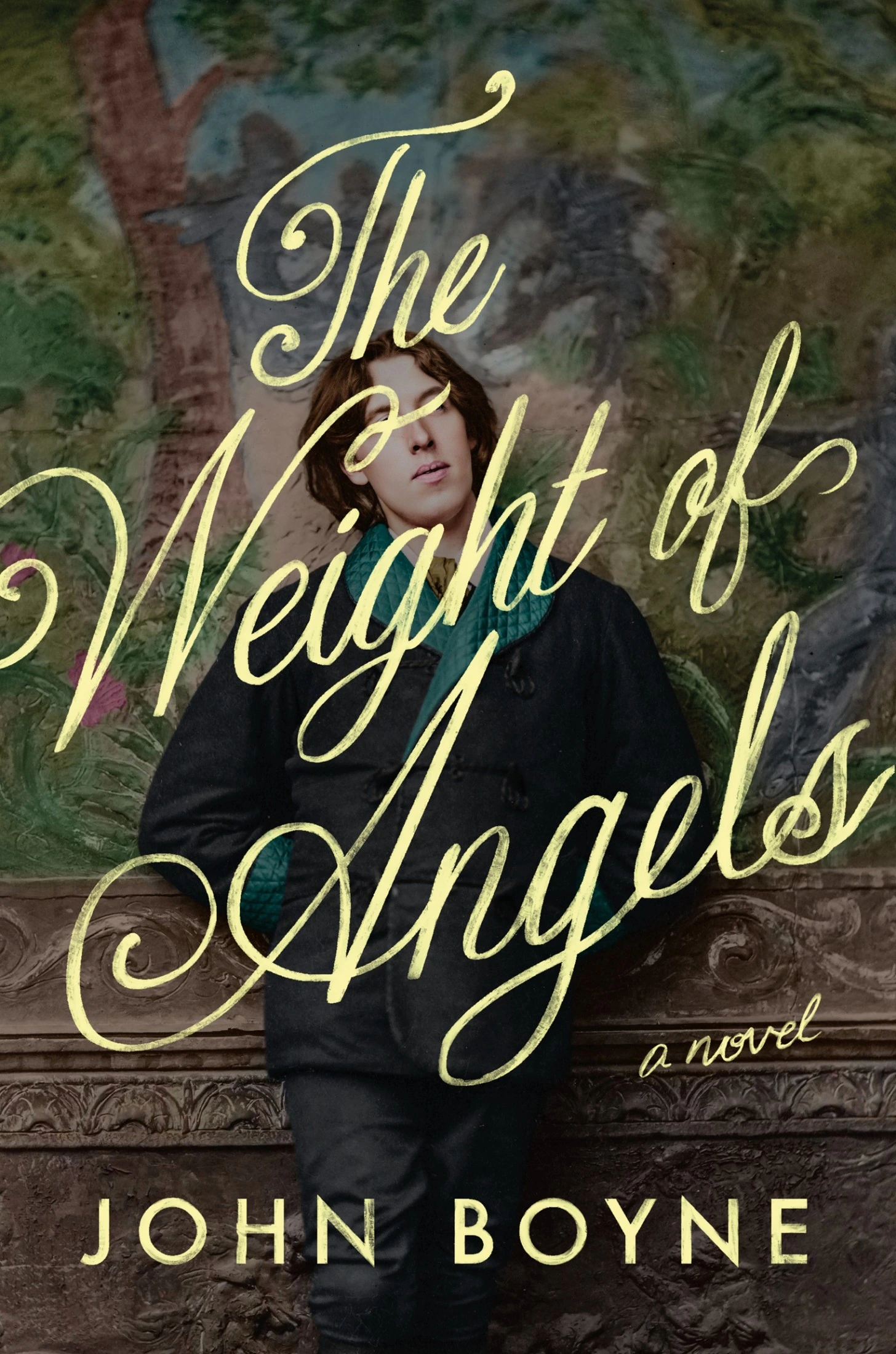
Prologue
In March 1895, Oscar Wilde receives a calling card at the Albemarle Club from the Marquess of Queensberry accusing him of sodomy. The insult threatens his public reputation and enrages his lover, Lord Alfred Douglas, known as Bosie. Bosie urges Wilde to prosecute his father for criminal libel, seeing the confrontation as an opportunity to retaliate against a man whose hostility and cruelty have marked his childhood. Wilde is initially tempted to accept the challenge, but he recognizes that a court case could require him to answer questions about his private relationships and dealings with young men.
Wilde consults his solicitor, Humphreys, and considers the warnings of friends, including Robert Ross and Robert Sherard. Humphreys explains the danger of turning an apparently straightforward libel complaint into a public examination of Wilde's conduct. Bosie treats caution as cowardice and presses Wilde to defend them both, but Wilde sees how little control he would retain once a prosecution began. He also doubts that exposing his relationship and risking imprisonment would be worth the satisfaction of humiliating Queensberry.
Wilde decides against legal action and destroys the card. Bosie storms out, unwilling to forgive the refusal. What appears to be an act of restraint becomes the novel's central counterfactual decision: Wilde avoids the trial and imprisonment that destroyed the historical writer's career, but must live with the relationships, social prejudices, and personal failings that the decision cannot resolve.
Key Events
- Queensberry leaves an accusatory calling card at the Albemarle Club.
- Bosie demands legal action against his father despite repeated warnings.
- Wilde destroys the card and refuses to sue, changing the course of his imagined life.
Characters Appearing
- Oscar Wilde
- Lord Alfred Douglas (Bosie)
- Robert Ross
- Robert Sherard
- Humphreys
Themes
- Reputation and legal vulnerability
- The difference between private loyalty and destructive pride
- The consequences of refusing a confrontation
Chapter 1
Between 1896 and 1901, Wilde's decision not to prosecute Queensberry preserves his freedom and his successful literary career, but does not protect the people he loves. His mother, Lady Wilde, dies, and his relationship with his wife Constance remains difficult. The estrangement between his family life and his relationship with Bosie becomes increasingly apparent. Meanwhile, Bosie's reckless behavior ends in his own prosecution after a police investigation into male sex workers. His trial, involving the lawyer Edward Carson, exposes the hostility that Wilde narrowly avoided. Bosie is convicted and imprisoned, while Wilde remains publicly celebrated but unable to rescue him.
Wilde pursues theatrical projects, including a French production of Salomé, and continues moving among prominent writers and performers. Encounters with André Gide and other acquaintances expose both the artistic freedom of his circle and its willingness to overlook the exploitation of younger men. Wilde's attraction to beauty and his reluctance to examine the vulnerability of boys in commercial sexual relationships remain unresolved. He also encounters Florence Stoker and the literary world surrounding Bram Stoker. Despite his external success, domestic consequences accumulate. Constance dies in 1898, leaving Wilde to reflect on a marriage in which he received affection he did not fully return. His later theatrical success cannot erase his regret at refusing her ordinary requests for intimacy and companionship.
When Bosie is released from prison, Wilde finds him permanently altered by hard labor and public disgrace. In Paris they briefly recover some affection, but Bosie's health is failing and his resources are exhausted. Wilde remains with him through his final illness. Bosie dies of meningitis at the Hôtel d'Alsace in November 1900, the date associated with the historical Oscar Wilde's death. Among his effects is the manuscript of The Ballad of Reading Gaol, here attributed to Bosie rather than to Wilde. Wilde's survival is therefore accompanied by an inversion of their public fortunes: he remains the acclaimed writer while Bosie dies prematurely, leaving a work that Wilde hopes to preserve.
Key Events
- Bosie is convicted and imprisoned after a scandal involving male sex workers.
- Constance dies in 1898 as Wilde continues his theatrical career.
- Wilde reunites with the ill Bosie in Paris and witnesses his death in 1900.
- Bosie leaves The Ballad of Reading Gaol, which Wilde hopes to publish.
Characters Appearing
- Oscar Wilde
- Lord Alfred Douglas (Bosie)
- Constance Wilde
- Cyril Wilde
- Vyvyan Wilde
- André Gide
- Florence Stoker
Themes
- The costs of secrecy and disgrace
- Marriage, bereavement, and retrospective guilt
- Artistic success alongside private loss
Chapter 2
As the new century begins, Wilde remains a fixture of British literary society. At Edward VII's coronation he observes an establishment fascinated by rank and ceremony while enforcing unequal standards in private life. He also tries, unsuccessfully at first, to secure publication for the late Bosie's Ballad of Reading Gaol. His obligation to preserve the poem conflicts with the indifference of people who would rather forget its disgraced author.
A meeting with George Cecil Ives and the German physician Magnus Hirschfeld raises the possibility of organized efforts to change the laws criminalizing sex between men. Wilde sympathizes with their goals but hesitates to risk his position by speaking publicly. His lack of care in other relationships produces further losses. A harsh review of a Bram Stoker novel destroys his friendship with Florence Stoker, despite his professed affection for her.
More disturbing is his visit to a Borstal institution, where he encounters Edgar Parsival, a boy known as Parsnip who has supported himself through sex work and been incarcerated in brutal conditions. Parsnip describes the power exercised by respectable adult customers, the violence and sexual exploitation within the institution, and the fate of another vulnerable boy. Wilde recognizes that he has treated boys in similar circumstances as sources of gratification without properly considering their age, coercion, or suffering. The visit challenges his habit of describing all his relationships as harmless affairs of mutual pleasure.
His successful stage work, including The Countess of Baku with Sarah Bernhardt, brings renewed admiration. Emmeline Pankhurst asks him to lend that influence to the campaign for women's suffrage, but he remains unwilling to commit himself fully. Near the chapter's end, an encounter at the Savoy with a schoolteacher, Augustus Boone, introduces a different possibility: a relationship based less on public excitement and flattery than on honesty and durable affection.
Key Events
- Wilde attends Edward VII's coronation and continues seeking a publisher for Bosie's poem.
- George Cecil Ives and Magnus Hirschfeld discuss sexual-law reform with him.
- The incarcerated Edgar Parsival makes Wilde confront the exploitation of vulnerable boys.
- Emmeline Pankhurst solicits his support, and Wilde meets Augustus Boone.
Characters Appearing
- Oscar Wilde
- George Cecil Ives
- Magnus Hirschfeld
- Edgar Parsival (Parsnip)
- Emmeline Pankhurst
- Augustus Boone (Gus)
Themes
- The distinction between consent and exploitation
- Public influence and political inaction
- The possibility of mutually sustaining love
Chapter 3
Wilde and Gus build a home together in Berkeley Square, cautiously presenting themselves to outsiders as two men sharing accommodation. Gus is a conscientious schoolteacher, and his father Albert becomes part of the household. The arrangement gives Wilde the warmth and dependable companionship he had previously sought through less stable attachments. His sons and his servants, especially Nancy, negotiate the unconventional domestic arrangement, but Wilde remains sensitive to his public reputation. He tells himself that he will treat Gus more faithfully than he treated Constance.
Domestic contentment has its complications. Wilde experiences creative uncertainty and resents the possibility that he is producing less exciting work now that his life is settled. Gus refuses to regard a successful relationship as an artistic obstacle. Their disagreement establishes a recurrent conflict between Wilde's desire to be admired and his obligation to the person who loves him.
Returning to Dublin for John Millington Synge's funeral, Wilde meets figures associated with the Irish Literary Revival, including W. B. Yeats and Lady Gregory. Yeats challenges the priorities of a celebrated Irish-born writer whose career has largely been established in London. Wilde neither shares the movement's political commitments nor accepts the suggestion that his private happiness is a distraction from his literary obligations. He also encounters hostility over his sexuality, a reminder that fame does not guarantee tolerance.
At George V's coronation Wilde again observes political and royal society while remaining conscious of laws that would criminalize aspects of his own life. The death of Bram Stoker brings regret about Wilde's estrangement from Florence. After suffragette Emily Wilding Davison dies following the Epsom Derby incident, Wilde publicly voices support for women's suffrage and promises some financial help, although he still prefers gestures that do not jeopardize his standing. By the chapter's close, he has achieved an unusually steady personal life without yet becoming the consistently courageous public advocate he could be.
Key Events
- Gus and Wilde establish a long-term household in Berkeley Square with Albert Boone.
- Yeats and Wilde clash over Irish cultural nationalism and the obligations of writers.
- Wilde reflects on his estrangement from Florence Stoker after Bram Stoker's death.
- The death of Emily Wilding Davison prompts more visible support for suffrage.
Characters Appearing
- Oscar Wilde
- Augustus Boone (Gus)
- Albert Boone
- Nancy
- Cyril Wilde
- Vyvyan Wilde
- W. B. Yeats
- Lady Gregory
Themes
- Domestic partnership and artistic ambition
- Irish identity and public responsibility
- Limited political commitment in a restrictive society
Chapter 4
The outbreak of the First World War transforms Wilde's family life and his artistic preoccupations. Before the war he quarrels with Emmeline Pankhurst over militant suffragette tactics and experiences a theatrical disappointment with Daphne Discovers a Diamond. His literary reputation remains substantial, but he cannot assume that every new production will succeed.
Wilde's older son Cyril enlists and goes to war. In a railway-station encounter Wilde meets Edgar Parsival again, now an adult husband and father traveling to military service. Parsnip introduces his Indian wife Esha and their son Advik, and gives Wilde contact information in case the family ever needs assistance. Cyril dies at Festubert in 1915. Wilde struggles with grief and increasingly questions the patriotic rhetoric surrounding the conflict. He refuses to supply the official propaganda requested by Charles Masterman, and is affected by his encounters with other bereaved parents. Rudyard Kipling, whose son John has also died, finds common ground with Wilde despite earlier tension between them.
Wilde continues writing, including work critical of the human cost of warfare, while the upheavals in Europe affect his friends and household. His relationship with Gus remains central, but Wilde is troubled by the conviction that artistic and romantic possibilities have diminished with age. During a visit to Dublin he becomes infatuated with Fionn Rillington, a handsome young man who wants to act. An affair begins without Gus's knowledge. Wilde recognizes the younger man's ambition and uncertain ability, yet gives his attraction priority over the stable relationship he has promised to protect.
The influenza pandemic and wartime losses further expose the household's vulnerability. Nancy tells Wilde of the death of Angelica, the woman she loved, bringing into the open her own long-concealed relationship. Vyvyan also suffers the death of his wife Violet in a fire. After the war, Esha and Advik arrive at Berkeley Square with news that Parsnip has been killed in service. Wilde takes them in, fulfilling his promise to a former vulnerable boy who trusted him with his family's future. He acts generously toward them while keeping his own betrayal of Gus concealed.
Key Events
- Cyril goes to war and is killed at Festubert in 1915.
- Parsnip entrusts Esha and Advik's welfare to Wilde before departing for military service.
- Wilde begins a secret affair with aspiring actor Fionn Rillington.
- Nancy reveals the death of her longtime female partner, Angelica.
- After Parsnip's death, Wilde shelters Esha and Advik.
Characters Appearing
- Oscar Wilde
- Augustus Boone (Gus)
- Cyril Wilde
- Vyvyan Wilde
- Edgar Parsival (Parsnip)
- Esha
- Advik
- Nancy
- Fionn Rillington
- Rudyard Kipling
Themes
- War grief and obligations to survivors
- Sexual secrecy and betrayal
- Compassion in conflict with self-indulgence
Chapter 5
In the aftermath of the war, Wilde's household offers a new home to Esha and Advik. Esha becomes his indispensable secretary and financial organizer, while Gus and Albert remain part of the family he has assembled. Wilde's professional reputation recovers through a successful historical play, Cruel Necessity, and he receives a knighthood. His secret affair with Fionn Rillington, however, has continued for years.
At a social gathering Wilde encounters Gus's former fiancée, Rebecca Hainsworth, now married to Hilary Wilmot. She has moved on with her life but still remembers how abruptly Gus ended their engagement and warns Wilde against hurting him. Wilde insists his partnership is secure even as he continues seeing Fionn. A proposed production of Cruel Necessity in the United States intensifies the conflict between Wilde's judgment and desire. Fionn wants a prominent part despite weak acting skills. Wilde repeatedly defends him and ultimately sacrifices the interests of more competent theater colleagues to sustain an affair in which the younger man uses his influence.
A visit to Paris with Gus brings the problem into sharper relief. André Gide speaks casually about obtaining adolescent boys from poor families, and Gus is appalled by the exploitation. Wilde is forced to consider his own past conduct and the difference between affection freely offered by an adult and sex obtained through unequal power. Gus still trusts him, unaware of the hypocrisy that makes Wilde uncomfortable.
Wilde's career continues through The Conscript and other projects. Bosie's Ballad is published in a literary magazine, prompting renewed hopes for a separate edition. Fionn demands money and then a part in Wilde's forthcoming play The Ecstasy of Youth. Wilde finally refuses, aware of the damage done by his preferential treatment, but Fionn threatens exposure. Their argument at Berkeley Square is overheard by Gus, and Wilde has no choice but to admit his long infidelity. Gus compares his treatment with Constance's and walks out, shattered by the betrayal. A late-night summons brings news that something worse has happened. The chapter ends before Wilde learns the full consequences, leaving the household's future in doubt.
Key Events
- Wilde gains a knighthood and success with Cruel Necessity.
- Rebecca Wilmot warns Wilde not to betray Gus.
- Fionn's demands compromise Wilde's professional judgment and threaten exposure.
- Gus overhears a confrontation and learns that Wilde has been unfaithful for years.
- Gus leaves the home and news of his arrest follows.
Characters Appearing
- Oscar Wilde
- Augustus Boone (Gus)
- Fionn Rillington
- Esha
- Advik
- Albert Boone
- Nancy
- André Gide
- Rebecca Wilmot
Themes
- The misuse of professional influence
- Infidelity and consequences for trusted partners
- Moral responsibility for unequal sexual encounters
Chapter 6
After learning of Wilde's years-long affair with Fionn, Gus goes to a male brothel in Soho while drunk and distraught. Police raid the premises on the same night and arrest him for gross indecency. He refuses Wilde's visits and letters. Nancy resigns in disgust, Albert leaves Berkeley Square to support his son, and Wilde is left with the company of Esha and Advik and an unsatisfactory replacement housekeeper. A journalist, Alan Arlington, approaches him at Gus's January 1924 hearing to discuss the injustice of laws criminalizing consensual relations between men, but Wilde fears that public advocacy would further humiliate Gus and harm his own family. Gus is sentenced to thirty months in prison and loses his career and reputation.
In February 1925 Wilde befriends E. M. Forster, whose unpublished novel Maurice depicts male love. Wilde urges him to publish despite foreseeable scandal, while Gus remains imprisoned. Forster later suffers professional ruin and leaves Britain after the book appears through the Woolfs' Hogarth Press. Wilde continues seeking a publisher for Bosie's Ballad. He also receives persistent admiring letters from the wealthy American Thelma, though he does not yet know how important their friendship will become.
As Gus's release approaches in 1926, Wilde receives a request for three shillings and sends the money in the hope that his beloved intends to begin a reconciliation. On the morning Gus is due to leave Wandsworth Prison, Wilde and Albert arrive separately and are told that Gus has hanged himself. The three shillings had been used to obtain the means for his death. His choice is presented through the prison report and the devastated responses of those who loved him, not as an act Wilde can conclusively explain. Wilde's infidelity precipitated the collapse of Gus's life, and the laws under which he was imprisoned intensified its consequences.
Wilde withdraws from public life in grief. Thelma eventually befriends him and draws him back into London society. He arranges for Leonard and Virginia Woolf to issue an edition of Bosie's Ballad, with his own introduction. At a 1930 gathering Thelma introduces him to the social circle of the Prince of Wales. Wilde meets Winston Churchill and asks whether a politician who has pursued prison reform will help change Britain's laws against homosexuality. Churchill is cautiously receptive, beginning a political partnership that will occupy the final decades of Wilde's life.
Key Events
- Gus is convicted after the Soho raid and receives a thirty-month sentence.
- Wilde declines Alan Arlington's early invitation to campaign publicly against the law.
- Forster publishes Maurice after encouragement from Wilde, with severe consequences for his reputation.
- Gus dies by suicide in Wandsworth Prison on the day of his intended release.
- Thelma helps Wilde reenter society, and Wilde approaches Churchill about reform.
Characters Appearing
- Oscar Wilde
- Augustus Boone (Gus)
- Albert Boone
- Nancy
- Esha
- Advik
- Alan Arlington
- E. M. Forster
- Thelma Furness
- Winston Churchill
- Virginia Woolf
- Leonard Woolf
Themes
- Criminalization and personal catastrophe
- The limits of private regret without public action
- Literary publication as a form of recognition
Chapter 7
In 1932 Wilde travels to Stockholm with Advik to accept the Nobel Prize for Literature. Although he has also acquired a peerage, the honors cannot compensate for the people absent from his life. He remembers Constance, Cyril, Parsnip, Bosie, his estranged friends, and especially Gus. He tells Advik how success is accompanied by accumulating remorse and advises him not to betray those who love him. Advik also asks about his father, Edgar Parsival, whose trust in Wilde helped establish the bond between their families.
In 1933 Wilde encounters Rebecca Wilmot on Westminster Bridge. She reveals that she and her husband Hilary visited Gus regularly in Wandsworth Prison. She has neither forgotten nor forgiven Wilde's part in his suffering, and chooses to leave him without further confrontation. The meeting prevents Wilde from treating remorse as something that belongs only to him.
Wilde brings German sexologist Magnus Hirschfeld to meet Winston and Clementine Churchill at Chartwell. Hirschfeld describes Nazi attacks on his institute, his exile, and the destruction of the research library. Churchill warns of the wider dangers of Hitler's regime. The group discusses legal reform for homosexual adults, but practical parliamentary support remains uncertain. Churchill urges Wilde to write a major play about love between men to move public opinion before political action. Wilde fears renewed scandal and the loss of affection from audiences, yet agrees to work toward the project.
Wilde's social contacts place him near another political scandal. Acting as mediator between Thelma Furness and Wallis Simpson, he witnesses the bitterness surrounding the Prince of Wales's changing affections. Seeing Wallis enter a car with Joachim von Ribbentrop, he passes the information to Churchill. In 1936, while visiting André Gide in Paris, Wilde again confronts the commodification of adolescent boys and visits Bosie's modest grave at Père Lachaise, remembering their love and its costs. At George VI's coronation in 1937 he learns that Neville Chamberlain, expected to succeed Baldwin as prime minister, opposes reform. The new European crisis and political resistance threaten to delay both Wilde's play and the legislation he hopes it will support.
Key Events
- Wilde receives the 1932 Nobel Prize and reflects with Advik on his many bereavements.
- Rebecca Wilmot reveals her sustained support for Gus during his imprisonment.
- Hirschfeld and the Churchills discuss decriminalization and rising Nazi persecution.
- Churchill asks Wilde to write a play that could change public opinion.
- Wilde visits Bosie's grave and confronts opposition from Neville Chamberlain.
Characters Appearing
- Oscar Wilde
- Advik
- Rebecca Wilmot
- Magnus Hirschfeld
- Winston Churchill
- Clementine Churchill
- Thelma Furness
- Wallis Simpson
- André Gide
- Neville Chamberlain
Themes
- Public honors and private responsibility
- Anti-gay legislation and emerging political advocacy
- The persistence of grief across decades
Chapter 8
Wilde and Churchill exchange letters in 1939 about Their Blood Is upon Them, the play Wilde has written to challenge laws punishing homosexual relationships. Churchill respects the subject and emotional force but asks for revisions, and the two disagree over how quickly public advocacy should proceed. Laurence Olivier and Vivien Leigh are to appear in the production. The planned opening on 1 September 1939 is canceled following Germany's invasion of Poland and the outbreak of war. Churchill's attention turns to the emergency, while Wilde feels that his final major theatrical achievement and the accompanying campaign have been lost.
Vyvyan persuades his elderly father to leave vulnerable wartime London. Wilde relocates to Los Angeles in 1940, with a local driver, Jake, and household help, but is dismayed to discover that his British reputation means little in Hollywood. He meets Katharine Hepburn at the Roosevelt Hotel. She recognizes his theatrical accomplishments, befriends him, and encourages him to try screenwriting. Together they propose The Countess Collapses, a comic film about an incompetent aspiring actress cast in a theatrical revival because a producer has become infatuated with her. David O. Selznick supports the project, and the cast comes to include Hepburn and Spencer Tracy.
News from Britain threatens Wilde's peace when Advik, serving in North Africa, is reported missing after a German attack. Wilde fears another loss like Cyril's but eventually learns that Advik survived captivity and escaped. At a 1942 Hollywood party celebrating the approaching film production, Wilde unexpectedly encounters his former lover Fionn, now a waiter whose acting ambitions have failed. Fionn insists that Wilde ruined his career, while Wilde acknowledges the shame of his affair but rejects the notion that Fionn's lack of success was his doing. Their argument returns to Gus's fate without producing a full reconciliation.
The Countess Collapses earns critical recognition. At the 1944 Academy Awards Wilde wins Best Original Screenplay, adding a new distinction to his Nobel Prize. His pleasure diminishes when he learns that his rival George Bernard Shaw had already combined those honors through Pygmalion. Despite his film success and friendships in America, Wilde decides that he belongs back in London. The war has postponed his campaign but not extinguished its purpose.
Key Events
- The 1939 premiere of Their Blood Is upon Them is canceled when war begins.
- Wilde moves to Los Angeles and befriends Katharine Hepburn.
- He writes The Countess Collapses, which David O. Selznick agrees to produce.
- Advik survives a wartime disappearance, and Wilde confronts Fionn years after the affair.
- Wilde wins an Academy Award for the screenplay and resolves to go home.
Characters Appearing
- Oscar Wilde
- Winston Churchill
- Vyvyan Wilde
- Advik
- Esha
- Katharine Hepburn
- David O. Selznick
- Fionn Rillington
- Spencer Tracy
Themes
- War disrupting cultural and political reform
- Exile, adaptation, and celebrity
- Unresolved accountability for past betrayal
Chapter 9
After the Second World War, Wilde's long-delayed campaign resumes. The chapter first adopts the form of an extract from a fictional 1972 film, In the Shameful Day, dramatizing a 1947 meeting in which Churchill visits Wilde at Berkeley Square. Churchill has lost office to Clement Attlee but sees a new opportunity for reform following the wartime service and sacrifice of gay men. Rather than depend on Wilde's unproduced play, he urges the elderly writer to acknowledge his own sexuality publicly and ask for equal treatment.
A series of newspaper extracts records the aftermath of Wilde's appearance at the first Cheltenham literary festival in 1949. Interviewed about his career, he describes Gus not merely as a housemate or friend but as his lover of many years, and links Gus's imprisonment and death to laws governing consenting adults. Press reaction exposes profound disagreement: some accounts recognize his candor and the audience's considerable support, while others reduce the relationship to innuendo or fabricate accusations about Gus's conduct and death. Wilde has made his private history publicly available in a way he refused to do decades earlier.
In November 1951 Wilde visits the dying Albert Boone in hospital after more than twenty-five years of estrangement. Albert tells him that, shortly before his suicide, Gus said he understood that Wilde had never intended to hurt him and forgave him. Albert deliberately withheld the message out of anger after losing his son. Wilde does not use Gus's forgiveness to excuse himself, but forgives Albert for his silence. They share a final moment of companionship. Albert later spends his last weeks back at Berkeley Square, dies, and is buried beside Gus.
In May 1952 Churchill, once again prime minister, assembles a cross-party audience of MPs at Claridge's to hear Wilde argue for decriminalization. He believes the proposed legislation is likely to fail but hopes debate will change public opinion. Discarding his prepared speech, Wilde recounts his relationships with Constance, Bosie, and Gus, accepts responsibility for his infidelity, and argues that consensual love should not be a crime. Increasing chest pain interrupts his account. He collapses before completing his appeal and is carried to an ambulance. The vote and his immediate fate are withheld until the epilogue.
Key Events
- In a fictional screen adaptation of 1947, Churchill proposes public testimony in place of the canceled play.
- At Cheltenham in 1949 Wilde openly describes his partnership with Gus; newspapers respond very differently.
- The dying Albert reveals that Gus forgave Wilde, and the two men reconcile.
- Wilde gives a personal appeal to MPs at Claridge's in May 1952 and collapses before finishing.
Characters Appearing
- Oscar Wilde
- Winston Churchill
- Nancy
- Esha
- Advik
- Albert Boone
- Ralph Richardson
- Clement Attlee
Themes
- Confession and civic advocacy
- Distortion by the press
- Forgiveness without the cancellation of responsibility
Epilogue
On 2 June 1953, a frail but living Oscar Wilde watches Elizabeth II's coronation on television at Berkeley Square with his family and longtime household companions. His health has prevented him from attending Westminster Abbey, although the Duke of Edinburgh has invited him and Nancy to a palace luncheon afterward. Their familiarity has grown into an affectionate domestic partnership, with Nancy increasingly directing the household. Wilde's extended family includes Vyvyan, Esha and Ravindu, Advik and his wife Susan, and their children.
The narrative reveals the result of the vote for which Wilde nearly died the previous year. Having survived his heart attack, he watched from Westminster's public gallery as the Commons voted 332 to 293 to decriminalize homosexual acts, a majority of thirty-nine. The press called the legislation Oscar's Law, but Wilde privately thinks of it as Gus's Law. This is a fictional early legal victory within Boyne's alternative history, not an account of legislation passed in the historical Britain of 1952.
At Buckingham Palace, Wilde's conversations affirm that the reform matters to another generation. A young footman named Alfred thanks him. Wilde briefly meets the queen's young son Charles, gives him advice about holding on to love and ignoring malicious insults, and exchanges remarks with the queen, who expresses admiration for his public courage. He returns home tired but satisfied that he has spent his life writing and has finally used his influence to protect others.
Late that night Wilde sits alone in his study and seems to receive a visit from Constance, restored to her youthful appearance. They dance together for the first time, correcting in this final encounter a small but enduring sorrow of their marriage. She tells him that his writing will be remembered and leads him toward an afterlife filled with people welcoming him. Wilde hopes Gus might be among them, but the reunion is not shown. The final scene strongly implies his peaceful death, while leaving the exact nature of what he experiences open to interpretation.
Key Events
- Wilde survives his 1952 collapse and recalls the fictional 332–293 vote for decriminalization.
- He accompanies Nancy to Elizabeth II's coronation luncheon and meets a young royal child.
- His farewell encounter with Constance implies that he dies peacefully at home.
- The hoped-for reunion with Gus remains unconfirmed.
Characters Appearing
- Oscar Wilde
- Nancy
- Constance Wilde
- Esha
- Ravindu
- Advik
- Vyvyan Wilde
- Queen Elizabeth II
- Prince Philip
- Prince Charles
Themes
- Legal reform and the inheritance of rights
- The persistence of love and memory
- Mortality, reconciliation, and unresolved hope