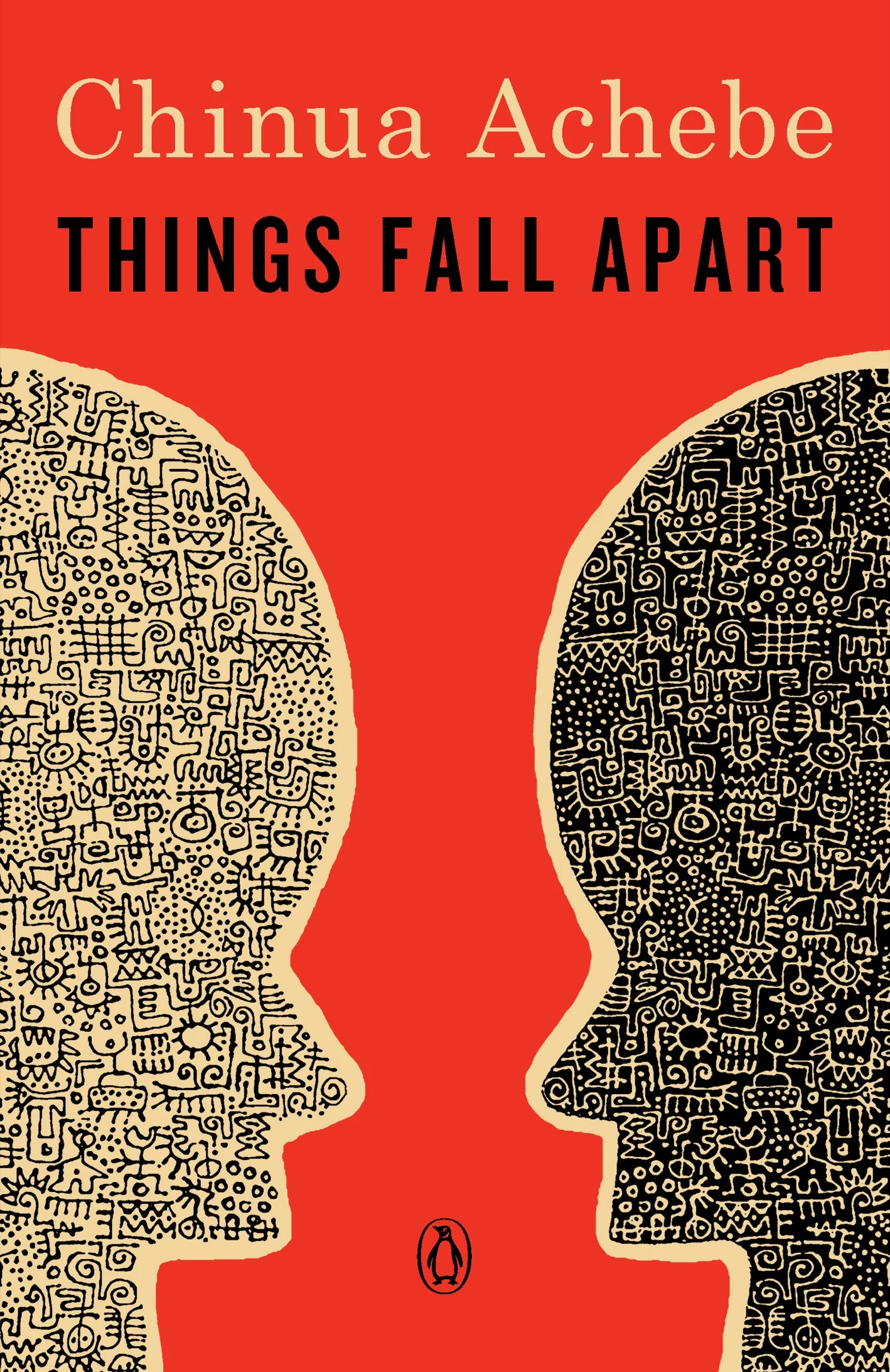
Chapter One
Okonkwo, a renowned figure in the nine villages of Umuofia, gained his fame through his exceptional wrestling skills and his strong, imposing presence. At the age of eighteen, he defeated the undefeated wrestler, Amalinze the Cat, in a fierce match that solidified his reputation. Over the years, Okonkwo’s fame grew, and he became known for his wealth, multiple wives, and significant achievements in both farming and warfare.
In stark contrast, Okonkwo’s father, Unoka, was a failure. Unoka was lazy, improvident, and deeply in debt. Despite his musical talents and love for the social aspects of village life, Unoka’s inability to manage his finances and responsibilities led to his downfall. His debts were numerous, and he was often ridiculed by the community. Unoka’s character is further illustrated through a visit from Okoye, who comes to collect a long-overdue debt. Unoka’s response, marked by laughter and a dramatic display of his debts, highlights his carefree and irresponsible nature.
The chapter concludes by emphasizing the stark difference between Okonkwo and his father. While Unoka died with no titles and heavy debts, Okonkwo’s achievements and hard work earned him respect and admiration. The community values achievement over age, and Okonkwo’s rise to prominence is a testament to his dedication and prowess. This sets the stage for the narrative, introducing the tension between tradition and individual ambition.
Key Events
- Okonkwo defeats Amalinze the Cat in a wrestling match
- Unoka’s visit from Okoye to collect a debt
- Comparison of Okonkwo’s success to Unoka’s failures
Characters Appearing
- Okonkwo
- Amalinze the Cat
- Unoka
- Okoye
Themes
- Achievement vs. Failure
- Respect Earned Through Achievement
- Personal Identity and Reputation
Chapter Two
The town crier's ogene jolts Okonkwo awake, announcing an urgent meeting for all men of Umuofia the next morning. The urgency in the crier's voice fills Okonkwo with a sense of impending conflict, and he speculates about the possibility of war. The next morning, the market place is filled with thousands of men, all murmuring in low voices until Ogbuefi Ezeugo, a powerful orator, silences them with his commanding presence and voice.
Ezeugo delivers a chilling message, revealing that a daughter of Umuofia was murdered in Mbaino. The crowd erupts in anger, and after a heated discussion, the decision is made to send an ultimatum to Mbaino: either face war or offer a young man and a virgin as compensation. Okonkwo, known for his bravery and leadership, is chosen to deliver this ultimatum. He returns two days later with a young boy named Ikemefuna and a young virgin, who is given to Ogbuefi Udo as a replacement for his murdered wife.
Ikemefuna is placed under Okonkwo's care, and for three years, he lives in Okonkwo’s household. Okonkwo, a strict and sometimes harsh figure, rules his household with a heavy hand, driven by a deep-seated fear of resembling his father. His eldest son, Nwoye, is often the target of Okonkwo’s frustration, as Okonkwo sees signs of laziness in him, leading to frequent nagging and physical punishment. Despite this, Okonkwo’s household is prosperous, with a well-kept compound and abundant yams in the barn.
Ikemefuna, initially terrified and confused, gradually adjusts to his new life. Okonkwo’s first wife, Nwoye’s mother, takes him in without further questioning, understanding the gravity of the situation. The arrival of Ikemefuna introduces a new dynamic to the household, setting the stage for future developments and conflicts.
Key Events
- The town crier announces an urgent meeting for all men of Umuofia.
- Ogbuefi Ezeugo reveals the murder of a Umuofia daughter in Mbaino.
- Umuofia decides to send an ultimatum to Mbaino, demanding a young man and a virgin as compensation.
- Okonkwo returns from Mbaino with Ikemefuna and a young virgin.
- Ikemefuna is placed under Okonkwo's care and lives in his household for three years.
Characters Appearing
- Ogbuefi Ezeugo
- Ogbuefi Udo
- Ikemefuna
- Nwoye
Themes
- Conflict and Resolution
- Fear and Ambition
- Tradition and Justice
Chapter Three
Unoka, known for his laziness and poor farming techniques, once consulted the Oracle of the Hills and the Caves to understand his poor harvests. The Oracle, through its priestess Chika, revealed that Unoka’s poor harvests were due to his own lack of effort, not any offense to the gods or ancestors. This encounter further solidified Unoka’s reputation as a man of weak resolve and poor judgment.
Determined not to follow in his father’s footsteps, Okonkwo worked tirelessly to build a prosperous future despite having no inheritance. He sought the help of Nwakibie, a wealthy and respected villager, to obtain seed yams. The meeting with Nwakibie is a formal affair, involving the sharing of kola nuts and palm wine, symbolizing respect and hospitality. Okonkwo’s earnest plea for assistance is met with Nwakibie’s approval, and he agrees to lend Okonkwo eight hundred seed yams, recognizing Okonkwo’s determination and work ethic.
However, the year proves to be disastrous for Okonkwo and other farmers. The rains are erratic, leading to a severe drought followed by excessive rainfall. Okonkwo’s efforts to protect his yams from the harsh conditions are futile, and the harvest is a complete failure. Despite the overwhelming despair, Okonkwo remains resolute, vowing to continue his efforts. His father, Unoka, offers words of encouragement during this trying time, acknowledging Okonkwo’s strong and proud heart.
Key Events
- Unoka consults the Oracle of the Hills and the Caves about his poor harvests.
- Okonkwo seeks and receives seed yams from Nwakibie.
- A catastrophic year of erratic weather leads to a failed yam harvest.
- Okonkwo remains resolute despite the failure.
Characters Appearing
- Chika
- Nwakibie
- Anasi
- Ogbuefi Idigo
- Akukalia
- Igwelo
Themes
- Resilience and Determination
- Tradition and Respect
- The Struggle Against Adversity
Chapter Four
Okonkwo’s rapid rise from poverty to prominence is noted by an old man, who observes his brusqueness towards less successful men. Okonkwo’s strict demeanor and fear of resembling his lazy father lead him to harshly silence a man at a kindred meeting, calling him a woman. The oldest man present sternly reminds Okonkwo of the importance of humility, and Okonkwo apologizes, though the incident underscores his intense drive and fear of weakness.
Meanwhile, Ikemefuna, who has been living with Okonkwo for three years, gradually overcomes his initial fear and becomes a beloved part of the household. He bonds deeply with Nwoye, teaching him various skills and folk tales. Okonkwo, inwardly fond of Ikemefuna, treats him with a heavy hand but allows him to accompany him to important village meetings, treating him like a son. However, Okonkwo’s fear of appearing weak leads him to hide his affection.
During the Week of Peace, Okonkwo, provoked by his youngest wife’s tardiness, beats her severely, forgetting the sacred truce. Ezeani, the priest of the earth goddess, Ani, confronts Okonkwo, emphasizing the grave offense and potential consequences for the clan. Okonkwo, though repentant, performs the required penance by offering sacrifices to the shrine of Ani. The community discusses the rarity and severity of Okonkwo’s transgression, with some suggesting his good fortune has gone to his head.
After the Week of Peace, the villagers begin preparing their farms for the new planting season. Okonkwo, with Nwoye and Ikemefuna’s help, meticulously prepares seed-yams, though he is critical of their efforts. The rainy season arrives, and the family plants yams, a crop that demands constant attention and hard work. Ikemefuna’s presence continues to positively influence Nwoye, who remembers this period fondly, especially the folk tales and the bond they shared.
Key Events
- Okonkwo’s brusque behavior at a kindred meeting and subsequent apology.
- Ikemefuna’s integration into Okonkwo’s household and his bond with Nwoye.
- Okonkwo’s violation of the Week of Peace by beating his youngest wife.
- Okonkwo’s penance and the community’s reaction to his transgression.
- Preparation and planting of yams, highlighting the demanding nature of the work.
Themes
- Humility and the Consequences of Arrogance
- Tradition and Personal Ambition
- Father-Son Dynamics and Influence
Chapter Five
The Feast of the New Yam approaches, and Umuofia buzzes with festive preparations to honor the earth goddess Ani and the ancestral spirits. The festival marks the beginning of the new year and the season of plenty. Despite his enthusiasm for hard work, Okonkwo is not particularly excited about the feast, preferring to focus on his farm. Nevertheless, he diligently prepares his compound, ensuring that his huts are scrubbed and decorated with intricate patterns, and his family is adorned for the celebration.
Tensions rise in Okonkwo’s compound on the eve of the festival when he confronts his second wife for cutting leaves from a banana tree. In a fit of rage, he beats her and, after a failed attempt to shoot her with his rusty gun, he calms down. Despite this incident, the spirits of the festival remain high, and Okonkwo’s household celebrates with feasting and drinking, welcoming guests from surrounding villages.
The second day of the festival features a highly anticipated wrestling match, which brings particular joy to Ekwefi, who has a deep love for the sport. Ekwefi and her daughter, Ezinma, prepare for the wrestling match by cooking a pottage. Ezinma, a wise and curious child, engages in playful conversation with her mother, discussing the significance of the day and the superstitions surrounding it. The drums of the wrestling match fill the air, stirring excitement and anticipation among the villagers. The rhythmic beats resonate through Okonkwo’s veins, rekindling his primal urge to dominate and his deep connection to the traditions of his people.
Key Events
- Preparations for the Feast of the New Yam
- Okonkwo’s violent outburst against his second wife
- Failed attempt to shoot his second wife with a rusty gun
- Celebration of the New Yam Festival with feasting and guests
- Anticipation of the wrestling match
Characters Appearing
- Obiageli
- Nkechi
Themes
- Festive Traditions and Community
- Violence and Control
- Family Dynamics
Chapter Six
The entire village converges on the ilo for the highly anticipated wrestling match, a cornerstone of the Feast of the New Yam. The air buzzes with anticipation, the drummers pounding out a frenetic rhythm that stirs the crowd. Elders and grandees sit on their stools, while the rest of the villagers stand or perch on makeshift stands. Okonkwo, a respected figure, is among the elders, his presence lending gravity to the occasion.
The match kicks off with the boys' preliminary bouts, warming up the crowd. The third bout, featuring Maduka, the son of Obierika, causes a sensation when he swiftly defeats his opponent with a move no one can describe. The crowd erupts in cheers, and Maduka is hoisted shoulder-high by his teammates. The drummers pause briefly, and the tension in the air eases as people relax and chat.
Ekwefi and Chielo, the priestess of Agbala, seize this moment to engage in a heartfelt conversation about Ezinma, Ekwefi’s daughter. Chielo, known for her kindness and friendship with Ekwefi, inquires about Ezinma’s health and well-being. Ekwefi expresses her hope that Ezinma will remain healthy, given the superstitions surrounding ogbanje children. Their conversation underscores the deep bond between the two women and the community’s concern for its members.
As the main event draws near, the drummers resume their intense rhythms, and the crowd’s excitement reaches a fever pitch. The final match pits Okafo and Ikezue, two of the best wrestlers in the nine villages, against each other. The contest is fierce, with both men displaying exceptional skill and strength. After a prolonged struggle, Okafo manages to outmaneuver Ikezue, throwing him to the ground. The crowd erupts in thunderous applause, and Okafo is carried away in triumph, his victory celebrated with songs and chants.
Key Events
- The village gathers for the wrestling match during the Feast of the New Yam.
- Maduka, the son of Obierika, wins a sensational preliminary bout.
- Ekwefi and Chielo discuss Ezinma’s health and well-being.
- Okafo defeats Ikezue in the final, highly anticipated match.
Themes
- Village Unity Through Tradition
- Competition and Rivalry
- Hope and Superstition
Chapter Seven
For three years, Ikemefuna has been a part of Okonkwo’s household, growing rapidly and becoming like an elder brother to Nwoye. Ikemefuna’s presence has positively influenced Nwoye, making him feel more grown-up and masculine. Nwoye, however, still prefers the stories his mother tells, but he hides this preference to please his father, who wants him to be tough and capable of ruling the household. Okonkwo, pleased with Nwoye’s development, shares stories of violence and bloodshed with the boys.
One day, a swarm of locusts descends upon Umuofia, a rare event that occurs once in a generation. The villagers, remembering that locusts are delicious to eat, eagerly collect them. The next day, the locusts are roasted and dried, providing a rare treat. Shortly after, Ogbuefi Ezeudu visits Okonkwo and privately warns him not to participate in Ikemefuna’s execution, as the Oracle has decreed that the boy must be killed. Despite this warning, Okonkwo agrees to join the men who will take Ikemefuna to his death, fearing that not doing so would make him appear weak.
The next day, a group of elders arrives at Okonkwo’s house, and Nwoye and Ikemefuna are sent out. Okonkwo informs Ikemefuna that he is being taken home. Nwoye bursts into tears, and his mother, Ekwefi, sighs with concern. The men, including Okonkwo, set out with Ikemefuna, who carries a pot of palm wine. As they walk, the atmosphere grows tense, and Ikemefuna begins to feel uneasy. He wonders about his real family and sings a childhood song to calm himself. Suddenly, one of the men raises his machete, and Ikemefuna cries out to Okonkwo for help. Overwhelmed with a paralyzing fear, Okonkwo strikes Ikemefuna down, driven by his fear of appearing weak.
Nwoye, upon seeing his father return, realizes that Ikemefuna has been killed. He feels a profound sense of loss and a snapping inside him, similar to the feeling he experienced when he heard the cries of abandoned twins in the forest during a harvest. This moment marks a significant emotional shift for Nwoye, hinting at a deeper internal conflict.
Key Events
- Ikemefuna's positive influence on Nwoye over three years.
- The arrival of locusts in Umuofia and the villagers' excitement.
- Ogbuefi Ezeudu warns Okonkwo not to participate in Ikemefuna's execution.
- Okonkwo joins the men to kill Ikemefuna, driven by fear of appearing weak.
- Nwoye's emotional breakdown upon realizing Ikemefuna's death.
Themes
- Masculinity and Violence
- Tradition and Change
- Emotional Suppression and Its Consequences
Chapter Eight
Consumed by guilt and distress following Ikemefuna's death, Okonkwo abstains from food for two days and drinks palm-wine excessively. Despite his efforts to distract himself with work, the season of rest offers no respite. His thoughts continually return to Ikemefuna, and he feels a deep sense of weakness, questioning his own valor. To regain his composure, Okonkwo visits his friend Obierika, who is making thatches from raffia-palm leaves.
During their conversation, Obierika mentions that his daughter’s suitor is coming to discuss the bride-price. Okonkwo expresses his concerns about Nwoye, feeling that his son lacks the necessary masculinity and strength. Obierika reassures him, suggesting that the children are still young. Okonkwo, however, remains troubled and brings up the recent killing of Ikemefuna, defending his actions as obedience to the Oracle. Obierika disagrees, warning that the Earth goddess may punish Okonkwo for his actions.
Their discussion is interrupted by Ofoedu, who brings news of the death of Ogbuefi Ndulue, an elderly man from Ire village, and his first wife, Ozoemena, who died shortly after him. This unusual event, where the wife died moments after her husband, is seen as a sign of their deep bond. Okonkwo begins to feel more like his old self, finding solace in engaging in conversation and work. He decides to tap his palm trees and discusses the laws and customs surrounding titled men and palm tree climbing with Obierika.
Later, Okonkwo returns to Obierika’s hut, where the latter is negotiating the bride-price for his daughter, Akueke. The negotiations involve a symbolic exchange of broomsticks, and the final price is settled at twenty bags of cowries. The men then enjoy a meal and discuss the varying customs of neighboring tribes, highlighting the differences in marriage practices and social norms.
Key Events
- Okonkwo's deep distress and guilt over Ikemefuna's death
- Okonkwo visits Obierika and discusses Nwoye's lack of masculinity
- Obierika warns Okonkwo about the Earth goddess's potential punishment
- Ofoedu brings news of Ogbuefi Ndulue and Ozoemena's deaths
- Negotiation and settlement of Akueke's bride-price
Characters Appearing
- Ibe
- Ukegbu
- Machi
Themes
- Guilt and Redemption
- Masculinity and Identity
- Tradition and Custom
Chapter Nine
For the first time in three nights, Okonkwo sleeps soundly, his mind free from the turmoil of recent events. He wakes to the persistent buzzing of mosquitoes and the memory of a whimsical tale his mother once told about their incessant humming. His tranquility shatters when Ekwefi pounds on his door, her voice trembling with fear, announcing that Ezinma is gravely ill. Okonkwo leaps into action, gathering medicinal herbs to treat Ezinma's fever, while Ekwefi kneels beside her, her worry etched deep in her face.
Ezinma, an only child, is the heart of Ekwefi's world. Despite Okonkwo's stern demeanor, Ezinma shares a unique bond with her mother, confiding in her and enjoying special moments together. Ekwefi's life has been marred by tragedy; she has lost nine of her ten children, each loss deepening her despair and resignation. Okonkwo, desperate for a solution, consulted a medicine man who identified Ezinma as an ogbanje, a child who dies and is reborn repeatedly. The medicine man, Okagbue Uyanwa, had previously unearthed Ezinma's iyi-uwa, a mystical stone believed to bind her to the spirit world, in an attempt to break the cycle of her rebirths.
Despite this intervention, Ezinma's sudden illness reignites Ekwefi's deepest fears. Okonkwo prepares a powerful medicine, placing Ezinma over a steaming pot. She struggles and cries, drenched in sweat, but eventually falls into a deep sleep, offering Ekwefi a glimmer of hope. The chapter highlights the profound connection between Ekwefi and Ezinma, and the relentless battle against the forces that threaten their fragile peace.
Key Events
- Okonkwo sleeps peacefully for the first time in three nights.
- Ekwefi informs Okonkwo that Ezinma is dying.
- Okonkwo prepares medicine to treat Ezinma's fever.
- Ekwefi's history of losing nine of her ten children is revealed.
- Okonkwo and Ekwefi recall the significance of the iyi-uwa and its role in breaking the cycle of Ezinma's rebirths.
Themes
- Motherhood and Loss
- Traditional Healing and Spirituality
- Hope and Despair
Chapter Ten
Large crowds gathered at the village ilo as the sun's heat diminished, preparing for a communal ceremony. Men dominated the scene, with women and children observing from the periphery. Titled men and elders sat on stools, awaiting the trials to begin. In front of them were nine empty stools, and two groups of people stood at a respectful distance, ready for the trial.
The egwugwu, representing the ancestral spirits, emerged from their house in a terrifying display of power and ritual. Women and children, including Mgbafo, fled in fear, even as her brothers restrained her. The egwugwu, led by Evil Forest, took their seats and began the proceedings. Okonkwo, notably absent from the elders, was disguised as one of the egwugwu, adding a layer of complexity to the trial.
The trial involved Uzowulu and his wife, Mgbafo, whose brothers accused Uzowulu of abusing her. Uzowulu claimed that Mgbafo's brothers had taken her away and demanded the return of her bride-price. Mgbafo's brothers countered that Uzowulu was abusive and had nearly killed her. After hearing testimonies and witnesses, Evil Forest delivered the verdict: Uzowulu was to bring a pot of wine to his in-laws and apologize, and Mgbafo would return to him on the condition that he ceased his abuse. The crowd murmured in approval, and the egwugwu adjourned to handle another case.
Key Events
- Crowds gather for a communal trial at the village ilo.
- The egwugwu emerge in a terrifying display, causing women and children to flee.
- The trial between Uzowulu and Mgbafo's brothers is conducted.
- Evil Forest delivers the verdict, ordering Uzowulu to apologize and Mgbafo to return on condition of no further abuse.
Characters Appearing
- Odukwe
Themes
- Justice and Law
- Gender Roles and Power Dynamics
- Ancestral Spirits and Communal Decision-Making
Chapter Eleven
On a dark and moonless night, Ekwefi and Ezinma sit together in their hut, the air thick with the intimacy of shared folk stories. The only sounds are their low voices and the occasional singing from neighboring huts, punctuated by the distant pounding of Nwayieke’s mortar and pestle. Okonkwo, having eaten from his wives' dishes, reclines against the wall, smoking his snuff, and listens to the tales.
Suddenly, the night is shattered by the high-pitched voice of Chielo, the priestess of Agbala, prophesying and calling for Okonkwo. She demands that Ezinma be brought to the Oracle in the hills and caves. Despite Okonkwo’s pleas for her to return in the morning, Chielo insists, and Ekwefi, fearing for her daughter, agrees to accompany them. Chielo curses Ekwefi for daring to follow, but Ekwefi remains resolute, her love for Ezinma driving her forward.
Ekwefi’s journey is fraught with fear and uncertainty. She runs through the dense forest, trying to keep up with Chielo’s rapid pace. The night is filled with eerie sounds and shadows, testing her resolve. Despite the risks, she continues, driven by her maternal love. Eventually, Okonkwo joins her, and together they wait outside the cave where Chielo has taken Ezinma. The chapter ends with Ekwefi and Okonkwo standing vigil, their minds drifting to the past and the strength of their bond.
Key Events
- Chielo calls for Ezinma to be taken to the Oracle in the hills and caves.
- Ekwefi defies Chielo’s warnings and follows them into the darkness.
- Ekwefi and Okonkwo wait outside the cave, protecting Ezinma.
Themes
- Maternal Love and Protection
- Fear and Determination
- The Power of Tradition and Ritual
Chapter Twelve
The morning after the tense night with the priestess, the village buzzes with excitement as preparations for Obierika’s daughter’s uri, a significant pre-wedding ceremony, get underway. Okonkwo’s family, including Nwoye’s mother and Okonkwo’s youngest wife, Ojiugo, set out early to help, carrying gifts of food and supplies. Ekwefi, still weary from the previous night’s ordeal, decides to wait for Ezinma to wake up before joining them, explaining to the others that she will be late. As the day progresses, Obierika’s compound becomes a hive of activity, with villagers gathering to celebrate the impending union.
Key Events
- Villagers prepare for Obierika’s daughter’s uri.
- Ekwefi waits for Ezinma to wake up before joining the celebration.
- Obierika’s compound becomes bustling with activity as the ceremony approaches.
Themes
- Ceremonial Traditions and Community Unity
- Family Dynamics and Support
- The Significance of Pre-Wedding Rituals
Chapter Thirteen
The night is shattered by the sound of the ekwe and the booming of the cannon, signaling that a member of the clan has died. The ekwe repeats the name of the clan, 'Umuofia obodo dike,' and then names the village, Iguedo, Okonkwo’s village. Anxiety rises as the ekwe finally names Ezeudu, a respected elder, as the deceased. Okonkwo recalls Ezeudu’s warning about not bearing a hand in Ikemefuna’s death, sending a chill down his spine.
Ezeudu’s funeral is a grand and chaotic event, befitting a great warrior. The clan gathers, and the air is filled with the sounds of drums, gunfire, and the frenzied dancing of warriors. Ancestral spirits, or egwugwu, appear, adding to the intensity. Among them is a particularly fearsome egwugwu, shaped like a coffin and emitting a sickly odor, who pays respects to Ezeudu’s body. The ceremony reaches its peak as darkness falls, and the final rites are about to begin.
Suddenly, a tragic accident occurs. Okonkwo’s gun explodes, and a piece of iron pierces the heart of Ezeudu’s sixteen-year-old son, killing him. The crowd is stunned, and the event is unprecedented in Umuofia’s history. Okonkwo’s accidental killing of a clansman is a crime against the earth goddess, and he must flee the clan. He collects his belongings, and with the help of friends like Obierika, he and his family leave for his motherland, Mbanta, where he will spend seven years in exile.
The next morning, men from Ezeudu’s quarter destroy Okonkwo’s compound as a ritual cleansing. Obierika, Okonkwo’s friend, reflects on the injustice of the situation, questioning why Okonkwo must suffer so much for an accidental offense. He thinks about the broader implications of the earth goddess’s justice and the clan’s strict adherence to tradition, even when it seems cruel.
Key Events
- Ezeudu's death is announced by the ekwe and cannon.
- Ezeudu’s grand funeral is held, with the appearance of various egwugwu.
- Okonkwo’s gun explodes, accidentally killing Ezeudu’s son.
- Okonkwo flees the clan for his motherland, Mbanta, due to the accidental killing.
- Men from Ezeudu’s quarter destroy Okonkwo’s compound as a ritual cleansing.
Themes
- Tension Between Traditional Law and Personal Circumstances
- Accident vs. Intent
- Community and Exile
Chapter Fourteen
Still reeling from the tragic accident at Ezeudu’s funeral, Okonkwo and his family arrive in Mbanta, his mother’s kinsmen. They are warmly received by Uchendu, his mother’s younger brother, who remembers Okonkwo as a boy when his mother was buried. Understanding the gravity of the situation, Uchendu offers no questions initially. The next day, Okonkwo recounts the tragic events leading to his exile, and Uchendu reassures him that it is a ‘female ochu,’ a lesser offense, and arranges the necessary rites and sacrifices.
Uchendu provides Okonkwo with a plot of land to build his compound and seed-yams to start farming. Despite the help and the new beginning, Okonkwo feels the weight of his exile deeply. The work lacks the vigor and joy it once brought him, and he often sits in a silent, despondent state. Uchendu, noticing Okonkwo’s despair, plans to speak to him after the isa-ifi ceremony, a ritual to ensure the fidelity of a bride.
The isa-ifi ceremony for Amikwu, Uchendu’s youngest son, takes place, involving a gathering of umuada, or the family’s daughters. The bride is questioned about her fidelity and swears on Uchendu’s ancestral staff. Following the ceremony, Uchendu gathers his family and Okonkwo to share wisdom. He questions why they say ‘Nneka’—‘Mother is Supreme’—despite a man’s primary allegiance to his fatherland. Uchendu explains that while a man belongs to his fatherland in times of peace, he finds refuge in his motherland during hardship, emphasizing the importance of maternal bonds and the need for Okonkwo to find comfort and strength in his motherland.
Uchendu shares his own life experiences, having lost multiple wives and children, to remind Okonkwo that suffering is universal and that resilience is key. He urges Okonkwo to comfort his family and prepare for their eventual return to Umuofia, cautioning against allowing sorrow to consume him.
Key Events
- Okonkwo and his family are received by Uchendu in Mbanta.
- Uchendu arranges the necessary rites and sacrifices for Okonkwo’s ‘female ochu’ offense.
- Okonkwo is provided land and seed-yams to start a new life.
- Uchendu holds the isa-ifi ceremony for his youngest son, Amikwu.
- Uchendu delivers a speech to Okonkwo about the importance of maternal bonds and resilience.
Characters Appearing
- Amikwu
- Njide
- Akueni
Themes
- Exile and Adaptation
- Maternal Bonds and Refuge
- Resilience in the Face of Suffering
Chapter Fifteen
Two years into his exile, Okonkwo’s friend Obierika arrives in Mbanta, accompanied by two young men carrying heavy bags of cowries. Okonkwo is overjoyed to see his friend, and they are warmly greeted by Okonkwo’s family and cousins. Uchendu, Okonkwo’s mother’s brother, welcomes the visitors and fondly recalls the days when people had friends in distant clans.
During the visit, Obierika recounts a harrowing tale about the destruction of Abame, a neighboring clan. A white man had arrived on an iron horse, and the clan, following the Oracle’s guidance, killed him and tied his iron horse to a sacred tree. Months later, a group of white men surrounded the market and massacred the villagers, reducing the clan to ruins. Uchendu criticizes the Abame people for their lack of caution and stresses the importance of vigilance.
After the intense discussion, Okonkwo’s first wife serves a hearty meal of pounded yams and bitter-leaf soup, and Nwoye brings sweet wine. Obierika mentions that he has brought the proceeds from selling Okonkwo’s yams, ensuring that Okonkwo has financial support during his exile. The conversation shifts to lighter topics, and they share a laugh about the challenges of early morning appointments.
Obierika’s visit provides both emotional and practical support to Okonkwo, who expresses his deep gratitude. The chapter underscores the themes of friendship, the impact of change, and the need for vigilance in the face of unknown threats.
Key Events
- Obierika visits Okonkwo in Mbanta with two young men carrying cowries.
- Obierika tells the story of the destruction of Abame by white men.
- Uchendu criticizes the Abame people for their lack of caution.
- Obierika presents Okonkwo with the money from selling his yams.
Themes
- Friendship and Support
- Impact of Change
- Vigilance and Preparedness
Chapter Sixteen
Two years into Okonkwo’s exile, Obierika arrives in Mbanta with news of the missionaries' arrival in Umuofia. The missionaries have built a church and gained a few converts, mostly efulefu, or worthless men. Chielo, the priestess of Agbala, denounces the converts and the new faith, calling them the excrement of the clan and the new faith a mad dog that has come to eat it up.
The most significant development is that Nwoye, Okonkwo’s son, has joined the missionaries. Obierika, upon finding Nwoye among the converts, learns that Nwoye has disowned his father. Okonkwo, when informed of this, remains silent, leaving Obierika to gather details from Nwoye’s mother.
The chapter also describes the missionaries' initial encounter with the people of Mbanta. A white man and five others, including an Ibo-speaking interpreter, address the gathered crowd. Despite the language barriers and initial skepticism, the white man’s commanding presence and the interpreters’ explanations capture the attention of some villagers. The missionaries sing a hymn that resonates deeply with Nwoye, addressing his inner turmoil over the clan’s practices, such as the killing of twins and Ikemefuna. Nwoye finds solace in the new religion, feeling a profound relief as the hymn’s message penetrates his soul.
Key Events
- Missionaries arrive in Umuofia and gain a few converts, mostly efulefu.
- Nwoye joins the missionaries and disowns his father, Okonkwo.
- The missionaries hold a meeting in Mbanta, where they preach and sing a hymn that captivates Nwoye.
Themes
- Tension between traditional beliefs and Christian doctrine
- Nwoye's search for personal identity and belonging
- The impact of religious conversion on family dynamics
Chapter Seventeen
The missionaries settle in Mbanta, spending their first nights in the marketplace before beginning to preach in the village. They seek a plot of land to build their church, and the village elders, led by Uchendu, offer them a portion of the Evil Forest, a place believed to be cursed and inhabited by dark spirits. To the villagers' surprise, the missionaries accept the offer and begin constructing their church without succumbing to the expected curses.
Intrigued by the missionaries' message, Nwoye secretly attends their gatherings. As the church stands firm in the Evil Forest, the missionaries win their first converts, including Nneka, a woman who had previously lost her twin children. Nwoye's conversion becomes known when his cousin, Amikwu, sees him at the church and informs Okonkwo. Enraged, Okonkwo confronts Nwoye, physically assaulting him until Uchendu intervenes.
Nwoye leaves his father's compound and joins the church, expressing his intention to attend the missionary school in Umuofia. Okonkwo, shaken by Nwoye's decision, reflects on his son's perceived weakness and his own failures, fearing the prospect of his male descendants abandoning their ancestral traditions.
Key Events
- The missionaries build their church in the Evil Forest.
- Nwoye is discovered attending the church and is confronted by Okonkwo.
- Nwoye leaves his father's compound to join the missionaries.
- Okonkwo reflects on his son's conversion and his own failures.
Characters Appearing
- Mr. Kiaga
Themes
- Cultural and Religious Tension
- Familial Conflict and Betrayal
- Resilience and Adaptation
Chapter Eighteen
Crises test the young church in Mbanta, but it perseveres and grows stronger. Initially, the clan views the church and its converts as insignificant. Tensions rise when three converts boast about burning the clan's shrines, leading to their violent expulsion. Despite this, the relationship remains relatively stable, with the missionaries seen as harmless and the converts, though considered worthless, still part of the clan.
A new crisis emerges when two osu, or outcasts, attempt to join the church. The converts initially resist, fearing social backlash, but Mr. Kiaga insists on their inclusion, emphasizing equality before God. His firm stance inspires the converts, and the osu are admitted, becoming zealous members.
Tensions escalate dramatically when one of the osu kills a sacred python, an act deemed highly blasphemous. Clan leaders, including Okonkwo, debate their response. Okonkwo advocates for violent retaliation, but others push for a more measured approach, ultimately deciding to ostracize the Christians. This decision is met with mixed reactions, and the Christians, now a self-assured community, continue to grow under Mr. Kiaga’s guidance and occasional visits from Mr. Brown.
Ostracization leads to further conflicts, with the clan preventing the Christians from accessing the stream and the quarry. Mr. Kiaga calms the situation by restraining the angry converts and investigating the claims. Tension peaks when Okoli, the alleged python killer, falls ill and dies, seen by the clan as divine retribution. This event temporarily quells hostilities, as the clan feels the gods can defend themselves.
Key Events
- The church faces initial crises but continues to grow stronger.
- Mr. Kiaga admits two osu into the church, strengthening the congregation.
- One of the osu kills a sacred python, causing outrage among the clan.
- The clan decides to ostracize the Christians rather than engage in violence.
- Okoli, the alleged python killer, falls ill and dies, seen as divine retribution.
Themes
- Religious conflict and tolerance
- Social hierarchy and outcasts
- Divine retribution and the power of tradition
Chapter Nineteen
Nearing the end of his seven-year exile in Mbanta, Okonkwo prepares for his return to Umuofia. He sends money to Obierika to build two huts in his old compound and begins planning a feast to thank his mother’s kinsmen for their hospitality. Despite his resolve, Okonkwo feels a deep sense of regret, believing he would have achieved greater success in Umuofia, where the men are bolder and more warlike.
Ekwefi, along with her daughter Ezinma and Ojiugo’s daughter, harvests cassava for the feast. Despite the cold and wet conditions, the task is completed efficiently, and the cassava is prepared for fermentation. Okonkwo insists on slaughtering three goats for the feast, emphasizing his gratitude and the importance of the occasion. The feast is grand, with abundant food and palm-wine, and all the umunna, the descendants of Okolo, are invited.
During the feast, Uchendu, the oldest member of the extended family, breaks the kola nut and prays for health, children, and the strength of kinship. Okonkwo speaks, acknowledging the kindness of his mother’s kinsmen and the value of family gatherings. An elder rises to thank Okonkwo, praising his generosity but expressing concern for the younger generation, who he fears lack the understanding of kinship and unity, leading to the acceptance of an abominable religion and the breaking of ancestral ties.
Key Events
- Okonkwo prepares for his return to Umuofia.
- Ekwefi and the girls harvest cassava for the feast.
- Okonkwo hosts a grand feast to thank his mother’s kinsmen.
- Uchendu breaks the kola nut and prays for the family.
- An elder expresses concern for the younger generation and the erosion of kinship values.
Themes
- Gratitude and Hospitality
- Kinship and Unity
- Tradition vs. Change
Chapter Twenty
Nearing the end of his seven-year exile in Mbanta, Okonkwo reflects on the changes that have occurred in his absence. He realizes that his place in the clan has been usurped, and he has lost opportunities to achieve higher titles and leadership roles. Determined to regain his status, Okonkwo plans to return with a grand gesture, rebuilding his compound on a larger scale and initiating his sons into the ozo society. He also expresses deep regret that Ezinma, his most understanding and capable child, is a girl, wishing she were a boy.
Okonkwo's daughters, especially Ezinma, have grown into beautiful young women, and Ezinma has developed a strong bond with her father. Despite numerous marriage proposals, Ezinma and her half-sister Obiageli refuse to marry in Mbanta, following Okonkwo's wishes to wait until their return to Umuofia. Okonkwo's resolve is further solidified by his determination to rebuild his reputation and influence in Umuofia, where he believes he would have achieved more.
However, Okonkwo's plans are complicated by the changes in Umuofia. The church has gained many converts, including respected figures, and the white men have established a government with court messengers known as kotma, who are despised for their arrogance and foreignness. These kotma enforce the white man's laws, often imprisoning and mistreating clan members, including those of high title.
When Obierika visits, he shares the grim reality of Umuofia's transformation. The clan's unity has been shattered, and many have turned against their own traditions. Okonkwo, frustrated and angry, urges a fight against the white men, but Obierika points out the futility, as many of their own people have joined the enemy. The story of Aneto's hanging, after being betrayed by the Christians to the white man's court, underscores the clan's weakened state and the deep divisions within it.
Key Events
- Okonkwo plans his grand return to Umuofia.
- Ezinma and Obiageli refuse marriage proposals in Mbanta.
- Obierika informs Okonkwo of the changes in Umuofia, including the church's influence and the presence of the white man's government.
- Okonkwo expresses frustration and a desire to fight the white men, but Obierika highlights the clan's divisions and the futility of resistance.
Themes
- Loss of Status and Ambition
- Gender Roles and Disappointment
- Religious Conversion and Social Change
Chapter Twenty-one
In Umuofia, many residents, unlike Okonkwo, embrace the changes brought by the white man. The introduction of a trading store has increased the value of palm-oil and kernels, bringing economic benefits to the village. The church, under Mr. Brown’s leadership, gains respect as he takes a gentle approach, avoiding unnecessary conflict with the clan’s traditional beliefs. Mr. Brown’s efforts to understand and respect the local customs earn him a degree of trust and admiration, even from some of the clan’s leaders.
Mr. Brown’s relationship with Akunna, a respected villager, exemplifies his diplomatic approach. They engage in lengthy discussions about religion, with Mr. Brown learning about the Igbo belief in Chukwu as the supreme deity and the role of lesser gods as intermediaries. Despite their differences, both men gain a deeper understanding of each other’s beliefs. Mr. Brown’s approach is strategic; he builds a school and a hospital, emphasizing the importance of education and modern healthcare. His efforts begin to bear fruit as more villagers, including older adults, start attending the school, recognizing the potential benefits for their future.
However, Mr. Brown’s health begins to deteriorate, and he is forced to leave Umuofia, leaving behind a growing and influential mission. Okonkwo, having recently returned from exile, finds his home transformed. His return is less impactful than he had hoped, overshadowed by the new religion and government. He is particularly disheartened by the lack of interest in his return and the apparent weakening of the clan’s traditional values and warrior spirit.
Okonkwo’s disappointment is compounded by the news that his son, Nwoye, now called Isaac, has been sent to a teacher training college. Okonkwo’s confrontational response to Mr. Brown’s visit underscores his growing frustration and sense of loss. The chapter ends with Okonkwo mourning the disintegration of the clan and the transformation of Umuofia into a place he barely recognizes.
Key Events
- Mr. Brown earns respect by respecting Igbo customs and building a school and hospital.
- Mr. Brown discusses religion with Akunna, gaining mutual understanding.
- Mr. Brown’s health deteriorates, and he leaves Umuofia.
- Okonkwo returns to Umuofia to find significant changes and a lack of recognition.
- Nwoye, now called Isaac, is sent to a teacher training college.
Themes
- Clash of Traditional and Western Values
- Education and Modernity
- Religious Tolerance
Chapter Twenty-two
Reverend James Smith, Mr. Brown’s successor, arrives in Umuofia with a markedly different approach. Unlike Mr. Brown, who sought to understand and accommodate Igbo customs, Reverend Smith is rigid and uncompromising, viewing the world in stark terms of good and evil. He quickly suspends a young woman from the church for allowing her heathen husband to mutilate their dead child, an act meant to prevent the child’s return as an ogbanje. This decision, along with his strict policies, fuels tension within the community.
Enoch, a zealous convert known for his excessive devotion and confrontational nature, becomes a focal point of conflict. During the annual ceremony honoring the earth deity, Enoch publicly unmasks an egwugwu, a grave offense in Igbo culture. This act plunges Umuofia into chaos, as the egwugwu, representing ancestral spirits, are deeply revered and their unmasking is seen as a profound desecration. The night following the incident, the Mother of the Spirits wails throughout the clan, a sound that fills the villagers with dread and foreboding.
The next day, the egwugwu gather in force, determined to exact retribution. They destroy Enoch’s compound and then move to demolish the church. Mr. Smith, though initially frightened, stands his ground but is ultimately powerless to stop the destruction. The leaders of the Christians, including Mr. Smith, had anticipated the clan’s reaction and decided to hide Enoch to avoid further violence. However, the church is razed, and the spirits’ wrath is temporarily appeased.
Ajofia, the leading egwugwu, addresses Mr. Smith, offering a truce and explaining that while they will not harm him personally, they demand the destruction of the church. Mr. Smith refuses to comply, but the egwugwu proceed regardless. The chapter ends with the church in ruins and the spirits’ wrath temporarily quelled, but the underlying tensions remain unresolved.
Key Events
- Reverend James Smith replaces Mr. Brown with a stricter, uncompromising approach.
- Enoch unmasks an egwugwu during a sacred ceremony, causing widespread outrage.
- The egwugwu destroy Enoch’s compound and the church.
- Ajofia, the leading egwugwu, offers a truce but demands the destruction of the church.
Characters Appearing
- Ajofia
Themes
- Egwugwu's Retribution
- Tradition vs. Change
- Religious Tension
Chapter Twenty-three
For the first time in many years, Okonkwo felt a semblance of happiness as the clan seemed to be making amends for their earlier indifference. The men of Umuofia had listened to his violent speech with respect, agreeing to take substantial action against the missionaries and the Christians, though they did not go as far as killing the missionary or driving away the Christians. Okonkwo was almost happy again, feeling a return to the old warrior spirit of the clan.
Two days after the destruction of the church, the District Commissioner returned from his tour. After conferring with Reverend James Smith, he summoned the six leaders of Umuofia, including Okonkwo, to his headquarters. Okonkwo warned the others to be fully armed, and they went to the meeting armed with machetes. The District Commissioner greeted them politely and began to discuss the recent events, but the conversation was a ruse. The six men were quickly overpowered, handcuffed, and led into the guardroom.
The District Commissioner demanded that the men pay a fine of two hundred bags of cowries to ensure such incidents did not occur again. The men were treated harshly by the court messengers, who shaved their heads and subjected them to insults and physical abuse. Denied food and water, their conditions worsened over the next few days. Okonkwo, choked with hate, blamed the others for not following his advice to kill the white man.
News of the imprisonment spread rapidly through Umuofia, causing widespread fear and uncertainty. The village, usually vibrant with the sounds of children and the activities of adults, fell silent. The village crier called for a meeting in the marketplace, and the men of Umuofia gathered to decide on a course of action. They agreed to collect the fine of two hundred and fifty bags of cowries, unaware that fifty bags would go to the court messengers, who had increased the fine for their own benefit.
Key Events
- Okonkwo feels a renewed sense of happiness as the clan shows solidarity.
- The District Commissioner summons the six leaders, including Okonkwo, to his headquarters.
- The leaders are overpowered, handcuffed, and imprisoned by the court messengers.
- The District Commissioner demands a fine of two hundred bags of cowries.
- The men are treated harshly and denied basic necessities in prison.
- News of the imprisonment spreads, causing fear and uncertainty in Umuofia.
- The men of Umuofia agree to collect the fine of two hundred and fifty bags of cowries.
Themes
- Renewed Solidarity and Warrior Spirit
- Deception and Betrayal by Authority
- Community Response to Oppression
Chapter Twenty-four
Following their release from imprisonment, Okonkwo and his fellow leaders return to Umuofia, their faces grim and their hearts heavy. The village is cloaked in a tense silence, and the men walk silently, their presence causing women and children to step aside without a word. Okonkwo, despite his lack of appetite, eats some food prepared by his daughter Ezinma, while his male relations and friends gather in his obi, discussing the upcoming meeting and the humiliation they suffered at the hands of the white man’s court.
The village crier announces another meeting, and Okonkwo spends a restless night, his mind consumed by thoughts of vengeance and the glory of past wars. He prepares his war dress, determined to fight if Umuofia decides on war. However, he is deeply concerned about the influence of Egonwanne, a man whose eloquence often sways the clan towards inaction. Okonkwo vows to confront Egonwanne and, if necessary, fight alone.
The next morning, the marketplace is filled with men from all nine villages, their presence a testament to the clan’s resolve. Okonkwo and Obierika join the crowd, searching for Egonwanne. The meeting begins with Okika, one of the imprisoned leaders, addressing the clan. He speaks passionately about the desecration of their gods and the betrayal by their brothers who have joined the white man. Okika calls for unity and action, warning that if they do not act now, the problem will only grow worse.
As the meeting reaches a critical point, the five court messengers arrive, demanding that the meeting be stopped. Okonkwo, overcome with rage, draws his machete and kills the head messenger. The crowd erupts into chaos, but Okonkwo realizes that Umuofia will not go to war. Disheartened and alone, he wipes his machete on the sand and walks away, knowing that his actions will have dire consequences.
Key Events
- Okonkwo and the other leaders are released from imprisonment.
- Okonkwo prepares for war and reflects on past glories.
- Okika delivers a passionate speech calling for unity and action against the white man.
- Okonkwo kills the head court messenger, leading to chaos and the end of the meeting.
Characters Appearing
- Ezinma
Themes
- Desecration and Betrayal
- Unity and Division
- Rage and Despair
Chapter Twenty-five
The District Commissioner arrives at Okonkwo’s compound with an armed band of soldiers and court messengers, finding a small group of men gathered in the obi, their faces etched with weariness. He demands to know where Okonkwo is, threatening to lock them all up if they do not produce him immediately. Obierika, speaking for the group, suggests that he can lead them to Okonkwo, hinting that the Commissioner’s men might need to assist them.
Wary of trickery, the Commissioner follows Obierika and a few others, his men holding their firearms at the ready. They lead him to a small bush behind Okonkwo’s compound, where they find Okonkwo’s body hanging from a tree. Obierika explains that it is against their custom to touch the body of someone who has committed suicide, as it is considered an abomination and an offense against the Earth. They request the Commissioner’s men to help bring down the body and bury it, as only strangers can perform this task.
The Commissioner, initially angered and frustrated, gradually transforms into a curious observer of Igbo customs. He orders his chief messenger to take down the body and bring it to the court along with the men. Obierika, overwhelmed with grief, accuses the Commissioner of driving Okonkwo to suicide and laments that he will be buried like a dog. The Commissioner, planning to write a book about his experiences, contemplates how Okonkwo’s story could fit into a chapter about the primitive tribes of the Lower Niger.
Key Events
- The District Commissioner arrives at Okonkwo’s compound and demands to see Okonkwo.
- Obierika leads the Commissioner to the bush where Okonkwo’s body is found hanging from a tree.
- Obierika explains the Igbo custom regarding suicide and requests the Commissioner’s men to help with the burial.
- The Commissioner orders his men to take down the body and brings it to the court.
- Obierika accuses the Commissioner of driving Okonkwo to suicide.
Themes
- Tradition and Custom
- Colonialism and Its Impact
- Death and Dignity