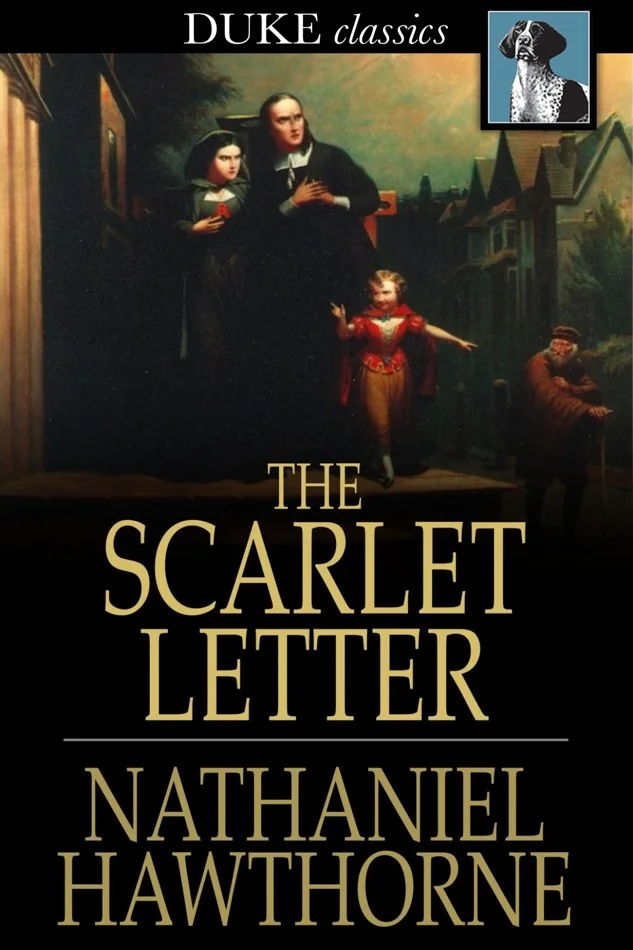
The Scarlet Letter
A profound exploration of guilt, redemption, and the human cost of moral rigidity, following Hester Prynne as she bears the scarlet letter of adultery in Puritan Boston while the true father of her child suffers in secret and her vengeful husband orchestrates a campaign of psychological torture.
Overview
In the rigid theocracy of seventeenth-century Boston, Hester Prynne emerges from the town prison bearing an infant and condemned to wear a scarlet letter 'A' upon her breast as eternal punishment for adultery. Against the stark backdrop of Puritan society, where sin and salvation are matters of public spectacle, Hester must navigate a world that has branded her an outcast while protecting the identity of her child's father. The ornate embroidery of her scarlet letter transforms what was meant to be a mark of shame into something approaching artistry, reflecting Hester's complex relationship with her punishment and her refusal to be entirely broken by it. Her daughter Pearl, born of passion and raised in isolation, grows into an otherworldly child whose very existence serves as both blessing and torment to her mother.
The arrival of a mysterious physician named Roger Chillingworth introduces a sinister undercurrent to the community's moral landscape. Chillingworth, revealed to be Hester's long-lost husband, embarks on a methodical campaign of psychological torture against the Reverend Arthur Dimmesdale, whom he suspects of being Pearl's father. As Chillingworth insinuates himself into the minister's life under the guise of medical care, Dimmesdale's health deteriorates under the weight of his hidden guilt and his tormentor's relentless probing. The minister's public eloquence and spiritual authority grow even as his private anguish consumes him, creating a devastating portrait of a man torn between his public persona and his secret shame.
Seven years after her initial punishment, Hester has evolved from a figure of scandal into something approaching a saint in the community's eyes, her scarlet letter gradually transformed in meaning from 'Adultery' to 'Able' through her acts of charity and resilience. When she finally confronts both Chillingworth and Dimmesdale about the destructive triangle that has defined their lives, the forest becomes a space of truth-telling and potential redemption. Her proposal that she and Dimmesdale flee to Europe with Pearl represents a radical rejection of Puritan society's constraints, offering the possibility of freedom from the roles that have trapped them all.
The climax arrives during the community's Election Day celebration, when Dimmesdale, at the height of his oratorical powers and public acclaim, chooses confession over escape. His public revelation on the very scaffold where Hester once stood alone transforms the meaning of suffering and redemption for all involved, while his death releases both himself and Chillingworth from their destructive obsessions. Pearl, finally acknowledged by her father, undergoes her own transformation from wild child to fully human, inheriting not only Chillingworth's fortune but also the possibility of a life beyond the shadow of her parents' sin. Hawthorne's masterpiece ultimately explores how individuals navigate the tension between private truth and public morality, suggesting that authentic redemption requires the courage to face one's deepest shame in the light of day, while questioning whether society's mechanisms of justice truly serve the cause of human understanding and forgiveness.
Main Characters
- Hester Prynne - the protagonist who bears the scarlet letter and transforms shame into strength
- Arthur Dimmesdale - the tormented minister and secret father of Pearl
- Roger Chillingworth - Hester's vengeful husband disguised as a physician
- Pearl - Hester's otherworldly daughter, born of sin but embodying natural freedom
Central Themes
- Sin and redemption
- Public shame versus private guilt
- The individual versus society
- The transformative power of suffering
- Nature versus civilization
Mood & Atmosphere
Brooding and morally complex, with an atmosphere of psychological tension and spiritual questioning set against the austere backdrop of Puritan New England